THE BAND: ‘The Last Waltz’ was nearly derailed | somethingelsereviews.com

‘The Last Waltz’ was nearly derailed, time and again: ‘It was like throwing the dice’

APRIL 7, 2015
BY 

The on-screen stars of The Last Waltz, simply galvanizing throughout, are Rick Danko and Robbie Robertson. They come off in Martin Scorsese’s bittersweet 1978 film, conceived as the Band’s concert farewell on Thanksgiving night at San Francisco’s Winterland, like rock ‘n’ roll updates of Johnny Boy and Charlie from Mean Streets.

Meanwhile, Bob Dylan almost didn’t go on — and Levon Helm made his enduring dissatisfaction with the whole production abundantly clear in his 1993 memoir This Wheel’s On Fire. And yet, the latter two ended up providing the all-star The Last Waltz with its heart and soul — something that translates just as well on the triple album, issued via Warner Bros. on April 7, 1978.

Levon Helm’s voice is the concert’s conscience (by turns bawdy, guttural and sincere), while his playing is its life blood. Nobody sounds more in the moment, more viscerally involved — likely because, as Band producer John Simon tells us, his was the only performance unaltered by post-production overdubs.

Bob Dylan, on the other hand, was expected for rehearsals at Shangi-La, but never appeared. (Joni Mitchell did, but couldn’t explain her own songs’ unusual tunings; Garth Hudson stepped in to help.) When Dylan finally showed, he locked himself away at Miyako’s piano-lounge basement. The Band did a couple of run throughs there, but without ever getting confirmation on his participation in the film.

Somehow, you can trace none of that indecision in the nervy, if far too brief, moments Dylan was on stage in San Francisco. He and the Band reconnected with the startling, genre-rattling energy on The Last Waltz that hurtled them both to previously unimagined places as the 1960s waned. Bob Dylan pushed back, and hard.

The Band went first, running through two hours of their best-known hits, from “Up on Cripple Creek” to “This Wheel’s On Fire,” “The Shape I’m In” to “Life is a Carnival,” “Rag Mama Rag” to “Stage Fright,” even as dinner was served. (Promoter Bill Graham conceived of the concert as a Thanksgiving event, with a huge meal — they served 220 turkeys and 500 pounds of cranberry sauce — included in the price.) Things were just getting started. “I was on stage for five and a half hours,” Rick Danko told Dirty Linen in 1992. “They could do a Son of ‘The Last Waltz,’ because we’ve got some great material. We only used a small amount of it.”

Bob Dylan arrived during the Band’s set, retreating to a dressing room. Negotiations on his participation continued through the intermission, apparently hung on the idea that The Last Waltz would be competing with Dylan’s own film project, Renaldo and Clara. The problem was, Warner Bros. had funded Scorsese’s movie with an understanding that Bob Dylan would appear. Finally, after another round of discussions, Dylan agreed to let crews film his last two songs, starting with a bitterly ironic run through “Forever Young,” which Dylan cuffs around with an acid brusqueness, curtly denying the evening’s embedded nostalgia.

Together, Bob Dylan and the Band resurrected two lesser-known gems from their infamous 1966 electric tour, “I Don’t Believe You (She Acts like We Never Have Met)” and — in a twist, Levon Helm once said — “Baby, Let Me Follow You Down.” “Surprised, we played along, figuring that Bob realized we were missing something good by not having any of the old rock ‘n’ roll on film,” Helm wrote in This Wheel’s On Fire.

Bob Dylan and the Band tore into them like hungry wolves — to the point where Dylan nearly snarls himself hoarse. As the crews tried to wrap up at the agreed-upon time, Levon Helm said Bill Graham rushed in to countermand those instructions, saying: “Fuck you! Roll the fucking cameras! Roll ‘em!” And thus, the raucous and celebratory sing-along of “I Shall Be Released” was thankfully documented.

Not that The Last Waltz doesn’t still shine a spotlight on the contributions of others. Van Morrison provides a needed spark during the lengthy concert’s mid point, Muddy Waters simply roars through a late-period rendition of “Mannish Boy,” Emmylou Harris imbues “Evangeline” with a crystalline beauty, and Rick Danko’s darkly emotional “It Makes No Difference” arguably outdoes the original studio version. Robbie Robertson, performing with an unfettered joy, fires off volley after volley of stiletto-precise guitar work, while Hudson creates a spectral frame for it all.

Of the Band, only Richard Manuel seems to recede in the moment. Not every guest works, including an out-of-place Neil Diamond and a simply out-of-it Neil Young. That anyone’s star shone so brightly, in retrospect, is no small miracle. Last-minute planning snafus — not least of which was Dylan’s unwillingness to commit — and recording mishaps nearly derailed The Last Waltz time and time again. Ultimately, the Band rehearsed for a staggering 12 hours, trying to nail down the arrangements and sound requirements for this bulging multi-artist extravaganza. Each of the songs would be performed live, in front of a sold-out crowd, and a huge crew with recording equipment.

“I mean, we had to learn twenty-some-odd songs we’d never played before in our lives,” Robbie Robertson toldMusician in 1982. “So, every time out of the chute, it was like throwing the dice. It’s hard enough to remember our own stuff, let alone everybody from Joni Mitchell to Muddy Waters.”

That actually played right into the hands of Bob Dylan and Levon Helm, two performers born to the stage. Helm was always most at home there; Dylan still is.

If Rick Danko nearly bested a signature performance from his own studio career, Levon Helm did one better — constructing the definitive version of “The Night They Drove Old Dixie Down” with the addition of a coiled horn section. His brilliant pairing with the Staple Singers for an update of “The Weight” plumbed undiscovered depths of meaning. He breathes shuddering new life into “Mystery Train,” and snorts through “Ophelia” with a salacious grit — the latter of which ends with a triumphal Helm sighing with what looks like satisfied exhaustion. Bob Dylan, meanwhile, managed that rarest of things — recapturing the danger and meaning of his best years, no small thing.

That Thanksgiving evening, some 37 years gone, concluded in the only way it could, really. Levon Helm wanders back out on stage, leading a loose jam for about 30 minutes before the rest of his Band mates eventually return, as well. That leads to the five-man lineup’s last song performance, an ironic run through the desperate pleas of“Don’t Do It” that ended around 2 a.m. “When it was over,” Levon Helm said, “so was the Band.” Robbie Robertson stepped up to the microphone and said, “Thank you, goodnight.” And then: “Goodbye.”

via ‘The Last Waltz’ was nearly derailed, time and again.

Posted in Album, CD, Concert, Documentary, Documentary, DVD, Film, Live, Music, Rhythm and Blues, Rock, Rock 'n' Roll | Tagged , , , , , , , , , , , , , , , , , , , , , , , | Leave a comment

BOLAN Gives His Fans ‘HOT LOVE’ – uDiscover

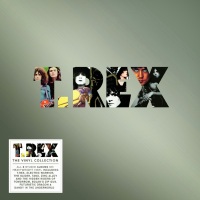
T.REX

It was ‘Ride A White Swan’ that lit the fire, and ‘Hot Love’ that set T. Rex ablaze. 44 years ago today, the band’s second big hit single gave Marc Bolan what he had always dreamed of: his first No. 1 hit.

‘Hot Love’ was the latest product of the T. Rex dream team that helped create Bolanmania. Marc wrote the song, gave it his distinctive vocal styling and some inventive guitar touches, and Tony Visconti put his expert production sheen on it. For Bolan’s rapidly-expanding army of fans, the effect was irresistible.

MARC

T. Rex had entered the album chart with their self-titled set (their first since dropping the “Tyrannosaurus”) in mid-January 1971. It spent two weeks in the top ten, peaking at No. 7, just before ‘Hot Love’ climbed to No. 1, but the single was made all the more tempting to record-buyers by not being included on the LP.

“The beat was simple and pronounced,” wrote Mark Paytress about ‘Hot Love’ in his 1992 biography of Bolan, ‘Twentieth Century Boy.’ “The full if uncluttered production, boosted by tuneful backing vocals and supportive strings, made it perfect for daytime radio. Marc pulled out all the stops, utilising Presley’s ‘uh, uh, uh’ vocal affectation from ‘All Shook Up,’ the guitar break from ‘Heartbreak Hotel’ for the break, and added a lengthy ‘Hey Jude’-type singalong for a lengthy coda.”

On the chart for March 20, 1971, ‘Hot Love’ took over from Mungo Jerry’s ‘Baby Jump’ at the summit, helping to deny Paul McCartney’s ‘Another Day’ a place at No. 1, and in the week that John Lennon and the Plastic Ono Band debuted with ‘Power To The People.’ The T. Rex single held on tight to the top spot for six weeks, before finally giving way to the reggae hit ‘Double Barrel’ by Dave and Ansil Collins.

“I know it’s like a million other songs,” said Bolan of ‘Hot Love’ at the time, “but I hope it’s got a little touch of me in it too.”

It’s ‘Cosmic Rock’ – T.Rex on ‘Top of the Pops’:

 Explore our dedicated T. Rex Artist Page

via Bolan Gives His Fans ‘Hot Love’ – uDiscover.

Posted in 45rpm vinyl single, Album, Music, Pop, Rock, Rock 'n' Roll, Song, Television | Tagged , , , , , , , , , , , , , , , , , , , , , , , , , , , | Leave a comment

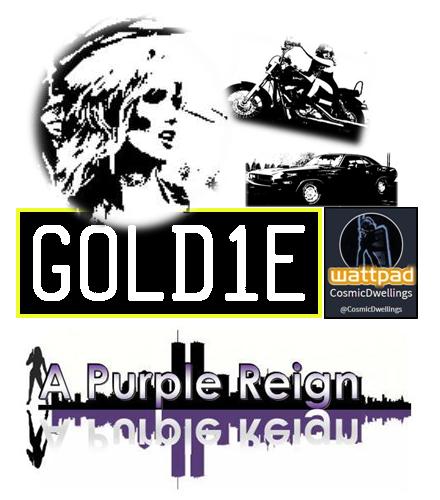
GOLD1E: “The Song Remains The Same” – Prologue…

The Song Remains The Same promoGOLD1E Newest cover

“The Song Remains The Same” is the second short story in our ebook serial entitled “GOLD1E” and features our gal on assignment duty once more for the Specialist Woman’s Organization of Retribution & Defense (S.W.O.R.D.) –

In this second short story, Goldie Johnson travels on The Silver Meteor to South Florida where she meets up with local P.I. Paul Trevino in connection with the previous death of an author and a link back to Woodstock ’69, which in turn unravels the involvement of a long lost relative! When things go considerably awry on a stake-out during an attempted bust on a drug ‘pipeline’, the investigation leads Goldie on a train trek up to Rocky Mount, Virginia with the hope of discovering the answers to some questions which have remained long unanswered…

“The Song Remains The Same” – Prologue:

“Sonny, keep your head down while I aim good and straight!” exclaimed the one known as Jerry, gradually regaining his breath from the side and round kicks she had delivered to his chest and stomach, now steadying his gun with both hands standing approximately twenty meters into the darkness across from them.

The flicker of gun metal and one side of his face was the only illumination in the near distance. The light from the garage drowned the area on which she now stood with the one known as Sonny, whose neck she clasped within the grip of her left arm and whose head she now pressed the Beretta 92fs onto – the trigger finger of her right hand controlled the option.

“Let go of him, bitch,” continued Jerry, his southern drawl very sure of an outcome, “else that purdy li’l face underneath that there baseball cap is goan need some beauty therapy!”

“Pull the trigger…shoot it now!” the choking demand croaked from the depths of Sonny’s throat as she further clamped her hold around his neck.

Then, she felt a forceful dig into her arm as Sonny attempted to push his chin and whole body downward so Jerry could get a clearer shot of her head and chest. She tried to steady her stance in order to maintain her grip, and the grimacing expression surged across her face in trying to defy Sonny’s attempt of gaining the advantage. The presence of the expression tugged at the corner of her mouth – the impact of the back of Sonny’s ‘leather’ dry hand a few moments ago. She further scraped the barrel of the Beretta into the gray shag of his hair to remind him of his potential fate, as the thought of knocking him unconscious with the butt of the pistol may also prove to have a fatal consequence for her, knowing that Jerry may not think twice about pulling his trigger.

Now more aware of her stance being open to the line of fire, the bleary brightness of the dangling rusty lantern of the garage caught the corner of her eye. Suddenly, she was reminded of the inspiring scene in “The Fisher King” – the glittering mirror ball of the clock at Grand Central Station in New York City, accompanied by the waltzing couples gliding across the floor beneath it. However, such scenes of fantasy would only hold an image of romanticism for her if the waltzing couples each carried a gun in order to protect themselves. It was such protection that she undoubtedly needed at this moment. 

The blood now seeping from the corner of her mouth…the name of a senior member of the Johnson family now seeping into her flood of thoughts…an outcome awaited the standoff of a ‘Mexican’ variety seeping into the situation as she continued to wrestle with Sonny’s neck: 

“SHOOT THIS BITCH!!” 

* * * * * * * * * * * * * * * *

– The “HOUSES OF THE HOLY” Reflections – 

[spotify https://play.spotify.com/album/5phxHbK2GSr7hEu4orLywP]

“The CD album is actually playing in the background of the first scene at the start of this story. The influence of the album’s opening song – “The Song Remains The Same” – stems from a combination of both the instrumentation and lyrics: the guitar and rhythm section subconsciously reminded me of a train’s pounding mechanics on its journey along its track of destiny. A furious locomotive that can’t wait to arrive at where it’s heading to face its destination – or its awaiting public. Therefore, this inspiration offered the prospect of allowing Goldie to travel on the Silver Meteor on her next S.W.O.R.D. assignment. It is also reminiscent of Goldie’s urgency in her journey, but alternatively, approaching an unsuspecting ‘public’ at her destination.”

“At the beginning of the song when the band almost ‘crash’ the pace to a halt and Robert Plant’s vocals ignite with the lyrics: ‘I had a dream, a crazy dream…’ I thought this further inspired an allusion to what happened in ‘A Purple Reign’ (the first ‘GOLD1E’ story) which also could mean that she still experiences such dreams leading up to this journey. And then we have the lyrics: ‘Anything I wanted to know, any place I needed to go’ – this line inspired a reference to her organization providing such information or ‘knowledge’ and travel arrangements if required.”

“The lyric of ‘Any little song that you know’ – this further inspired the thinking behind Goldie’s relationship with her organization: the ‘dancing’ or ‘singing’ to their song, which in these instances are the assignments she finds herself undertaking. It can also allude to her own singing talent which she can hardly find time to further undertake whilst she ‘sings’ a different kind of ‘song’, but one which she is becoming familiar with.”

“‘Everything that’s small has to grow‘ – these lyrics inspired my thinking toward the organization in itself with Goldie being the primary operative. And we also discover in this story that S.W.O.R.D. (being the organization in question) is gradually growing.”

“‘California sunlight‘ – this inspired a ‘nod’ to Goldie’s birthplace. The lyrics also mention ‘Calcutta‘ and ‘Honolulu‘ which influenced my thinking toward potential places where she could be sent on assignment. The title lyrics of ‘The Song Remains The Same’ confirming her ‘position’ with her organization throughout the story.”

“‘The Rain Song‘ with its evocative lyrics which paint its romantic textures is like a ‘lover’s lament’ between Goldie and her late husband, Gil. But also it’s a song with a ‘double-edged sword’ type of retrospective which influenced my allusion to the events which had occurred in Goldie’s life after Gil’s death. Therefore it’s eerily prophetic.”

The complete first short story in the “GOLD1E” serial can be accessed for FREE at the following picture link:

GOLD1E promo+

Don’t miss the “GOLD1E” Interview with writer, Tony G. Marshall at the following picture link:

Goldie and HV Elements

+

Goldie now with her very own dedicated Facebook and Twitter profiles at the following links below:

Goldie Facebook Page

FACEBOOK

“GOLD1E” / “The Song Remains The Same” characters and contents –
Copyright ©2012, 2013, 2014, 2015 by Tony G. Marshall and Cosmic Dwellings.
All Rights Reserved.

Posted in Crime, Music, Short Story, Short Story Serial, Thriller | Tagged , , , , , , , , , , , , , , , , , , , | Leave a comment

“GOLD1E” Interview with Writer, TONY G. MARSHALL

Cosmic Dwellings explores the main character, the action and the inner turmoil of the planned 15-story crime-fighting ebook serial entitled “GOLD1E” with writer, Tony G. Marshall

Goldie quote 1

Cosmic Dwellings: With an intricately detailed nightmare, ever-growing suspense and mystery, along with issues of rape and drugs, and the presence of two sexy females – one of whom is the actual main protagonist – coupled with sexy vehicles and music, do you think “GOLD1E” has delivered in its first short story?

Tony G. Marshall: I like to think so. On a personal level, it has certainly set the bar for the premise and pace for the rest of the crime-fighting stories in the serial. Naturally, “A Purple Reign” – this first story – will always remain somewhat special. It was always my intension to maintain a certain sense of mystery in its unfolding, not only about the actual story, but the main character too. You realise how her name isn’t revealed until the very end, and it became a type of enigma in itself. It was entertaining to reveal certain aspects of the story with this approach, so I hope the entertainment value transfers over into people’s reading perceptions…

Goldie and HV Elements

CD: Can you explain the reason for spelling the title of the serial with a ‘1’ instead of an ‘i’?

TGM: It’s a take on the main character’s car number plate, and can actually be pronounced as ‘Gold – One – E’. Therefore, I thought it appropriate to represent the character’s first name in this interpretation of the title.

CD: That brings us to her car itself – the 1970 Dodge Challenger R/T Special Edition painted in ‘Plum Crazy Purple‘ – what influenced the car aspect of the story?

TGM: Well, Goldie’s a skilled mechanic for one thing. I wanted to define her love of classic vehicles and that shows in this type of model of Challenger. I actually contacted a classic car dealership based in Missouri to use the copyright for the machine, so in a sense I made it an official ‘Goldie’ possession! And it’s even taken on a life of its own with the nickname of “Plum”…      (interview continues below)

Plum with Goldie License Plates

CD: It’s interesting how you have crafted the first story as a depiction of several elements of Goldie’s past and then utilised them into the storytelling of her current life and situation. Was this your original intention?

TGM: Not necessarily, but I found it was important to gradually introduce those past elements because those are the kind of things which have influenced her actions and thinking. Furthermore, it presented me with immediate opportunities for the other stories.

CD: Goldie would make a very good modern-day ‘Bond Girl’, did any of Ian Fleming’s original characters influence your development of her?

TGM: Yes, certainly the Fleming books were an integral part of that development. Three of Fleming’s original female characters namely, ‘Tiffany Case’ (“Diamonds Are Forever”), ‘Honeychile Rider’ (“Dr. No”) and ‘Vivienne Michel’ (“The Spy Who Loved Me”), I found were influential in the writing of Goldie. However, those kind of influences came after her initial creation and not before…      (interview continues below)

Goldie promo

CD: Goldie appears to be a multi-skilled and talented person, was it difficult to decide which way to develop her character with all these attributes?

TGM: No. I just wanted to portray a hard-working gal who had experienced a lot in her early life especially with the death of her husband and the subsequent ordeal she had to endure after that. It was her husband who inspired her to gain a skill and a qualification as a mechanic, therefore she inherited his legacy. Also, it was necessary to have her develop in such areas as the martial arts which ties in with her passion and commitment of righting life’s wrongs and so forth. The singing aspect of her nature is something she does very well, but not on a professional basis, even though she’d like to…that’s more like a hobby with the bands that occupy her social life…once again, this connection is through her late husband. Remember, she’s not any kind of ‘Superwoman’ with special powers – obviously it’s not a Science-fiction story…this is a story about an ordinary woman who has been hurt several times and aims to stop the hurting by channeling some of the more positive aspects in her life – like music and martial arts – which allow her a great deal of spiritual development.

CD: What inspired the idea for the Specialist Woman’s Organization of Retribution & Defense, otherwise known as ‘S.W.O.R.D.’?

TGM: I thought it was an interesting concept in which to allow the main character to both develop and represent. But, initially, it channels that old adage of do we really know the people we see or meet on the street? She was a victim and ‘S.W.O.R.D.’ became her channel, her forum, her occupancy in which to develop, deliver, and literally execute. But, primarily, it’s a network that indirectly renders her an ‘assassin’ against the evil in the world.

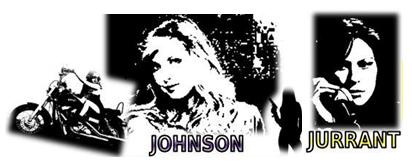
CD: And what about the sexy female leader of ‘S.W.O.R.D.’ – Jana Jurrant?

TGM: Well, the organisation needed its roots and reasons to exist, so ‘Jana’ is the perfect character for this element of the story. It was Jana who realised Goldie’s potential in becoming an operative and therefore presented her with the tools and the challenges and helped her to develop and learn the required skills to face those challenges. Their chemistry evolves around their professional relationship, but they both have a similar taste in men, a love of classic cars and martial arts. Goldie stands at a fair height of 5’8″ and Jana at a towering 5’10” and they’re both a ‘fitness’ force to be reckoned with.

Johnson + Jurrant

CD: What made you choose the timeline of 1995 to 2008 in which to deliver the story?

TGM: Well, Goldie was born in 1968 so I thought having the story develop from the time just before her 27th birthday in 1995 was really ideal. At that point, there’s a great sense of who she is, what she’s been through, and where she’s going. Therefore, the very final story will take us to the year 2008 when she is 40 years old.

CD: The next story in the serial, entitled “The Song Remains The Same” will see her aboard The Silver Meteor heading for South Florida. What influenced this idea?

TGM: I thought it was a good idea to expand the location setting within the story. But, having her travel on the Meteor train also didn’t limit her access to the tools she requires in order to carry out the assignment, and I found it a good way to interweave the crime-related aspect into the story within the journey. I’ll continue to research other locations and travel possibilities for the remainder of the serial.

CD: There are some interesting concepts already planned, such as the 3-part story ‘arc’ entitled, ‘Harmony’s Voice’ – why was it necessary to have this type of idea within the serial?

TGM: The idea behind it was to represent the changes that have taken place in Goldie’s life at that juncture in the serial. Therefore, a considerable amount of character development is unfolding whilst maintaining the crime-fighting aspect of the storyline. ‘Harmony’s Voice’ is actually the name of a band in that story idea, so the music element is still a prominent force.       (interview continues below…)

The Song Remains The Same promo

CD: What inspired the idea for the character’s theme tune?

TGM: It was a concept that allowed me to further develop the dramatic tension and action that surrounded the character’s development. So, it was purely for writing purposes but it appears to have taken on another dimension in respect of Goldie. The theme is an adapted variation on John Barry’s “The Persuaders!” theme and it’s performed by Bing Satellites. I’ve retitled it “Family Persuasion” for the story in relation to another element that is referenced throughout its timeline. Alternatively, it’s simply called “GOLD1E’s Theme” and you can listen to it at the following link: “FAMILY PERSUASION”

CD: Finally, the first story of the serial, “A Purple Reign” is available to read for FREE via this blog and Wattpad. When will the complete “GOLD1E” ebook be available for purchase?

TGM: In approximately 18 months to 2 years time. However, I’ve still yet to decide on which publishing platform it will be available from, so watch this space. The first two parts of “A Purple Reign” are now combined on this blog at this link: “A PURPLE REIGN”. And there’s also a link on there for the final part which is only available to read via Wattpad. However, the complete “A Purple Reign” on Wattpad is at the following link:

GOLD1E promo

Goldie now with her very own dedicated Facebook and Twitter profiles at the following links below:

Goldie Facebook Page

FACEBOOK

“GOLD1E”/”A Purple Reign” characters and contents/Blog Interview – Copyright ©2012, 2013, 2014, 2015 by Tony G. Marshall and Cosmic Dwellings. All Rights Reserved.

Posted in Crime, Music, Short Story, Short Story Serial, Thriller | Tagged , , , , , , , , , , , , , , , , , , , , , , , , , , , , , , , , | Leave a comment

PINK FLOYD: ‘The Wall’ Turns 35 – Roger Waters Revisits Pink Floyd’s Enduring Rock Opus | Billboard

Roger Waters: The Wall...
Billboard Touring Awards: Roger Waters, Neil Diamond, Bruce Springsteen Win Big

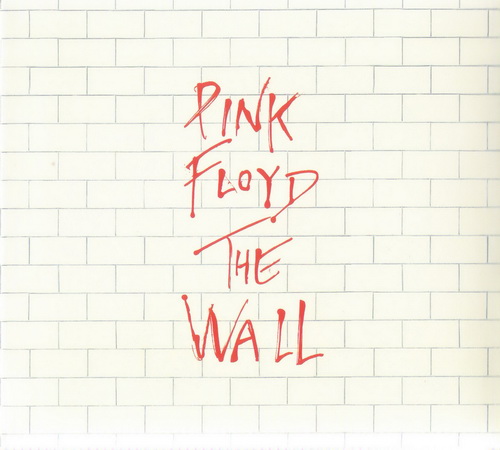
Pink Floyd’s The Wall — a dark and enduring rock masterpiece that deals with personal alienation juxtaposed against a backdrop of war and government corruption — has been presented in many formats over the years. First came the 1979 double album (co-produced by Bob Ezrin) that spent 15 weeks a top of the Billboard 200 album chart and became not only one of the most successful releases in Floyd’s catalog (second only to 1973’s Dark Side of the Moon), but also the last album to feature the band’s classic lineup of Roger Waters, David Gilmour, Nick Mason and Richard Wright.

Following a plagued 1980 tour where the album was presented in its entirety, the band released the 1982 film Pink Floyd: The Wall starring Sir Bob Geldof, which instantly became a cult classic. In 1990, Waters and several high-profile guests — including Cyndi Lauper,Bryan AdamsSinead O’ConnorJoni Mitchelland many others — staged The Wall as a benefit concert in Berlin, commemorating the fall of the Berlin Wall eight months earlier. Most recently,The Wall was rebuilt as an ambitious, technically stunning stadium tour that began in September 2010 and rolled on for more than three years, eventually becoming the fourth highest-grossing tour in history. As we celebrate the 35th anniversary of the original album’s release on Nov. 30, we revisit an exclusive 2013 Billboard interview with Waters, the creative force behind each of The Wall’s captivating incarnations… (continues below)

The Wall PF

[spotify http://open.spotify.com/album/33p78EyTp6esCBodi24Pzx]

Billboard: Throughout your career you’ve been an artist who looks forward and explores. So what is it about The Wall that makes it worthy of such attention and reassessment?

Roger Waters: All those years ago when I wrote this piece, I thought it was about me, and about feelings that I had about my Dad being killed at Anzio [in Italy during World War II], how much I missed him, and the fact that I’d made some really poor choices in relationships with women — all of that crap. Which it was.

But in the intervening 33 years, I’ve realized that because of the theatrical construction of the “wall,” which was an idea that I had back in ’77 because of my disaffection with big audiences and stadiums and all that, the power of the metaphor lends the story a much more universal vision and appeal. So I’ve come to realize it’s not about me. It’s about anybody that has suffered the loss of a loved one in some kind of conflict, whether it be war or something else. It’s about the problems we all face with errant authority, or all the difficulties we all have in relationships with one another, whether they’re sexual relationships or political/international relationships…(continues below)


Video: Pink Floyd performs The Wall live at Nassau Coliseum, Long Island, NY – February, 1980

It’s well documented that you were unhappy with the overall experience of the first Wall tour. What went wrong?

I remember doing the shows [back in 1980]. They were a nightmare. Everybody would tell you exactly the same. I remember Earl’s Court, we had separate [trailers] as dressing rooms, the four of us, and they were all circled like the pioneers in covered wagons, and all the doors faced outward. Isn’t that great? There was so little community by then. And that’s not to knock any of us. David, Rick, Nick and I were no longer together, so we faced outwards. We did the work, and the work wasn’t bad. I still own all the film of those, which I’ve been editing a bit, and I might even release it at some point.

We’d finished as a group then, there was nothing going on at all. What we were doing on that tour was performing this thing that I’d largely written. Dave contributed to it a little bit, and so did Bob Ezrin, to “The Trial.” But mainly it was something I’d written that the four of us were performing because we hadn’t quite arrived at the point where we were brave enough to not be together any more. And we eventually arrived there. There’s no guilt or shame involved in any of it, it’s an organic thing. And we eventually, a few years later, arrived at a place where we realized, “Wow, this is not healthy any more, we shouldn’t be doing this.”

Pink Floyd’s 15 Albums, Ranked From Highest to Lowest Charting

What inspired you to rebuild The Wall for the elaborate 2010 stadium tour?

[What] excited me about revisiting the piece … was making a version that would work in stadiums and ballparks and football stadiums, which is ironic, because my starting point was my disaffection with that situation. But I’ve come to realize that not only does it work in big spaces, its appeal is such that people in big spaces feel intimately connected with the message.

In the second act, I sing “Vera” walking down steps at the bottom of the stage, and in the last verse, I’m just behind the curtain of the stage, and I actually step out and sing the last verse — “Vera, Vera, what has become of you?” — and nobody’s looking at me, they’re all looking at the screen: a young girl in a classroom meeting her father who’s just come back from Iraq or Afghanistan or somewhere. And as I sing the words, “Does anybody else feel the way I do?” I see lots of lips in the audience moving, and I know that it’s not just anybody else that feels the way I do. They all feel the way I do. It’s just the reality of living a life where those feelings get expression and can affect governments and foreign policy. There is a wall between us and the realizing of our dream of peace…(continues below)


Video: Roger Waters’ Keynote Q&A at the 2013 Billboard Touring Conference

Pink isn’t a character that’s ever particularly happy, and I presume you were struggling with certain things when you wrote that character.

Yes.

But now you seem like a happy guy. So do you still relate to Pink?

I feel much less of a victim now. I’ve taken control of my life. I’m capable now, 30 years older and a little bit wiser, of resolving a lot of the issues that I wasn’t capable of resolving at the time.

After Endless River: More Floyd Music on the Way?

You’ve said that the loss of a father is the “central prop” on which The Wall stands. That angle of it, as I know, doesn’t go away. You live with it.

You live with it. But if it’s in any sense a gift — and I may get a bit wobbly here, because it means a lot to me — the gift is it encourages us to empathize with others. I don’t know if you know or not, but we have 20 vets we give tickets to every night, and they come backstage at halftime, so I spend most of my 25-minute break with them. I sign photographs, and we talk a bit, but we never talk politics, because that would be entirely counterproductive. But somehow they get that, whatever our politics might be, that I empathize with their situation. I don’t invite them backstage because I applaud American foreign policy or because I’m jingoistic. I invite them backstage because I feel that to some extent I understand not only their plight — a lot of them have been wounded physically, very badly, but also been mentally scarred — but also that their families suffer, and they suffer in the same way that I suffered as a kid.

There was one guy about 70 or 80 shows ago — he was an older guy, a Vietnam guy — he stood back and he didn’t want a photograph or an autograph, but I noticed him and he just watched me. And when I was leaving the room, he just sort of stopped me, so I paused for a minute. I was just about to go back onstage. He looked me in the eye and he said to me, “Your father would be proud of you.” And I was fucked. I couldn’t speak. It was such a weird, emotional moment. I kind of swallowed a couple of times, and then I went on and we did “Hey You” and we carried on with the second half. Because, as you know, the show must go on. But it was deeply moving.

via ‘The Wall’ Turns 35: Roger Waters Revisits Pink Floyd’s Enduring Rock Opus | Billboard.

Posted in Album, CD, Concert, DVD, Film, Live, mp3, Music, Pop, Rock | Tagged , , , , , , , , , , , , , , , , , , , , , , , , , , | Leave a comment

DEEP PURPLE: Rock & Classical Married – uDiscover

Deep Purple...

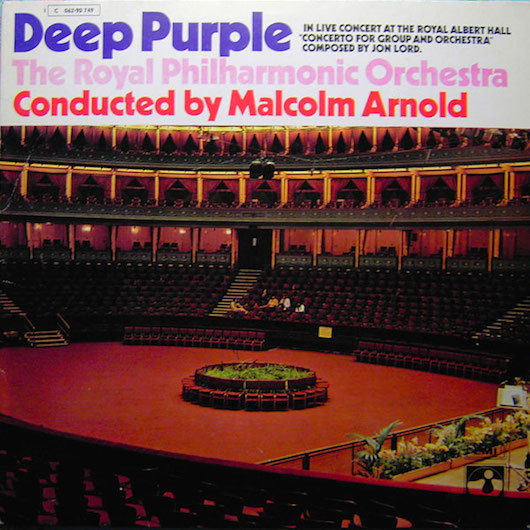
These days we’re very used to the worlds of rock and classical music coming together. In 1969, for the most part, they lived at very different addresses, until the composing genius of Jon Lord brought them together in the groundbreaking ‘Concerto For Group And Orchestra,’ performed exactly 45 years ago today by the powerful combination of the Royal Philharmonic Orchestra and Deep Purple.

Here’s the third movement (‘Vivace-Presto’) of the piece, which shows both the majesty of the orchestra, conducted by the revered Sir Malcolm Arnold, and the commanding presence of Deep Purple as they were emerging as one of Britain’s finest new rock forces. Watch in particular for brilliant solos by Lord, drummer Ian Paice and the potent playing of lead guitarist Ritchie Blackmore.

Purple performed the ‘Concerto’ once more, in California in 1970, this time with the Los Angeles Philharmonic, after which Lord’s score was, rather improbably and upsettingly, lost. After Dutch composer Marco de Goeij restored the score by annotating it from the video and audio recordings of the 1969 performance, the band were able to stage it again, this time with the London Symphony Orchestra but again at the Royal Albert Hall, 30 years almost to the day since the first concert, on September 25 and 26, 1999. There was a guest vocal appearance alongside Purple by Blackmore’s former Rainbow colleague Ronnie James Dio, as a triumphant night was reenacted.

Here’s the album of the full 1969 show, which became Purple’s first UK chart album, peaking at No. 26 early the following year. In the US, where the band’s three early albums had all charted in 1968 and 1969, it reached No. 149 in an eight-week run.

As we reported in July, ‘Celebrating Jon Lord,’ the concert held in Jon’s honour at the Royal Albert Hall in April, is released on DVD, Blu-Ray and CD by earMUSIC next Monday (September 29).

[spotify http://open.spotify.com/album/2MDlquYiN2cUsTh5kt2mPE]

Rock & Classical Married By Deep Purple – uDiscover.

Posted in Album, Blues, CD, Classical, Concert, DVD, Guitar, Instrument, Instrumental, Live, mp3, Music, Rhythm and Blues, Rock | Tagged , , , , , , , , , , , , , , , , , , , , | Leave a comment

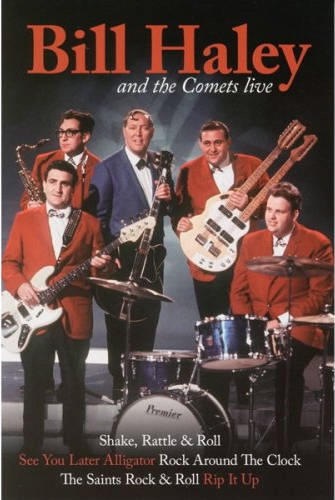
BILL HALEY – “Rock Around The Clock” | This Day In Music

The first Rock ‘n’ Roll star.

Haley was one of the earliest acts to bring rock and roll to the attention of white America and the rest of the world. He sold over 60 million records during his career.

As a rule, people don’t like new things. Or is it the media who don’t like change? With any new craze, we – the public are always warned about the hidden dangers of the ‘new fad’.

This happened at the birth of Rock & Roll.

Fans of rock ‘n’ roll music were warned that tuning into music on the car radio could cost you more money. Researchers from the Esso gas company said the rhythm of rock & roll could cause the driver to be foot heavy on the pedal, making them waste fuel.

Rock ‘n’ Roll fans in Cleveland aged under 18 were banned from dancing in public (unless accompanied by an adult), after Ohio Police introduced a law dating back to 1931.

In 1955, after complaints from his neighbours, Rock ‘n’ Roll fan Sidney Adams was fined £3 and 10 shillings, ($9.80) by a London Court after playing Bill Haley’s “Shake Rattle and Roll” all day at full volume.

Haley was always an unlikely pop star. Blinded in his left eye as a child due to a botched operation, he later adopted his distinctive spit-curl hairstyle to distract attention from his blind eye. He wasn’t sexy, he looked more like a bandleader or your uncle than a rock ‘n’ roll star.

William John Clifton Haley was born at Highland Park, Michigan. His father, William Albert Haley was from Firebrick, Kentucky. His mother, Maude Green was English, she came from Ulverston in Lancashire and had emigrated to the States during her teens.

At home, Bill was surrounded by music, his father played Banjo, his mother who had been classically trained, taught piano. Little did Bill know that later in life he would be responsible for bringing a new dangerous beat to popular music. Haley paid his dues. In his late teens, Bill found work playing the local amusement parks, his first break came when he signed on with ‘Cousin Lee’s Band’ who had a popular radio show. Haley sang, played his guitar and yodelled. He also worked with a traveling medicine show. At the age of 22 Haley was hosting a local radio programme on the newly formed station WPWA. When “Rock Around the Clock” appeared behind the opening credits of the 1955 film Blackboard Jungle it soared to the top of the American Billboard chart for eight weeks. After the record rose to #1, Haley was quickly given the title “Father of Rock and Roll,” by the media.

Bill and his Comets

A self-admitted alcoholic, Haley fought a battle with alcohol into the 1970s. Nonetheless, he and his band continued to be a popular touring act. In 1980 it was reported that Haley had a brain tumor, a doctor at the clinic where Haley had been taken said, “The tumor can’t be operated on anymore.” 

On 9th Feb 1981 Haley was found dead – fully clothed on his bed at his home in Harlingen, Texas from a heart attack. 

So there we have it. The final twist in the tale is all of this almost didn’t happen. The recording session in 1954 was about to be cancelled because the band were traveling on a ferry that got stuck on a sandbar en route to New York from Philadelphia. 

Once at the studio, the producer insisted the band work on a song entitled “Thirteen Women (and Only One Man in Town)” – which was going to be Haley’s first single for his new label Decca. Near the end of the session, the band finally recorded a take of “Rock Around the Clock,” but Haley’s vocals were drowned out by the band. A second take was quickly made with minimal accompaniment. Decca engineers later combined the two versions together into one version. And that is the song as we know and love. 

The same year, newer stars came and took over the charts – Elvis, Jerry Lee, Little Richard – but William John Clifton Haley did change the face of popular music as we know it – for ever. Haley died on 9th February 1981. 

via Rock Around The Clock.

Posted in 45rpm vinyl single, Music, Rhythm and Blues, Rock, Rock 'n' Roll, Song | Tagged , , , , , , , , , , , , , , , , , , , , , , , , , , , , , , , , , , , | Leave a comment

FABULOUS FENDERS | uDiscover


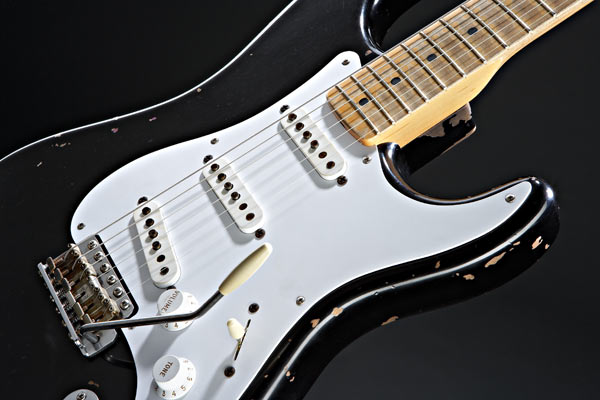
Fender Stratocaster

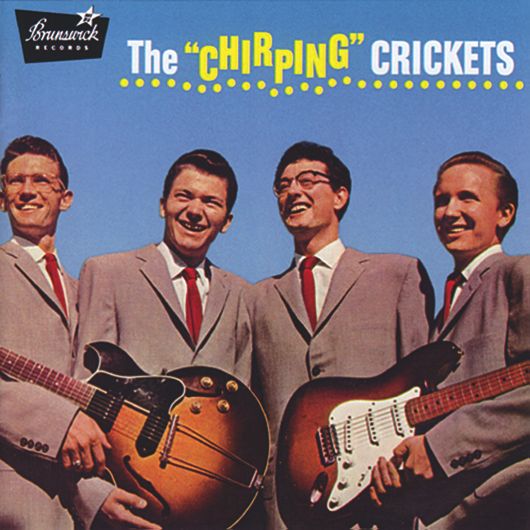
Fender guitars are iconic, they have a look, a look of sleek refinement that says play me and play me loud, ply me subtly and play me well. For many people of a certain age their first awareness of the Fender Stratocaster was on the cover of the 1957 Chirping Crickets album on which Buddy is clutching his guitar. Two years earlier Buddy walked into Adair Music in Lubbock and traded his first electric guitar for a brand-new Fender Stratocaster – back then they cost a shade over $300

The Chirping Crickets

Four years later on the cover of the first Shadows album Hank Marvin is holding, admittedly not as visibly, his Stratocaster that he had bought because of seeing Holly’s on the Cricket’s album. Ask just about any British guitarist that came after the Shadows and most every one will admit to having been impressed with Hank’s red and white Stratocaster.

Before the Stratocaster there was the Telecaster, the first solid-body electric guitar; the initial single-pickup production model appeared in 1950 and was called the Esquire. It’s known for its bright, rich, cutting tone, referred to as the telecaster twang as well as its mellow, warm, bluesy tone. It all depends on which pickup, is used – “bridge” pickup for the twang and “neck” for the mellow tone.

In the early days it was country musicians that favoured the Telecaster. James Burton who played with Elvis and Rick Nelson was one of its early stars. Eric Clapton played a Tele while he was with the Yardbirds and Blind Faith. King of the Chicago Blues, Muddy Waters was another who favoured the Telecaster as did Stax man Booker T and the MG’s guitarists, Steve Cropper and Albert Collins. At the Beatles last ever live appearance, on the roof of the Apple building, George Harrison played a custom made Telecaster. Jimmy Page played one on the solo on ‘Stairway to Heaven’.

The Stratocaster came along in 1954 and so sixty years later it has been a mainstay of rock bands and just about every other kind of band ever since. Today you can buy an Eric Clapton signature Stat, along with ones endorsed by Jeff Beck, Stevie Ray Vaughan, John Mayer, Buddy GuyRobert Cray, Ritchie Blackmore and Kenny Wayne Shepherd. If you want one like Buddy Holly is holding on the cover of the Chirping crickets album there’s a 60th anniversary commemorative Stratocaster that is retailing on the Fender website at $1500.

Dire Straits/Mark Knopfler

As soon as you hear the opening notes of Dire Straits’ ‘Sultans of Swing’ played of course by Mark Knopfler you know it’s a Strat, the tone gives it away, but you need to be a guitarist of Mark’s stature to make it sing so well.

Eric Clapton used his Stratocaster he called ‘Brownie’ on the Layla and Other Assorted Love Songs album. Eric had bought Brownie at London’s Sound City while touring with Cream in May 1967 for $400. It has an alder body, two-tone sunburst finish, a maple neck, skunk-stripe routing and black dot inlays and was manufactured in 1956 and the serial number is 12073 and can be seen on the cover of his solo album Eric Clapton. In June 1999 Clapton sold the guitar at Christie’s in New York City to help raise funds for his Crossroads Centre. Brownie sold for $497,500 becoming the most expensive guitar ever sold at the time only to be eclipsed by Clapton’s other favourite guitar Blackie on that sold for $959,500 in 2004. Brownie can be seen at the Experience Music Project in Seattle, Washington.

Another iconic Fender track is the Rolling Stones’ ‘Satisfaction’, it’s Keith Richards the riff-master at his very best. In 1981 when the band played Hampton Coliseum ‘Satisfaction’ was the encore. Mick draped in his Union Jack/Stars and Stripes cape and with with Keith riffing and hundreds of coloured balloons showering down from the roof, a fan charges on stage. Keith swerves, the fan comes back for a second pass and in an instant Keith whips off his Fender and smacks the guy round the head with it. The fan stumbles, security escort him from the stage and Keith carries on as though nothing untoward has happened. Despite the attack the Telecaster stays in tune. According to Keith, “The damn thing stayed in tune, and this is the greatest advertisement for Fender that I can give you.”

We have put together a 60 track playlist in celebration of Fender and aside from what we’ve already mentioned there’s music from Pink Floyd with Dave Gilmour’s memorable soloing on ‘Comfortably Numb’, Joe Walsh in his James Gang days, Jimi Hendrix, Deep PurpleThe Beach BoysCreedence Clearwater Revival, and Cream along with many other tracks, some well known, some not so well known. What do you think we’ve left out?

[spotify http://open.spotify.com/user/udiscover/playlist/4llQq4HySENzqxF6HyFBA8]


via Fabulous Fenders | uDiscover.

Posted in Guitar, Instrument, Instrumental, Live, Music, Studio | Tagged , , , , , , | Leave a comment

BRYAN ADAMS Remembers The Fifth Of November – uDiscover


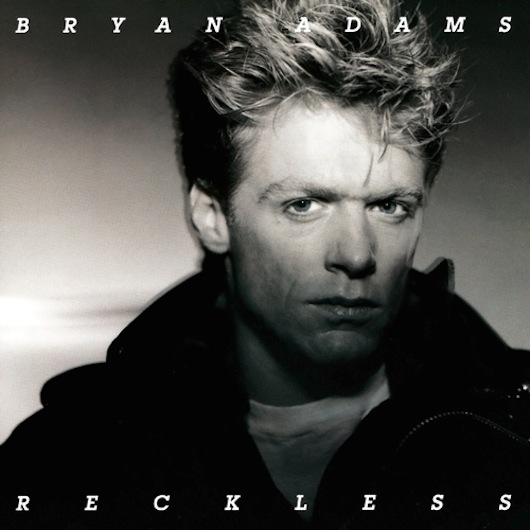
Reckless

November 5 is a significant date in the life of Bryan Adams. On this day in 1984, the Canadian rock star and acclaimed photographer released his multi-million-selling ‘Reckless’ album, on his 25th birthday. So congratulations are in order, as the album hits 30, Bryan turns 55, and Universal prepare to unveil a brand new 30th anniversary edition, in double vinyl, Super Deluxe and Blu-ray versions that you can pre-order.

The four-disc CD set, released like the other editions on November 17, is housed in a book that includes the 2014 remastered audio and seven bonus tracks in both standard cd and Blu-Ray formats; the ‘BBC in Concert’ Hammersmith Odeon show of April 1985; and a DVD of ‘Reckless – The Movie.’

Even more excitingly for Adams’ millions of fans, the set also includes the previously unissued track, ‘Reckless’ which debuts on Vevo today. We have it right here for you to access: “RECKLESS”.

Worldwide sales of ‘Reckless’ are now estimated at 12 million worldwide, approaching half of those in the US alone, and a million in Canada, qualifying for a Diamond Award there. That’s an extraordinary result for an album that was a real slow burner, spending two weeks at No. 1 on the Billboard 200 fully nine months after release, in the summer of 1985.

Adams’ ‘Summer Of ‘69’ was well on its way to becoming an anthem when the album hit that US chart summit. Indeed, the LP became almost a greatest hits collection in its own right, starting from the moment that ‘Run To You’ entered the charts in the week of the album’s release, on its way to No. 6 in the US. In the new year of 1985, the single became Adams’ first to make the British charts, peaking at No. 11.

The subsequent singles from ‘Reckless’ weren’t big UK hits — almost unbelievably, for such a rock staple, ‘Summer Of ‘69’ peaked at No. 42 there — but they were major successes for Adams in the US, establishing him as one of the biggest new rock stars of the 1980s. After ‘Somebody’ had reached No. 11, the power ballad ‘Heaven’ went all the way to No. 1, quite a result for a song recorded two years earlier for the film ‘A Night In Heaven,’ starring Christopher Atkins.

And still the hits from ‘Reckless’ kept coming, making Adams a mainstay of top 40 radio all through 1985 and into ’86. After ‘Summer Of ‘69’ reached No. 5 on the Hot 100, there were two more top 20 singles to come in ‘One Night Love Affair’ and the memorable duet with a resurgent Tina Turner, ‘It’s Only Love.’

Adams begins his UK tour in support of his new album ‘Tracks Of My Years’ on November 13 in Nottingham.

Get your copy of ‘Reckless’ now:

Pre-order the Super Deluxe edition from the official uDiscover store

Buy from Amazon

Download from iTunes

For more from Bryan Adams, explore our dedicated uDiscover artist page

[spotify https://play.spotify.com/album/0dLBZmYzmQRZOz4cJG05DA]

via Bryan Adams Remembers The Fifth Of November – uDiscover.

Posted in Album, CD, Music, Pop, Rhythm and Blues, Rock | Tagged , , , , , , , , , , , , , , , , , , , , , , | Leave a comment

T.REX’s ‘Get It On’ (‘Bang A Gong’)…For A Second Time | uDiscover

t-rex-get-it-on-2007-e1406217262140

by uDiscover

It was March 1971 when record producer Tony Visconti arrived in Los Angeles, he was there with Marc Bolan and T.Rex to work on some new tracks, including ‘Get It On’ that became the band’s next single. Tony takes up the story…

“I was walking down Sunset Boulevard, wearing shades and sweating in my t-shirt. I went to Tower Records; at the time it was the largest record shop in the world, where I heard Bowie’s ‘The Man Who Sold The World’ blaring out from the loudspeakers. In the middle of the almost empty store a sales clerk was playing ‘air bass’ to my bass part on ‘She Shook Me Cold’. I couldn’t resist it: ‘I’m Tony Visconti, the producer and bass player of that song.’ ‘No way!’ I had to show him my driver’s licence before he would believe me.”

Visconti and Marc Bolan were in LA to record with Howard Kaylan and Mark Volman who had been the singers in the Turtles, the band that had a world wide hit with ‘Happy Together’ in 1967. After leaving the Turtles they had to change their names to Flo and Eddie as contracturally their former record label owned their names!

According to Mark Volman, “Actually we first met Marc when he was on Fly Records with Tyrannosaurus Rex. He came to the US as an opening act for Flo and Eddie. So we hung out with him. When we toured the UK with Zappa we looked him up. He was doing things like ‘Seagull Woman’ I think and then he had ‘Hot Love’. We ended up recording a lot with Marc, we contributed the high voices, and T Rex became all that high voiced harmonies. We did ‘Electric Warrior’, ‘Jeepster’ etc and appeared on 10 or 12 of his records. Including ‘Bang A Gong’.”

‘Bang A Gong’ was what T.Rex’s single ‘Get it On’ was called in America as there was already an R&B single of that name and it was felt it would avoid confusion. Tony Visconti recalling the story of recording ‘Get It On’.

“Before going into the studio we rehearsed the new material at Howard Kaylan (Eddie)’s Laurel Canyon house. All his windows and doors were open and we could smell the orange trees that surround his pool. I’d never ever met anyone with a swimming pool in his back yard. Mickey Finn and Steve Currie staged a fake slow motion gunfight by the pool, which I filmed on my Super 8 cine camera, before we retired inside to routine the back-up vocals for a new song called, ‘Get It On’.
Rehearsing in such a lush house, close to a private swimming pool was a surreal experience. Marc was a prolific songwriter. He had a lined schoolbook chock-full of lyrics and chord symbols. He would open the book at the beginning of an album, and then when we had enough tracks recorded – say about 17 – he’d close the book. ‘Get It On’ was just one of about 50 or 60 he had in the book at the time.
When I first heard it, only the day before we recorded it, it sounded like a hit to me. The next day we drove what seemed like miles and miles (typical of distances in LA) to Wally Heider Studios and recorded ‘Get It On’ – the sunshine seemed unbearable to us, with our maggot-like complexions from grey London. Our engineer was a very helpful, and eager, Rik Pekkonin; I’d seen his name on many record covers. We did it in one evening, complete with overdubbed backing vocals from Flo and Eddie – we knew we had our next single.”

Back in London we were adding my string arrangement to ‘Cosmic Dancer’ in Trident Studios when a thought occurred to me. ‘Marc, you do realize that both the last two singles have strings on them and there are none on ‘Get It On’?’

He went pale on the spot. ‘Tony we must have them, can you write something?’ With the string players patiently sitting in their seats I quickly dictated the three notes the strings were to play on the chorus. Without a score to read from I simply pointed to them when they were meant to play the three notes and repeat them when necessary. They had to watch me carefully to stop playing the three notes because the repetition was different each chorus

The counterpoint to working on T. Rex was brought into even sharper focus in July with the release of ‘Get It On’; it was the beginning of T. Rextasy. Although the two big hits had catapulted Marc and the band up several rungs on the ladder, ‘Get It On’ took them to an altogether different place; it become universally the most popular T. Rex song. “

‘Get It On’ became T.Rex’s second UK number 1 on 24 July 1971

Finally a couple of pieces of trivia. The last line of ‘Get it On’, “Meanwhile, I’m still thinking…” was a nod to Chuck Berry’s song “Little Queenie,” which includes the same lyric and inflection. The saxophonist on the record is King Crimson’s Ian McDonald. We would also like to dispel a myth surrounding Rick Wakeman playing piano on this record. The pianist was in fact Blue Weaver who had been in Amen Corner and Fairweather and was soon to join the Strawbs; Blue was later in the Bee Gees band for many years. He told us this week. “Yes it’s true although, it’s been quoted that Rick played, but Tony Visconti said it was me and I also did the piano gliss on ‘Telegram Sam’. The greatest kick was watching Elton mime to my part on TOTP.”

The extracts by Tony Visconti come from his book, Tony Visconti: The Autobiography: Bowie, Bolan and the Brooklyn Boy

[spotify http://open.spotify.com/user/udiscover/playlist/7q7XSfHsdonUASWROz9H51]

19710731-Get-It-On-No.1-Disc

Posted in 45rpm vinyl single, Music, Pop, Rhythm and Blues, Rock, Song | Tagged , , , , , , , , , , , , , , , , , , , , , , , , , , , , , , , , , , , | Leave a comment