BRIAN WILSON’s ‘SMiLE’ vs. THE BEACH BOYS’ ‘The Smile Sessions’ | Consequence of Sound

Ten years later, Dean Essner speculates which one’s the real deal.

BY ON SEPTEMBER 27, 2014, 6:25AM

Brian Wilson's SMiLE

How do you write a follow-up to Pet Sounds? Such was the dilemma of The Beach Boys architect Brian Wilson, who, at the time, was getting pulled in a variety of musical directions.

First, there was his experimental ambitions, fueled by a consistent diet of hallucinogenics as well as his partnership with composer and lyricist Van Dyke Parks that began in 1966. There was also the loud, disapproving choir of bandmates, fans and record company executives clamoring for the simple pop music days of yore. He’d eventually fail to satisfy both, and put out nothing. But before the stress and frustration of the various influencing voices in his life became too much to take, Wilson worked on SMiLE: a psychedelic rock collage of disjointed Americana– from the prairies to the tropics to the cities and then back again.

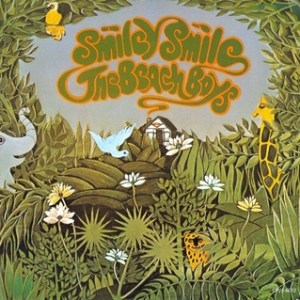
Brian Wilson collageHe famously scrapped the project in 1967, but some of its fundamental pieces would come out in drips and drabs on various Beach Boys releases: “Cabin Essence” thrown in the middle of the otherwise uneven 20/20, “Wind Chimes” in wispy, stripped-down form on the haphazardly compiled Smiley Smile. Even album centerpiece “Surf’s Up” got a whole record named after it. These small bits of insight would only further the mystery.

In 2004, Wilson went back into the studio with Parks and a new band to rerecord his masterpiece, allowing for the album’s initially-intended arc to finally come to realization. Upon the 10th anniversary of that record – titled Brian Wilson Presents SMiLE – we provide our own deconstruction, compiling a list of pros and cons in reference to the original Beach Boys demos (which finally saw a proper release in 2011) as well as the album’s overall folklore. And, of course, there’s the following overarching question: Does the 2004 release do justice to SMiLE’s legend or should the record have just remained a series of enigmatic scraps?

Pro – The “Surf’s Up” suite in its full form for the first time:

“Surf’s Up” is one of Brian Wilson’s finest and (most melancholy) achievements, a multipart symphony of sorts about leaving behind one’s nostalgic past. In the case of his band, that past is centered on writing songs about young love and frivolous beach play, making the title a brilliant, unsettling double entendre. As good as the song is as a standalone achievement as it exists on the 1971 album Surf’s Up, though, it needs its whole conceptual arc, which includes the tracks “Wonderful”, “Song For Children”, and “Child Is The Father Of The Man”. These set the tone for what’s to come with “Surf’s Up”, showcasing the song’s melody for the first time and slowly building tension.

Pro – The solidification of the album’s theme:

As aforementioned, SMiLE is a trek through America and its vastly diverse landscapes and essences: breezy, tropical Hawaii on “Roll Plymouth Rock”; rural farmlands on “Barnyard”; the quiet, tranquil forest on “Wind Chimes”; and the chaotic hustle of the city on “Mrs. O’ Leary’s Cow”. In individual form, each song vividly signifies one place. But on Brian Wilson Presents SMiLE, each stray location suddenly becomes a special part of a larger whole.

Pro – Van Dyke Parks finally gets his due

Van Dyke Parks

Much of SMiLE’s detailed, intricate storyline can be attributed to Van Dyke Parks, who conceptualized the project with Wilson and wrote a large portion of the album’s lyrics. But it took a long time for people to realize that. Even if you’re a Beach Boys purist and don’t believe that Brian Wilson Presents SMiLE should exist in the first place (without the help of his bandmates), then you should at least feel good for Parks. One can only imagine how draining the original 1966 sessions were, and it’s nice to know that all the work he put in finally amounted to something.

Con – Superfluous lyrics:

2011’s The Smile Sessions suggested an album largely unfinished, however some of the instrumental passages that lacked lyrics, I’d argue, were perfect as is. On Wilson’s 2004 version, in an attempt at filling up some of these empty spaces, Parks penned new words and I’m not sure all of them are necessary. For instance, on The Smile Sessions, “Holidays” (on Wilson’s edition it’s “On A Holiday”) has no vocals at all, allowing for the track’s wind instruments and marimbas to gorgeously swell at the front of the mix. But on Brian Wilson Presents SMiLE, Wilson sings a forgettable line about pirates, cluttering up the otherwise simple, feathery melody.

Con – It needs the Boys:

If I were pressed to pick my favorite moment on The Smile Sessions, it’d be the final movement to “Cabin Essence”, where the strings, harpsichord, and bass harmonica begin to furiously swirl and Mike Love sings that immortal line of bizarre yet harrowing psychobabble that he notoriously hated: “Over and over/ The crow cries/ Uncover the cornfield.” We still get that moment on Wilson’s 2004 version, but there’s less anger and befuddlement in his voice. Part of the appeal of The Smile Sessions is it showcases the beautiful, half-completed product above the bubbling-over, in-band turmoil below the surface. And the music is better for that juxtaposition. There may have been fighting amongst the Boys, but sometimes the best art is born out of such natural tension.

Con – The end of music’s greatest folklore
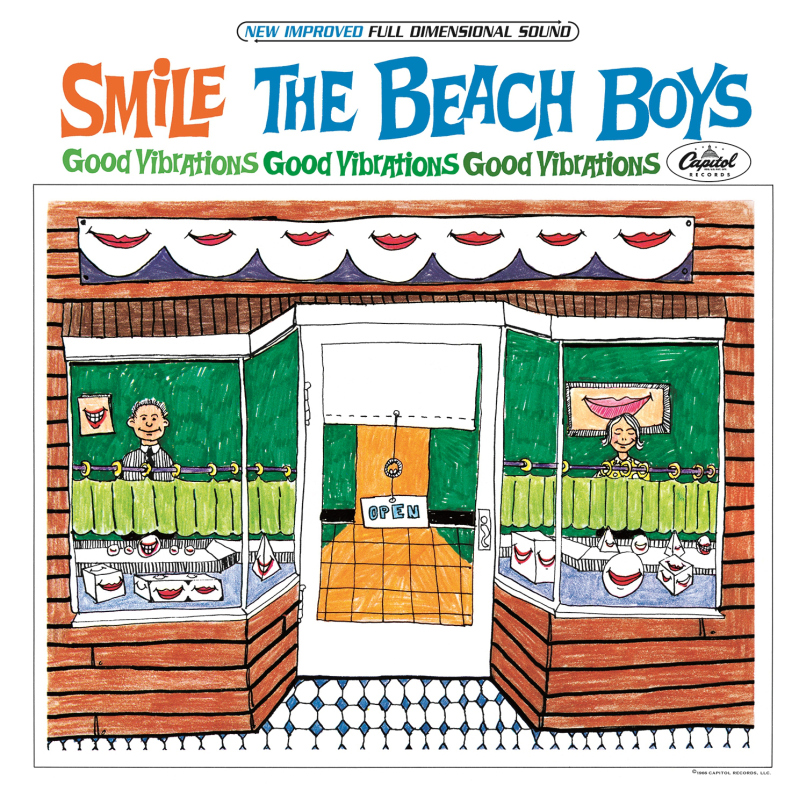
SMiLE

Before 2004, it was a tradition amongst Beach Boys fans to re-imagine your own ordering for SMiLE using the tracks that had already been released. But Wilson’s record renders that practice useless. There was a time when SMiLE was like a book that had been incinerated in a fire, with only stray pages or lines here and there surviving the flames. In essence, because it never made it to the public, it belonged to the public. It was a blank canvas that required everyone’s imagination to come to life. Therefore, it’s hard not consider Brian Wilson Presents SMiLE, as the album to officially end the legend, a letdown in some way.

via Brian Wilson’s SMiLE vs. The Beach Boys’ The Smile Sessions | Consequence of Sound.

A further comprehensive review of The Beach Boys’ “The Smile Sessions”/”SMiLE” can be viewed at the following link:

smile-box-set

A review of the 2001 CD reissue of “Smiley Smile” featuring “Wild Honey” can be viewed at the following link:
Smile Smile

Posted in Album, Blues, CD, Classical, Folk, Instrumental, Jazz, mp3, Music, Pop, Rhythm and Blues, Rock, Soul | Tagged , , , , , , , , , , , , , , , , , , , , , | Leave a comment

THE BEACH BOYS – “The Smile Sessions” | Album Reviews | Consequence of Sound

SMiLE

BY
ON NOVEMBER 03, 2011, 12:00PM

“Say, ‘Oh no, I’m stuck in my french horn.’” “It’s me. Brian. I’m in the microphone. It’s not a buzz. I’m really in here. I’m not kidding.” “Swim, swim, fishy. Swim, swim, fishy.” “Is it okay if I just take one of these carrots? Let me put ’em in my glove compartment.” –

That’s Brian Wilson: erratic genius, musical wunderkind, fabled nutbar, etc. Amongst all the eye-shuttering madness, his troubled character utters such hilarious catchphrases, including everyone’s favorite: “Let’s do one more, let it roll.”

Isn’t that what SMiLE always has been? A great serial? The stuff of rock ‘n’ roll lore? Perhaps one of the only true myths within the genre? On paper, it sure reads like it: “Acclaimed songwriter Brian Wilson loses mind while constructing the highly anticipated follow-up to The Beach Boys’ landmark album, 1966’s Pet Sounds. Once labeled Dumb Angel, the new LP goes by the title of Smile. Reports indicate he’s working with Van Dyke Parks and writing from a sandbox, constructed to his liking in his Beverly Hills home.” It’s a blessing producer Chuck Lorre wasn’t around at the time. Otherwise, we’d be experiencing The Smile Sessions on DVD today – with commentary, no less.

Instead, we’re left with a colossal box set, featuring hours of studio rehearsals, demos, and rare recordings. To fully grasp just how much time was spent in the studio, know there are 34 separate takes for Heroes & Villains here, and that’s only what they’ve made available. If only they had Internet memes back then; could you imagine the “before and after” shots of each musician involved? One Polaroid full of ambition, the next battered, destroyed, and wrecked. It’s easy to lose yourself in the countless studio takes. Little gasps of pure genius here and there. The slow dissolution to it all. The echoes of things to come. It’s a history lesson come to life, and that’s part of the reason the collection here works so well. You don’t have to listen to Wilson – and when we say Wilson, we’re talking about Brian – berate his band and surrounding musicians in that passive aggressive tone of his. But, if you do, you truly appreciate the final offering.

Especially if you’ve committed Wilson’s 2004 offering to memory. It just doesn’t compare anymore. There’s just no struggle within; it had been pacified by then. (That’s not to say Wilson didn’t struggle prior to 2004…) With this version – featuring the original band – Wilson had roped his bandmates in for a long, troubling fellowship that nobody involved had anticipated. Emotions bled into these songs, and unlike the 2004 incarnation, there’s a lot at stake here. Remember, this wasn’t recorded now. It was recorded then. The tensions and drama are wired into the tracks. And, say what you will about Mike Love – there’s plenty to pile on, don’t forget it – but his vocals offered priceless support. Listen to opening track Our Prayer. Both of them. Which one makes your hairs stand up? Which one tickles behind the eyes? Which one sounds like The Beach Boys?

That’s the real deal. Even Wilson himself feels that way. In his recently penned liner notes (as featured in the box set), he concludes, “I’ve often felt that I was on a musical mission, to spread the gospel of love through records. Probably nothing I’ve ever done has topped the music I made with Van Dyke, my old crew in the studio and the voices of my youth – me and The Beach Boys.” Few will disagree. Look no further than the final craftsmanship. Over 40 years later, SMiLE resembles the jaw-dropping entity that it was always destined to be; an aural equivalent of a Georges Seurat piece, if you will.

There’s just always something new to hear – a very telling facet of the work. Now, the real truth behind Wilson’s madness was his unwillingness to disregard the music he heard in his head. This is an attribute that explains the 30, 40, 50 takes. But, boy, did he need it. Take the album’s four key entries: Heroes & Villains”, “Surf’s Up”, “Vega-Tables”, and Good Vibrations. Each track sees Wilson shuffling about this proverbial music room, tuning and tweaking here and there. Then doing it again and again and again. It’s exhausting. It’s overwhelming. But it’s hands down some of the most impacting music of all time. These songs vindicate Wilson. You can’t listen to them without sympathizing with the man. Here’s some perspective: Would you let go of these sounds?

Of course, SMiLE is far more than a handful of four songs. For every inclusion, there are a thousand points of reference: the reflective, rollicking banjo in Cabin Essence, the windmill of harmonies behind Child Is Father of the Man, the cloud-swimming harpsichord that pushes Wonderful, and the instrumental paranoid delusions of The Elements: Fire (Mrs. O’Leary’s Cow). You could rewrite that sentence with a new hallmark for each song a hundred times over before you’d be at a loss for words. It’s that strong.

Truth be told, however, it’s not The Beach Boys’ greatest album. (You really can’t argue with the timeless themes of Pet Sounds. You just can’t.) But, it is their most important one. It also contains the group’s two best songs. Everyone loves “Good Vibrations” to death, and with good reason (e.g. Carl Wilson’s sky-searching vocals on the verse, Paul Tanner’s electro-theremin that still sounds extraterrestrial, and Love’s tender moment on the bridge), but it all chisels down to “Surf’s Up”. Upon hearing a rough demo of it in the early ’90s, Elvis Costello likened it to uncovering an early Mozart piece – how about that, another fella who’s right. There just isn’t any other song like it. Again, it’s all about the myriad moments within. There’s one – just before it breaks into the closing sea of harmonies – where Wilson lightly sings, “Surf’s up! Mmm. Aboard a tidal wave…” and it just crushes you. The undeniable beauty, the eroded innocence, and yet that mystifying assurance… fuck, it smothers the soul. As ol’ Brian would say, “Let’s do one more, let it roll.” Yes, forever, please.

Essential Tracks: “Surf’s Up”, “Good Vibrations”, “Cabinessence”, and “Our Prayer”

The Beach Boys – The Smile Sessions | Album Reviews | Consequence of Sound.

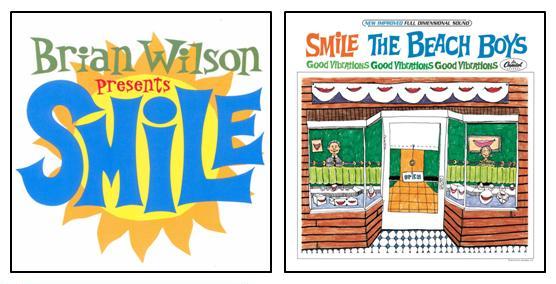
A review of Brian Wilson Presents SMiLE” vs. The Beach Boys’ “SMiLE” can be viewed at the following link:
Smile vs Smile Sessions

A review of the 2001 CD reissue of “Smiley Smile” featuring “Wild Honey” can be viewed at the following link:
Smile Smile

Posted in Album, CD, Instrumental, mp3, Music, Pop, Rhythm and Blues, Rock, Rock 'n' Roll, Soul | Tagged , , , , , , , , , , , , , , , , , , , , , , , , , , , , , , , , | Leave a comment

“GOLD1E” – The Concept Album

Goldie the Concept Album - Copy

Cosmic Dwellings interviews GOLD1E writer, Tony G. Marshall about the idea behind the concept album of lyrical prose dedicated to his main character’s timeline of short stories –

Cosmic Dwellings: What inspired you to create an additional project for the “GOLD1E” serial?

Tony G. Marshall: I suppose the idea stems from having created the lyrics to songs for ‘Jim Maclaine’s ‘Dea Sancta et Gloria” rock opera during the time I was writing the script for the radio play of “That’ll be the Stardust!“. ‘Dea Sancta’ is as a tie-in to that radio project. Therefore, ‘Goldie Johnson’ is given the same music-related treatment for her ‘GOLD1E’ stories. 

CD: Apart from ‘Goldie’, do the lyrics of the potential songs share a common thread throughout their narrative?

TGM: The lyrics depict the elements of each associated ‘Goldie’ story. For example, Whirlpool To Reality”  is the ‘song’ which represents the first story in the series, A Purple Reign” and the lyrical concepts illustrate the darker aspects of that story as seen through Goldie’s eyes in the moment. Therefore, I would say that every ‘song’ being written is a standalone representation for each story but their ‘common thread’ is the main character. 

CD: Why have you decided to give the songs a different title to the actual story they each represent?

TGM: Individual artistic representation. Therefore, each song title is allowed to creatively flow into its own ‘pool’ of destination even though they represent an individual story in the serial. There’s a closer analysis of the first song after this interview (at the end of this article below). 

CD: The 2nd story in the “GOLD1E” serial is called The Song Remains The Same”, however, the song that represents this story is entitled, “Calling! what is the meaning behind this title?

TGM: The title is all to do with having a connection with somebody or someplace, or a place having a calling upon you which has a very magnetic force of attraction, whether it’s for either the right or wrong reasons. I wrote the verses to this song with obviously the locations of the story in mind, but also there’s these fabulous historical musical landscapes that illuminate the concepts within the song. 

CD: Have your songs/lyrics ever been inspired by other well-known songs?

TGM: That can happen from time to time. It happened with a couple of songs from ‘Jim Maclaine’s ‘Dea Sancta”. But, it’s mainly the inspiration behind the melody of another song, not the lyrics. No doubt it may happen again with the ‘Goldie’ project. In that sense it’s good to embark on another angle of ‘attack’ in your creative process. 

CD: Will each song share a particular musical genre or is it your intention to vary the mix of material?

TGM: At this point I suppose the rock genre is a primary focus with ‘Goldie’ being an avid rock music fan, and let’s not forget she does some singing throughout the timeline of stories too, but I would like to think that there’s the potential ideas to write ballad-type songs and soul or r’n’b songs throughout the creation of this concept album.

CD: The latest idea that you’ve come up with for this concept album is to include specially-written voice-over segments at the beginning and end of each song – what has inspired this idea?

TGM: I wanted to further cement the ‘concept’ factor of the project. The idea is unique to its concept. For example, “A Purple Reign” – the first story – has a color theme running through the start of it, so the voice parts reiterate those parts of the story which focus on this aspect. The text of these segments also provide the links in-between each song. 

CD: As you’re not a musician as such, how do you decide if you’re creating a rock song or a ballad-type composition throughout the process?

TGM: I suppose it’s all to do with the themes of each individual story which prompts my intuition toward that decision. Sometimes, I may have a feel for a melody or a chorus which consistently makes its presence felt with certain lyrics or verses. 

CD: Have you ever collaborated with any singer-songwriter musicians for any of your projects?

TGM: No. I did attempt to collaborate with musicians on a previous project. But, as a rule, I don’t like to rely on anyone else to provide inspiration in order to further my ideas of words or lyrics. This is due to the fact that I’ve never really found a musician dedicated enough who has wanted to, or been able to, provide their musical talent to accompany my lyrics. However, I’m not saying that’s a closed chapter or book. If the right type of dedicated musician, or musicians, came along and providing they could bring their enthusiasm and creativity to the project, then I would be willing to discuss such matters. 

*   *   *   *   *   *   *   *   *   *   *

Below, Tony G. Marshall explains the concepts and themes within the lyrical prose of “Whirlpool To Reality” – the lyrics to the song can be accessed via this graphic link:

Whirlpool To Reality

1ST VERSE: 

  • The first verse of lyrics depict the start of the so-called ‘whirlpool’ or nightmare. It’s the river which is illustrated by the “surrounding shivers” .
  • The needles” act as a reference to both the spikey coldness from the river and the Twin Towers of the World Trade Center. Remember, the timeline of the story is pre-9/11.
  • clouds in creases” is exactly that, the “creases” may be caused by the falling dusk or the fact that the clouds are passing over the Twin Towers which is causing them to separate.

2ND VERSE: 

  • The second verse’s “man flailing” is in reference to Goldie’s late husband, Gil whom she sees in the nightmare sequence. Or, at least she assumes it’s Gil.
  • violet cascading” refers to the falling dusk once again.
  • A tempest crying” is a summation of how she feels, what she sees – it’s the whole sequence of events unfolding in a climaxing anxiety all around her.

BRIDGE: 

  • The bridge of the song relates to her reaching for Gil, but “you’re all gone” (in body and spirit) and it’s a “cloud that reigns” – it rules the situation because the dream or nightmare is continuous.

CHORUS:

  • The first part of the chorus obviously confirms the ‘opening door’ (‘the whirlpool’) to her realistic existence. But, she hasn’t quite reached that stage, therefore all actions including “Words spoken” all take on a form of unreality which in a sense makes her wonder if this is all a joke (“Jest”).
  • The second part of the chorus once again confirming that ‘whirlpool’ in the river. But maybe she has just passed through that route to her reality – just before she awakens and the “purple” that is in “reign” is the last thing she can remember before it transforms into the darkness into which she cannot see any further.

3RD VERSE:

  • The third verse takes us into another element of the dream. This time we are in the depths of the river with the “woman’s shadow” (silhouette) which is “below the silence” (in or beneath the depths).
  • “Cutting the eye within my mind” illustrates the effect the water is having on her sight. She’s hoping to see more clearly so that her mind is able to process the images better.
  • Her feelings and perception of the moment also spill over into the next line: “Splintering heart, leading the blind”. 
  • “A child aloft in the arms of innocence” is exactly that. The shadow she sees is as innocent in the situation as the child she holds up. It’s a very evocative combination.

4TH VERSE:

  • In the fourth verse, the “desperate call from the voice’s past” depicts a shout or an echo from the image that she sees. Possibly from the shadow itself.
  • “the mirror” is probably what she sees as elements of her life being magnified in the river. Then, it becomes her very own “looking-glass” from which the “terror” ‘bleeds’.
  • “The hand from above” reaches down to her, but it’s not a ‘saving hand’ or her savior. It’s exactly the opposite.

5TH VERSE:

  • In the fifth verse, we discover they’re the “hands of Satan”. The ‘satan’ of her nightmare. The one who created the nightmare in the first place. His “lust” is conveyed through his touch. His “eyes” also take charge in a “lusty” manner by provocatively enforcing her “doom”.
  • The ‘dream’ continues (“dancing” with her thoughts) as the ‘nightmare’ elements are now reinforced – “soaked in the reaper’s dust”. The expression “soaked” is used in reference to the river from which she has been pulled to face this ‘demon’. The ‘demon’ is from the past because he is “soaked” (or ‘cloaked’) in dust – something old.

6TH VERSE:

  • In the sixth verse, her “flailing fists” don’t resolve the situation and the struggle continues. “The past” begins to take hold and dominate. However, “the river” flows away but with a definite sadness. The feeling here resonates in the “ringing chimes” which sound out in the distance somewhere.

7TH VERSE:

  • The seventh verse alludes to the ‘sound’ of reality which is gradually becoming the dominating force as the dream/nightmare begins to fade (“dissolve”) along with the flow of the river.
  • The “images” from the sky in this verse are almost mirroring the river below. A great sense of flowing (“sailing”) into oblivion, but “symbols” of reality are gradually becoming more prominent after experiencing a “lost” or ‘limbo’ sensation. Reality taking over.

8TH VERSE:

  • The eighth verse brings her full circle only to experience the ‘flip side’ of the nightmare which turns out to be reality itself. The “leering”eyes of ‘Satan’ now look on helplessly in “fear”

*   *   *   *   *   *   *   *   *   *   *

For a further insight into the creation and development of “Whirlpool To Reality” then read the FREE 1st story of the “GOLD1E” serial, at the following link: A Purple Reign
*   *   *   *   *   *   *   *   *   *   *

*Tony G. Marshall expresses his sincere gratitude to Callum Gee for his assistance and organisation with this blog interview*

*   *   *   *   *   *   *   *   *   *   *

The “GOLD1E” interview with Tony G. Marshall is at the following link:

Goldie quote 1

“THE SONG REMAINS THE SAME”The Prologue of the 2nd story in the “GOLD1E” serial is at the following link:
The Song Remains The Same promo

Goldie now with her very own dedicated Facebook and Twitter profiles at the following links below:

Goldie Facebook Page

FACEBOOK

“GOLD1E” Serial of short stories and its accompanying projects, characters and contents – Copyright ©2012, 2013, 2014, 2015 by Tony G. Marshall and Cosmic Dwellings. All Rights Reserved.

*   *   *   *   *   *   *   *   *   *   *

Posted in Album, Blues, Crime, Music, Rhythm and Blues, Rock, Rock 'n' Roll, Short Story, Short Story Serial, Song, Soul | Tagged , , , , , , , , , , , , , , , , , , , | Leave a comment

THE JUKEBOX: Put Another Nickel In… | uDiscover


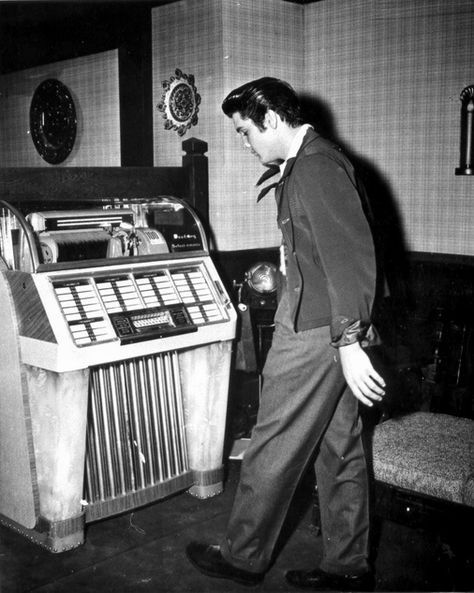
This image has an empty alt attribute; its file name is elvis-and-jukebox.jpg

“We had these little juke joints, little taverns at that time. On a weekend there was this little place in the alley that would stay open all night. We called them Saturday night fish fries, they had two or three names; they called ‘em juke houses.”Muddy Waters

Juke is a West African word, in one language it means wicked or disorderly and in another Congolese language it means, a building without walls. The word juke passed into popular usage with a sexual overtone among African Americans from the Southern States, it later came to describe a sort of dance. Like many derivative words it’s almost impossible to get to the complete truth.

Generally Juke joints were found in rural areas and it has been suggested that there is a link to the jute fields and the jute workers that frequented makeshift bars. A juke joint typically had a bar that fronted onto the street, often with a dance floor and a back room for gambling or other activities; some Juke joints doubled as a brothel. The need for music in such a place is obvious. During the 1930’s itinerant musicians, often bluesmen, used the Juke Joints as their regular gigs. It was in a Juke that Robert Johnson watched Son House, while Tommy Johnson studied Charley Patton.

Robert Johnson Juke Joint
Robert Johnson was allegedly poisoned at this juke joint.

In 1928 Justus P. Seepburg invented one of the first jukeboxes and by the mid to late 1930s they could be found in bars, cafes, and juke joints right across America, but particularly in working class areas where people were less likely to own their own phonograph. In late 1938 Billboard began a new chart, which was a survey of the most popular records on Juke Boxes in America.

By 1939 there were 225,000 jukeboxes in America, which prompted James Caesar Petrillo, the President of the American Federation of Musicians to declare that records were “the number one scab”. He and his members felt that records and record companies were taking work away from musicians. Largely because of the juke box the AFM called a strike of its members in 1942; their motive was to persuade record companies to create a trust fund to compensate musicians who might lose live work as a result of records played on juke boxes and the radio. The strike ended in 1944 and the spread of the jukebox and the availability of an increasing number of phonographs was what the musicians strike had hoped to address. In reality the strike, along with the war, helped bring on the demise of the big band. The singer was the star; the traditional bandleader would never again be preeminent.

Black music of the late 1940s and early 1950s was what was most commonly found on jukeboxes. It was what evolved into rock ‘n’ roll and the beautiful looking jukeboxes became pivotal in spreading the gospel according to rock ‘n’ roll.

Films like American Graffiti fuelled the mythical status of the Juke Box, as did the teenagers who hung out in the diner in the hit TV show Happy Days. Standing around the record machine, deciding what to play, is an enduring image of a bygone era of unit uninterrupted happiness. Certain records just sound better on a juke box, but as most of us don’t have one to hand we’ve put together what we think is the start of the Ultimate Juke Box playlist. Let us know what you think we should add.

via Put Another Nickel in the Jukebox – uDiscover.

Posted in Album, Bluegrass, Blues, Country, Folk, Gospel, Instrument, Instrumental, Jazz, Music, Pop, Rhythm and Blues, Rock, Rock 'n' Roll, Rockabilly, Song, Soul | Tagged , , , , , , , , , , , , , , , , , , , , , , , , , , , , , , | Leave a comment

SO JUST WHAT WAS THE FIRST ROCK ‘N’ ROLL RECORD? – uDiscover

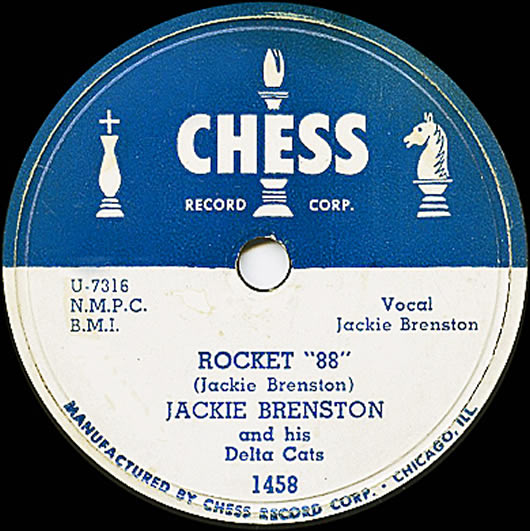
Rocket '88

“My man rocks me with one steady roll.” – Trixie Smith, 1922

Rock and roll is as old as mankind and the first rock ‘n’ roll record was Jackie Brenston and his Delta Cats’ ‘Rocket 88’ recorded at Sam Phillips’ Sun Studios in Memphis Tennessee. One of these two things is untrue, and it’s not that rock and roll is as old as mankind. Rock ‘n’ roll was little more than a euphemism among the Black population in early 20th Century America. There are some that think it was also a dance, but for some the difference between sex and dancing is as thin as the line between love and hate. Nor is it true that Alan Freed, the Cleveland DJ invented the term…but more of that later.

Nearly 90 years ago in September 1922 in New York City 27 year old Trixie Smith along with the Jazz Masters went into the studio to cut a couple of sides. Who made up the Jazz Masters have been lost down the crack in the shellac, all except one – Fletcher Henderson a name ubiquitous within jazz circles and whose band Louis Armstrong joined in 1924. One of the sides Trixie and the boys cut was ‘My Daddy Rocks Me (with one steady roll); as clear evidence as you can get for the link between rock and roll, and sex…

My daddy rocks me with one steady roll.
There’s no slippin’ when he once takes hold.
I looked at the clock and the clock struck one.
I said “Now Daddy, ain’t we got fun.”
He kept rockin’ with one steady roll.

Now hold those lyrics in your head because we’ll return to them soon enough. Four years after Trixie was rockin’ and rollin’ a man got around to it too; Blind Blake, whose Christian name may or may not have been Arthur, was the first to use the word ‘rock’ in a song. His earliest record for the Paramount label in August 1926 had ‘West Coast Blues’ on one side of it.

It opens with the lines…

Now we gonna do the old country rock.
First thing we do, swing your partners.

It’s a lot less sexy than Trixie and certainly seems to relate to some kind of dance, which is possibly evidence for the whole thing being a mix of both sex and dancing. Later in the song he even does a little advertising, “Good to the last drop. Just like Maxwell House Coffee, yes.” When President Theodore Roosevelt visited the manufacturer of Maxwell House in 1907, had a cup of their coffee, saying “It’s good to the last drop”; probably the only time a US President has been an advertising copy writer. There again it may also take us back towards the sex angle!

Three years later, in 1929, a twenty-five year old by the name of Tampa Red, who seems to have hailed from Florida, but grew up in Georgia and was a bit of a whizz on the kazoo, as well as piano and guitar decided to do a little rocking of his own. Tampa recorded such risqué songs as ‘It’s Tight Like That’ and ‘Jelly Whippin’ Blues’ but he also fronted the Hokum Jug Band. One weekend in April 1929 Tampa and his band recorded several tunes including ‘She is Hot’ which sounds like the perfect rock ‘n’ roll title and they also covered Trixie’s ‘’My Daddy Rocks Me (with one steady roll)’. Now, Tampa being a man doing a song about his Daddy rocking him with one steady roll obviously poses some questions, but on this occasion it wasn’t Tampa singing – it was instead the cross-dressing Frankie ‘Half-Pint’ Jaxon.

Frankie put his own slant on Trixie’s lyrics…

My Man rocks me with one steady roll.
It makes no difference if he’s hot or cold.
When I looked at the clock, clock struck one.
I said honey oh let’s have some fun.
But you rock me with one steady roll.

Frankie also goes in for some no holds barred, nor blushes spared, heavy breathing just in case anyone was in any doubt about what his song was all about. While the content, the words and the feel may all have some of the feel of rock ‘n’ roll about them the music for all this and the songs that went before did not. They were all very much in the blues idiom.

Rolling forward through the jazz age, the big bands, and generally the fuller sounds that became popular with black musicians and their audiences we get to 1945 and a man named Wynonie Harris.  Harris had sung with Lucky Millinder’s Orchestra, one of the swingiest, rockiest of the black big bands. In 1941, before Harris had joined them Millinder, who was a regular at the Apollo and the Savoy in Harlem, released ‘Big Fat Mama’ (“with meat shaking on her bones”) which was one of a number of his songs that pointed the way towards rock ‘n’ roll.

Harris took what he had learned with Millinder and distilled it into something all together more rock ‘n’ roll in the way it sounded. In July 1945, along with a band put together by Johnny Otis, Wynonie recorded ‘Around the Clock parts one and two’; compare their lyrics with Tampa’s…

Sometimes I think I will, sometimes I think I won’t.
Sometimes I believe I do, and then again I believe I won’t.
Well I looked at the clock, the clock struck one.
She said come on Daddy let’s have some fun.
Yes we were rolling, yes we rolled a long time.

Musically there was little rock ‘n’ roll about ‘Around The Clock’ but come 1957 and the great Chuck Berry recorded ‘Reelin’ and Rockin’. As we all know he, “looked at his watch and it was 9.21”. The fact is that what had gone before all led to that moment. So much music, black or white, was all about influences, acknowledged and otherwise, and the development of rock ‘n’ roll, as a concept, goes way back. As a sound it definitely had it’s origins in the jump music and R & B of the 1940s.

There are also those that think Alan Freed ‘invented’ rock ‘n’ roll.  There’s no question that Freed was a key player in the development of the music. On 11 July 1951, Freed started broadcasting on Cleveland’s WJW, calling his show The Moondog House. He played jump and R & B records and began calling it rock ‘n’ roll music; he also started promoting live shows featuring the artists he played like Tiny Grimes and Paul ‘Hucklebuck’ Williams.  Given the reach that his radio show gave him, even more so when he switched to WINS in New York City, it’s unsurprising that Freed has been so closely associated with the music, and its naming. But mentions of rocking and rolling were not the sole preserve of the black blues singers or the DJs that played the music. In 1934 the Boswell Sisters, a middle class, close harmony group from New Orleans released ‘Rock and Roll’, but theirs is a song of the high seas – “the rolling rocking rhythm of the sea”.

“So won’t you satisfy my soul with the rock and roll” – Teddy Grace, August 1937

In 1939, Western Swing star Buddy Jones released ‘Rockin’ Rollin’ Mama’. Two years earlier Teddy Grace recorded ‘Rock it For Me’, a couple of months later Chick Webb’s Orchestra with their singer Ella Fitzgerald did it too, like others they used the term in their own way, “So won’t you satisfy my soul with the rock and roll” Even Hollywood got in on the act when Betty Grable’s film, Wabash Avenue was promoted by calling her, ‘The First lady of rock and roll’. The point of it all? It was very much in the zeitgeist; it just needed Freed to bring it altogether.

So, how come many think that Jackie Brenston made the first rock ‘n’ roll record? Well for a start, Sam Phillips was fond of telling people that it was. But it’s just another record from the hundreds, thousands even, which came out in the post war years that had the feel of proto rock about them. Interestingly Wynonie Harris’ ‘Around the Clock’ while having the lyrical heritage does not sound much like a rock ‘n’ roll record – there are many others of his that definitely do. ‘Good Rocking Tonight’ from 1946 and so did ‘Lollipop Mama’ from 1948, with its fast walking bass line. There are hundreds of records that a case could be made for naming them as ‘The First Rock ‘n’ Roll record’. Here’s a list of ten records that could claim the title…in no particular order, other than the date they were recorded!

Rock, Daniel – Lucky Millinder and his Orchestra with Rosetta Tharpe (June 1941)
Be-Babba Leba – Helen Humes (August 1945)
My Gals A Jockey – Big Joe Turner (January 1946)
Choo Choo Ch’Boogie – Louis Jordan (July 1946)
The House of Blue lights – Ella Me Morse with Freddie Slack and his Orchestra (February 1946)
Gotta Gimme Whatcha Got – Julia Lee and her Boyfriends (September 1946)
He’s A Real Gone guy – Nellie Lutcher (July 1947)
Drinkin’ Wine Spo-Dee-O-Dee – Sticks McGhee and his Buddies (February 1949)
Rock the Joint –Jimmy Preston & His Prestonians (May 1949)
Teardrops From My Eyes – Ruth Brown (October 1950)

via So just what was the first rock ‘n’ roll record? – uDiscover.

Posted in 45rpm vinyl single, Bluegrass, Blues, Country, Folk, Gospel, Guitar, Instrument, Instrumental, Jazz, Music, Pop, Presentation, Production, Radio, Rhythm and Blues, Rock, Rock 'n' Roll, Rockabilly, Song, Soul | Tagged , , , , , , , , , , , , , , , , , , , , , , , , , , , , , , , , , , , | Leave a comment

T. REX No. 1 That Took Four Years – uDiscover

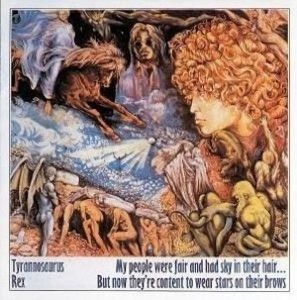
Tyrannosaurus Rex would understandably have thought they’d cracked it when their first album, the expansively-titled ‘My People Were Fair and Had Sky in Their Hair…But Now They’re Content to Wear Stars on Their Brows’ hit the UK charts. Released in July 1968, it immediately made the bestsellers at No. 22, reaching its peak two weeks later at No. 15.

Then came a setback. Just three months later, Marc Bolan and his partner in the group, Steve Peregrin Took, released the follow-up album ‘Prophets Seers & Sages: The Angels of the Ages’ — and it missed the charts altogether. But 43 years ago today, four years after their first release, the two albums found themselves together at No. 1.

TRex-1st-album-cover-297x300What had happened in the interim, of course, was that after two more records as Tyrannosaurus Rex (‘Unicorn’ and ‘A Beard of Stars’), the band abbreviated itself, so to speak, leading to a serious national outbreak of T. Rexstasy and Bolanmania. The ‘T.Rex’ album of summer 1971 reached No. 7, then a ‘Best Of’ set of their early work went to No. 21, before ‘Electric Warrior’ charted in October and spent Christmas and the new year at No. 1.

David Platz, the music publisher who had founded by now founded Fly Records, re-released ‘Prophets Seers & Sages’ and ‘My People Were Fair’ as a double, gatefold album in mid-April, 1972, under the banner title ‘Tyrannosaurus Rex: A Beginning.’

Bolan’s new fans were now eager to snap up anything with his or his band’s name on it, and a single reissue of ‘Debora’ and ‘One Inch Rock’ was already in the top ten, at No. 7, in the week that the double album hit the charts at No. 2. A week later, the twinpack album went to No. 1, replacing Deep Purple’s ‘Machine Head.’ Bolan’s early creative outpourings had been completely embraced by his new audience.

Listen to ‘My People Were Fair and Had Sky in Their Hair…But Now They’re Content to Wear Stars on Their Brows’ on Spotify
Listen to ‘Prophets Seers & Sages The Angels of the Ages’ on Spotify
Download ‘My People…’ from Google Play or buy it from Amazon
Download ‘Prophets…’ from Google Play or buy it from Amazon
Explore our dedicated T. Rex Artist Page

via The T. Rex No. 1 That Took Four Years – uDiscover.

Posted in Album, Music | Tagged , , , , , , , , , , , , , , , , , , | Leave a comment

THE BAND: ‘The Last Waltz’ was nearly derailed | somethingelsereviews.com

‘The Last Waltz’ was nearly derailed, time and again: ‘It was like throwing the dice’

APRIL 7, 2015
BY 

The on-screen stars of The Last Waltz, simply galvanizing throughout, are Rick Danko and Robbie Robertson. They come off in Martin Scorsese’s bittersweet 1978 film, conceived as the Band’s concert farewell on Thanksgiving night at San Francisco’s Winterland, like rock ‘n’ roll updates of Johnny Boy and Charlie from Mean Streets.

Meanwhile, Bob Dylan almost didn’t go on — and Levon Helm made his enduring dissatisfaction with the whole production abundantly clear in his 1993 memoir This Wheel’s On Fire. And yet, the latter two ended up providing the all-star The Last Waltz with its heart and soul — something that translates just as well on the triple album, issued via Warner Bros. on April 7, 1978.

Levon Helm’s voice is the concert’s conscience (by turns bawdy, guttural and sincere), while his playing is its life blood. Nobody sounds more in the moment, more viscerally involved — likely because, as Band producer John Simon tells us, his was the only performance unaltered by post-production overdubs.

Bob Dylan, on the other hand, was expected for rehearsals at Shangi-La, but never appeared. (Joni Mitchell did, but couldn’t explain her own songs’ unusual tunings; Garth Hudson stepped in to help.) When Dylan finally showed, he locked himself away at Miyako’s piano-lounge basement. The Band did a couple of run throughs there, but without ever getting confirmation on his participation in the film.

Somehow, you can trace none of that indecision in the nervy, if far too brief, moments Dylan was on stage in San Francisco. He and the Band reconnected with the startling, genre-rattling energy on The Last Waltz that hurtled them both to previously unimagined places as the 1960s waned. Bob Dylan pushed back, and hard.

The Band went first, running through two hours of their best-known hits, from “Up on Cripple Creek” to “This Wheel’s On Fire,” “The Shape I’m In” to “Life is a Carnival,” “Rag Mama Rag” to “Stage Fright,” even as dinner was served. (Promoter Bill Graham conceived of the concert as a Thanksgiving event, with a huge meal — they served 220 turkeys and 500 pounds of cranberry sauce — included in the price.) Things were just getting started. “I was on stage for five and a half hours,” Rick Danko told Dirty Linen in 1992. “They could do a Son of ‘The Last Waltz,’ because we’ve got some great material. We only used a small amount of it.”

Bob Dylan arrived during the Band’s set, retreating to a dressing room. Negotiations on his participation continued through the intermission, apparently hung on the idea that The Last Waltz would be competing with Dylan’s own film project, Renaldo and Clara. The problem was, Warner Bros. had funded Scorsese’s movie with an understanding that Bob Dylan would appear. Finally, after another round of discussions, Dylan agreed to let crews film his last two songs, starting with a bitterly ironic run through “Forever Young,” which Dylan cuffs around with an acid brusqueness, curtly denying the evening’s embedded nostalgia.

Together, Bob Dylan and the Band resurrected two lesser-known gems from their infamous 1966 electric tour, “I Don’t Believe You (She Acts like We Never Have Met)” and — in a twist, Levon Helm once said — “Baby, Let Me Follow You Down.” “Surprised, we played along, figuring that Bob realized we were missing something good by not having any of the old rock ‘n’ roll on film,” Helm wrote in This Wheel’s On Fire.

Bob Dylan and the Band tore into them like hungry wolves — to the point where Dylan nearly snarls himself hoarse. As the crews tried to wrap up at the agreed-upon time, Levon Helm said Bill Graham rushed in to countermand those instructions, saying: “Fuck you! Roll the fucking cameras! Roll ‘em!” And thus, the raucous and celebratory sing-along of “I Shall Be Released” was thankfully documented.

Not that The Last Waltz doesn’t still shine a spotlight on the contributions of others. Van Morrison provides a needed spark during the lengthy concert’s mid point, Muddy Waters simply roars through a late-period rendition of “Mannish Boy,” Emmylou Harris imbues “Evangeline” with a crystalline beauty, and Rick Danko’s darkly emotional “It Makes No Difference” arguably outdoes the original studio version. Robbie Robertson, performing with an unfettered joy, fires off volley after volley of stiletto-precise guitar work, while Hudson creates a spectral frame for it all.

Of the Band, only Richard Manuel seems to recede in the moment. Not every guest works, including an out-of-place Neil Diamond and a simply out-of-it Neil Young. That anyone’s star shone so brightly, in retrospect, is no small miracle. Last-minute planning snafus — not least of which was Dylan’s unwillingness to commit — and recording mishaps nearly derailed The Last Waltz time and time again. Ultimately, the Band rehearsed for a staggering 12 hours, trying to nail down the arrangements and sound requirements for this bulging multi-artist extravaganza. Each of the songs would be performed live, in front of a sold-out crowd, and a huge crew with recording equipment.

“I mean, we had to learn twenty-some-odd songs we’d never played before in our lives,” Robbie Robertson toldMusician in 1982. “So, every time out of the chute, it was like throwing the dice. It’s hard enough to remember our own stuff, let alone everybody from Joni Mitchell to Muddy Waters.”

That actually played right into the hands of Bob Dylan and Levon Helm, two performers born to the stage. Helm was always most at home there; Dylan still is.

If Rick Danko nearly bested a signature performance from his own studio career, Levon Helm did one better — constructing the definitive version of “The Night They Drove Old Dixie Down” with the addition of a coiled horn section. His brilliant pairing with the Staple Singers for an update of “The Weight” plumbed undiscovered depths of meaning. He breathes shuddering new life into “Mystery Train,” and snorts through “Ophelia” with a salacious grit — the latter of which ends with a triumphal Helm sighing with what looks like satisfied exhaustion. Bob Dylan, meanwhile, managed that rarest of things — recapturing the danger and meaning of his best years, no small thing.

That Thanksgiving evening, some 37 years gone, concluded in the only way it could, really. Levon Helm wanders back out on stage, leading a loose jam for about 30 minutes before the rest of his Band mates eventually return, as well. That leads to the five-man lineup’s last song performance, an ironic run through the desperate pleas of“Don’t Do It” that ended around 2 a.m. “When it was over,” Levon Helm said, “so was the Band.” Robbie Robertson stepped up to the microphone and said, “Thank you, goodnight.” And then: “Goodbye.”

via ‘The Last Waltz’ was nearly derailed, time and again.

Posted in Album, CD, Concert, Documentary, Documentary, DVD, Film, Live, Music, Rhythm and Blues, Rock, Rock 'n' Roll | Tagged , , , , , , , , , , , , , , , , , , , , , , , | Leave a comment

BOLAN Gives His Fans ‘HOT LOVE’ – uDiscover

T.REX

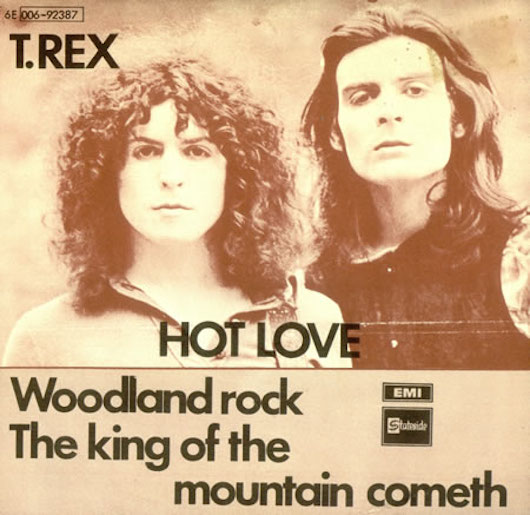
It was ‘Ride A White Swan’ that lit the fire, and ‘Hot Love’ that set T. Rex ablaze. 44 years ago today, the band’s second big hit single gave Marc Bolan what he had always dreamed of: his first No. 1 hit.

‘Hot Love’ was the latest product of the T. Rex dream team that helped create Bolanmania. Marc wrote the song, gave it his distinctive vocal styling and some inventive guitar touches, and Tony Visconti put his expert production sheen on it. For Bolan’s rapidly-expanding army of fans, the effect was irresistible.

MARC

T. Rex had entered the album chart with their self-titled set (their first since dropping the “Tyrannosaurus”) in mid-January 1971. It spent two weeks in the top ten, peaking at No. 7, just before ‘Hot Love’ climbed to No. 1, but the single was made all the more tempting to record-buyers by not being included on the LP.

“The beat was simple and pronounced,” wrote Mark Paytress about ‘Hot Love’ in his 1992 biography of Bolan, ‘Twentieth Century Boy.’ “The full if uncluttered production, boosted by tuneful backing vocals and supportive strings, made it perfect for daytime radio. Marc pulled out all the stops, utilising Presley’s ‘uh, uh, uh’ vocal affectation from ‘All Shook Up,’ the guitar break from ‘Heartbreak Hotel’ for the break, and added a lengthy ‘Hey Jude’-type singalong for a lengthy coda.”

On the chart for March 20, 1971, ‘Hot Love’ took over from Mungo Jerry’s ‘Baby Jump’ at the summit, helping to deny Paul McCartney’s ‘Another Day’ a place at No. 1, and in the week that John Lennon and the Plastic Ono Band debuted with ‘Power To The People.’ The T. Rex single held on tight to the top spot for six weeks, before finally giving way to the reggae hit ‘Double Barrel’ by Dave and Ansil Collins.

“I know it’s like a million other songs,” said Bolan of ‘Hot Love’ at the time, “but I hope it’s got a little touch of me in it too.”

It’s ‘Cosmic Rock’ – T.Rex on ‘Top of the Pops’:

 Explore our dedicated T. Rex Artist Page

via Bolan Gives His Fans ‘Hot Love’ – uDiscover.

Posted in 45rpm vinyl single, Album, Music, Pop, Rock, Rock 'n' Roll, Song, Television | Tagged , , , , , , , , , , , , , , , , , , , , , , , , , , , | Leave a comment

GOLD1E: “The Song Remains The Same” – Prologue…

The Song Remains The Same promoGOLD1E Newest cover

“The Song Remains The Same” is the second short story in our ebook serial entitled “GOLD1E” and features our gal on assignment duty once more for the Specialist Woman’s Organization of Retribution & Defense (S.W.O.R.D.) –

In this second short story, Goldie Johnson travels on The Silver Meteor to South Florida where she meets up with local P.I. Paul Trevino in connection with the previous death of an author and a link back to Woodstock ’69, which in turn unravels the involvement of a long lost relative! When things go considerably awry on a stake-out during an attempted bust on a drug ‘pipeline’, the investigation leads Goldie on a train trek up to Rocky Mount, Virginia with the hope of discovering the answers to some questions which have remained long unanswered…

“The Song Remains The Same” – Prologue:

“Sonny, keep your head down while I aim good and straight!” exclaimed the one known as Jerry, gradually regaining his breath from the side and round kicks she had delivered to his chest and stomach, now steadying his gun with both hands standing approximately twenty meters into the darkness across from them.

The flicker of gun metal and one side of his face was the only illumination in the near distance. The light from the garage drowned the area on which she now stood with the one known as Sonny, whose neck she clasped within the grip of her left arm and whose head she now pressed the Beretta 92fs onto – the trigger finger of her right hand controlled the option.

“Let go of him, bitch,” continued Jerry, his southern drawl very sure of an outcome, “else that purdy li’l face underneath that there baseball cap is goan need some beauty therapy!”

“Pull the trigger…shoot it now!” the choking demand croaked from the depths of Sonny’s throat as she further clamped her hold around his neck.

Then, she felt a forceful dig into her arm as Sonny attempted to push his chin and whole body downward so Jerry could get a clearer shot of her head and chest. She tried to steady her stance in order to maintain her grip, and the grimacing expression surged across her face in trying to defy Sonny’s attempt of gaining the advantage. The presence of the expression tugged at the corner of her mouth – the impact of the back of Sonny’s ‘leather’ dry hand a few moments ago. She further scraped the barrel of the Beretta into the gray shag of his hair to remind him of his potential fate, as the thought of knocking him unconscious with the butt of the pistol may also prove to have a fatal consequence for her, knowing that Jerry may not think twice about pulling his trigger.

Now more aware of her stance being open to the line of fire, the bleary brightness of the dangling rusty lantern of the garage caught the corner of her eye. Suddenly, she was reminded of the inspiring scene in “The Fisher King” – the glittering mirror ball of the clock at Grand Central Station in New York City, accompanied by the waltzing couples gliding across the floor beneath it. However, such scenes of fantasy would only hold an image of romanticism for her if the waltzing couples each carried a gun in order to protect themselves. It was such protection that she undoubtedly needed at this moment. 

The blood now seeping from the corner of her mouth…the name of a senior member of the Johnson family now seeping into her flood of thoughts…an outcome awaited the standoff of a ‘Mexican’ variety seeping into the situation as she continued to wrestle with Sonny’s neck: 

“SHOOT THIS BITCH!!” 

* * * * * * * * * * * * * * * *

– The “HOUSES OF THE HOLY” Reflections – 

[spotify https://play.spotify.com/album/5phxHbK2GSr7hEu4orLywP]

“The CD album is actually playing in the background of the first scene at the start of this story. The influence of the album’s opening song – “The Song Remains The Same” – stems from a combination of both the instrumentation and lyrics: the guitar and rhythm section subconsciously reminded me of a train’s pounding mechanics on its journey along its track of destiny. A furious locomotive that can’t wait to arrive at where it’s heading to face its destination – or its awaiting public. Therefore, this inspiration offered the prospect of allowing Goldie to travel on the Silver Meteor on her next S.W.O.R.D. assignment. It is also reminiscent of Goldie’s urgency in her journey, but alternatively, approaching an unsuspecting ‘public’ at her destination.”

“At the beginning of the song when the band almost ‘crash’ the pace to a halt and Robert Plant’s vocals ignite with the lyrics: ‘I had a dream, a crazy dream…’ I thought this further inspired an allusion to what happened in ‘A Purple Reign’ (the first ‘GOLD1E’ story) which also could mean that she still experiences such dreams leading up to this journey. And then we have the lyrics: ‘Anything I wanted to know, any place I needed to go’ – this line inspired a reference to her organization providing such information or ‘knowledge’ and travel arrangements if required.”

“The lyric of ‘Any little song that you know’ – this further inspired the thinking behind Goldie’s relationship with her organization: the ‘dancing’ or ‘singing’ to their song, which in these instances are the assignments she finds herself undertaking. It can also allude to her own singing talent which she can hardly find time to further undertake whilst she ‘sings’ a different kind of ‘song’, but one which she is becoming familiar with.”

“‘Everything that’s small has to grow‘ – these lyrics inspired my thinking toward the organization in itself with Goldie being the primary operative. And we also discover in this story that S.W.O.R.D. (being the organization in question) is gradually growing.”

“‘California sunlight‘ – this inspired a ‘nod’ to Goldie’s birthplace. The lyrics also mention ‘Calcutta‘ and ‘Honolulu‘ which influenced my thinking toward potential places where she could be sent on assignment. The title lyrics of ‘The Song Remains The Same’ confirming her ‘position’ with her organization throughout the story.”

“‘The Rain Song‘ with its evocative lyrics which paint its romantic textures is like a ‘lover’s lament’ between Goldie and her late husband, Gil. But also it’s a song with a ‘double-edged sword’ type of retrospective which influenced my allusion to the events which had occurred in Goldie’s life after Gil’s death. Therefore it’s eerily prophetic.”

The complete first short story in the “GOLD1E” serial can be accessed for FREE at the following picture link:

GOLD1E promo+

Don’t miss the “GOLD1E” Interview with writer, Tony G. Marshall at the following picture link:

Goldie and HV Elements

+

Goldie now with her very own dedicated Facebook and Twitter profiles at the following links below:

Goldie Facebook Page

FACEBOOK

“GOLD1E” / “The Song Remains The Same” characters and contents –
Copyright ©2012, 2013, 2014, 2015 by Tony G. Marshall and Cosmic Dwellings.
All Rights Reserved.

Posted in Crime, Music, Short Story, Short Story Serial, Thriller | Tagged , , , , , , , , , , , , , , , , , , , | Leave a comment

“GOLD1E” Interview with Writer, TONY G. MARSHALL

Cosmic Dwellings explores the main character, the action and the inner turmoil of the planned 15-story crime-fighting ebook serial entitled “GOLD1E” with writer, Tony G. Marshall

Goldie quote 1

Cosmic Dwellings: With an intricately detailed nightmare, ever-growing suspense and mystery, along with issues of rape and drugs, and the presence of two sexy females – one of whom is the actual main protagonist – coupled with sexy vehicles and music, do you think “GOLD1E” has delivered in its first short story?

Tony G. Marshall: I like to think so. On a personal level, it has certainly set the bar for the premise and pace for the rest of the crime-fighting stories in the serial. Naturally, “A Purple Reign” – this first story – will always remain somewhat special. It was always my intension to maintain a certain sense of mystery in its unfolding, not only about the actual story, but the main character too. You realise how her name isn’t revealed until the very end, and it became a type of enigma in itself. It was entertaining to reveal certain aspects of the story with this approach, so I hope the entertainment value transfers over into people’s reading perceptions…

Goldie and HV Elements

CD: Can you explain the reason for spelling the title of the serial with a ‘1’ instead of an ‘i’?

TGM: It’s a take on the main character’s car number plate, and can actually be pronounced as ‘Gold – One – E’. Therefore, I thought it appropriate to represent the character’s first name in this interpretation of the title.

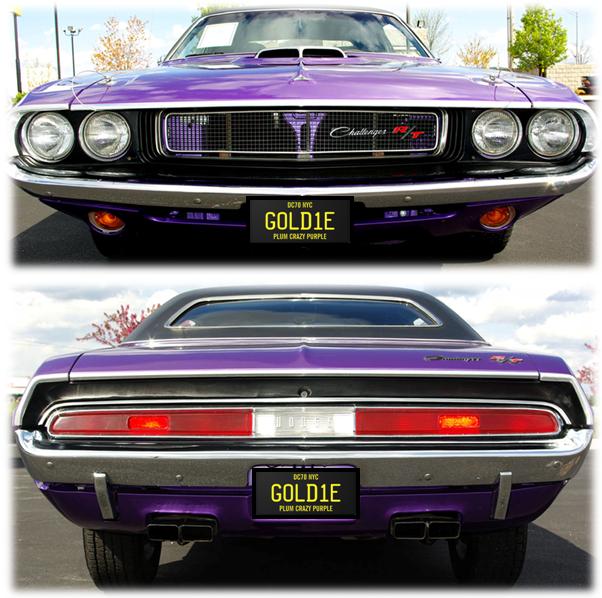
CD: That brings us to her car itself – the 1970 Dodge Challenger R/T Special Edition painted in ‘Plum Crazy Purple‘ – what influenced the car aspect of the story?

TGM: Well, Goldie’s a skilled mechanic for one thing. I wanted to define her love of classic vehicles and that shows in this type of model of Challenger. I actually contacted a classic car dealership based in Missouri to use the copyright for the machine, so in a sense I made it an official ‘Goldie’ possession! And it’s even taken on a life of its own with the nickname of “Plum”…      (interview continues below)

Plum with Goldie License Plates

CD: It’s interesting how you have crafted the first story as a depiction of several elements of Goldie’s past and then utilised them into the storytelling of her current life and situation. Was this your original intention?

TGM: Not necessarily, but I found it was important to gradually introduce those past elements because those are the kind of things which have influenced her actions and thinking. Furthermore, it presented me with immediate opportunities for the other stories.

CD: Goldie would make a very good modern-day ‘Bond Girl’, did any of Ian Fleming’s original characters influence your development of her?

TGM: Yes, certainly the Fleming books were an integral part of that development. Three of Fleming’s original female characters namely, ‘Tiffany Case’ (“Diamonds Are Forever”), ‘Honeychile Rider’ (“Dr. No”) and ‘Vivienne Michel’ (“The Spy Who Loved Me”), I found were influential in the writing of Goldie. However, those kind of influences came after her initial creation and not before…      (interview continues below)

Goldie promo

CD: Goldie appears to be a multi-skilled and talented person, was it difficult to decide which way to develop her character with all these attributes?

TGM: No. I just wanted to portray a hard-working gal who had experienced a lot in her early life especially with the death of her husband and the subsequent ordeal she had to endure after that. It was her husband who inspired her to gain a skill and a qualification as a mechanic, therefore she inherited his legacy. Also, it was necessary to have her develop in such areas as the martial arts which ties in with her passion and commitment of righting life’s wrongs and so forth. The singing aspect of her nature is something she does very well, but not on a professional basis, even though she’d like to…that’s more like a hobby with the bands that occupy her social life…once again, this connection is through her late husband. Remember, she’s not any kind of ‘Superwoman’ with special powers – obviously it’s not a Science-fiction story…this is a story about an ordinary woman who has been hurt several times and aims to stop the hurting by channeling some of the more positive aspects in her life – like music and martial arts – which allow her a great deal of spiritual development.

CD: What inspired the idea for the Specialist Woman’s Organization of Retribution & Defense, otherwise known as ‘S.W.O.R.D.’?

TGM: I thought it was an interesting concept in which to allow the main character to both develop and represent. But, initially, it channels that old adage of do we really know the people we see or meet on the street? She was a victim and ‘S.W.O.R.D.’ became her channel, her forum, her occupancy in which to develop, deliver, and literally execute. But, primarily, it’s a network that indirectly renders her an ‘assassin’ against the evil in the world.

CD: And what about the sexy female leader of ‘S.W.O.R.D.’ – Jana Jurrant?

TGM: Well, the organisation needed its roots and reasons to exist, so ‘Jana’ is the perfect character for this element of the story. It was Jana who realised Goldie’s potential in becoming an operative and therefore presented her with the tools and the challenges and helped her to develop and learn the required skills to face those challenges. Their chemistry evolves around their professional relationship, but they both have a similar taste in men, a love of classic cars and martial arts. Goldie stands at a fair height of 5’8″ and Jana at a towering 5’10” and they’re both a ‘fitness’ force to be reckoned with.

Johnson + Jurrant

CD: What made you choose the timeline of 1995 to 2008 in which to deliver the story?

TGM: Well, Goldie was born in 1968 so I thought having the story develop from the time just before her 27th birthday in 1995 was really ideal. At that point, there’s a great sense of who she is, what she’s been through, and where she’s going. Therefore, the very final story will take us to the year 2008 when she is 40 years old.

CD: The next story in the serial, entitled “The Song Remains The Same” will see her aboard The Silver Meteor heading for South Florida. What influenced this idea?

TGM: I thought it was a good idea to expand the location setting within the story. But, having her travel on the Meteor train also didn’t limit her access to the tools she requires in order to carry out the assignment, and I found it a good way to interweave the crime-related aspect into the story within the journey. I’ll continue to research other locations and travel possibilities for the remainder of the serial.

CD: There are some interesting concepts already planned, such as the 3-part story ‘arc’ entitled, ‘Harmony’s Voice’ – why was it necessary to have this type of idea within the serial?

TGM: The idea behind it was to represent the changes that have taken place in Goldie’s life at that juncture in the serial. Therefore, a considerable amount of character development is unfolding whilst maintaining the crime-fighting aspect of the storyline. ‘Harmony’s Voice’ is actually the name of a band in that story idea, so the music element is still a prominent force.       (interview continues below…)

The Song Remains The Same promo

CD: What inspired the idea for the character’s theme tune?

TGM: It was a concept that allowed me to further develop the dramatic tension and action that surrounded the character’s development. So, it was purely for writing purposes but it appears to have taken on another dimension in respect of Goldie. The theme is an adapted variation on John Barry’s “The Persuaders!” theme and it’s performed by Bing Satellites. I’ve retitled it “Family Persuasion” for the story in relation to another element that is referenced throughout its timeline. Alternatively, it’s simply called “GOLD1E’s Theme” and you can listen to it at the following link: “FAMILY PERSUASION”

CD: Finally, the first story of the serial, “A Purple Reign” is available to read for FREE via this blog and Wattpad. When will the complete “GOLD1E” ebook be available for purchase?

TGM: In approximately 18 months to 2 years time. However, I’ve still yet to decide on which publishing platform it will be available from, so watch this space. The first two parts of “A Purple Reign” are now combined on this blog at this link: “A PURPLE REIGN”. And there’s also a link on there for the final part which is only available to read via Wattpad. However, the complete “A Purple Reign” on Wattpad is at the following link:

GOLD1E promo

Goldie now with her very own dedicated Facebook and Twitter profiles at the following links below:

Goldie Facebook Page

FACEBOOK

“GOLD1E”/”A Purple Reign” characters and contents/Blog Interview – Copyright ©2012, 2013, 2014, 2015 by Tony G. Marshall and Cosmic Dwellings. All Rights Reserved.

Posted in Crime, Music, Short Story, Short Story Serial, Thriller | Tagged , , , , , , , , , , , , , , , , , , , , , , , , , , , , , , , , | Leave a comment