ELVIS PRESLEY: How he built rock ‘n’ roll on his self-titled debut | Record Bin | Nooga.com

By JOSHUA PICKARD 

During the course of any reasonable discussion about the history of modern music, there are always going to be a few names that pop up again and again—Bob Dylan, The Beatles, Robert Johnson and Elvis Presley spring to mind.

But more than any of these other artists, Presley was the one who basically ignited rock ‘n’ roll’s feral heart and made it into a viable commodity, both in terms of its commercial strength and critical relevance. His wildly impulsive swagger and homespun good looks meant that girls would flock to this music, but even more than his larger-than-life personality, it was the combination of this media persona and the music itself that cemented his role as one of the founding fathers of rock music.

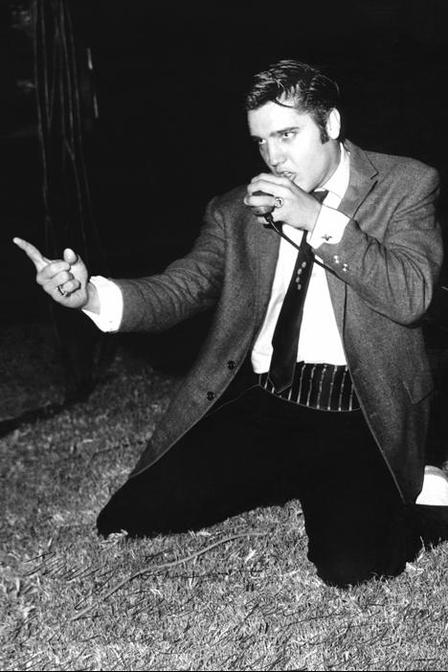
Elvis '56

The road to the recording studio led him from his birthplace of Tupelo, Mississippi, to the big city of Memphis and a meeting with Sun Records founder Sam Phillips in his studio. Presley would later relate that his intention was simply to record a two-song acetate as a gift for his mother—there are those, however, who have argued that, given Phillips notoriety, it was far more likely that he chose this particular recording studio in hopes of getting discovered and having his music picked up by Phillips for his own label.

Invariably, Phillips did see something in the young singer and brought in guitarist Winfield “Scotty” Moore and upright bass player Bill Black to work on some material to be released. Initially, this session was unfruitful, but they continued playing late into the evening until at one point Presley grabbed his guitar and started playing Arthur Crudup‘s “That’s All Right,” a blues song that found the singer jumping around and generally acting goofy.

“That’s All Right” became his first single and helped bring him to the attention of promoter and manager Bob Neal, who would go on to introduce Presley and his band to Colonel Tom Parker, who would figure prominently in Presley’s mythology. It was around this time that the jerky leg movements that he would become known for began working their way into his live shows. Born from an inherent nervousness and Presley’s own reaction to the music, these rhythmic gyrations would help solidify his standing as one of music’s earliest sex symbols. After a lengthy bout of touring and promotion—which included the acquisition of drummer D.J. Fontana—several large record companies developed an interest in backing the singer, with RCA Records winning rights to distribute his songs. They would even go back and reissue his Sun Records material under their own label.

In 1956, Presley entered the studio and began his first recordings for RCA, many of which would find their way onto his debut record released later that year. Mixing elements of rockabilly, proto-rock and roll ‘n’ blues, Presley managed to straddle these genres without much effort—especially for someone so young. These sessions produced dozens of songs, notably including “Heartbreak Hotel” (this song did not make the cut for his debut album and was released as a standalone single at the time). With the addition of pianist Floyd Cramer, guitarist Chet Atkins and a handful of background singers, including Gordon Stoker of The Jordanaires, the record’s roster read like a who’s who of studio musicians.

These songs sparked the imaginations of an entire country, and not just because they were all rocking stompers. Many of these songs were low-key ballads or covers that didn’t necessarily display Presley’s manic live energy—though they did convey that something new and unique was happening in these particular vinyl grooves and radio airwaves. His cover of the Carl Perkins classic, “Blue Suede Shoes,” opens the record with a fiery bounce, heralding Presley as someone who could hit the marks of his peers while also elevating the material to new and undreamed-of heights. Other tracks such as “I’m Counting On You” and “Just Because” showcased his range, if not his rock ‘n’ roll chops. But these interludes were necessary to prove that he wasn’t a one-trick pony and could hold his own in any given genre.

This album was released to capitalize on the success of “Heartbreak Hotel” and consisted of songs that the record label thought were less likely to be strong singles. The given practice at the time was to release stronger songs as singles and fill albums with weaker tracks. As it turns out, though, these songs created the greatest and most comprehensive perspective on Presley at the time and gave fans the ability to see him as a wholly complete artist and not merely some disembodied voice coming through their speakers. Based on the success of this record, RCA made the curious, but not entirely unpredictable, move to release all the songs here as singles. Although that might seem like overkill and could have saturated a market already well-versed in Presley’s sound, fans couldn’t get enough—and the first steady footing of his legacy was established.

Presley would go on to become an American institution, an artist who was recognized in almost every household and would have his visage adorn everything from truckloads of memorabilia to postage stamps. His reputation would only grow and expand, eventually changing based on his own musical development. But whatever you think of his later material, the songs that comprised his debut record were some of his best and most expressive recordings. They are a testament to his abilities to include his audience in each track rather than exclude them. These songs needed the active participation of their listeners to reach their full potential, and people gladly did their part. Presley became an icon, one of the greatest examples of classic rock ‘n’ roll, and it all started with a handful of songs and a young man from Mississippi singing his heart out.


Joshua Pickard covers local and national music, film and other aspects of pop culture. You can contact him on FacebookTwitter or by emailThe opinions expressed in this column belong solely to the author, notNooga.com or its employees.

via Record Bin: How Elvis Presley built rock ‘n’ roll on his self-titled debut | Nooga.com.

Posted in Album, Blues, CD, Country, Music, Pop, Rhythm and Blues, Rock, Rock 'n' Roll, Rockabilly, Studio | Tagged , , , , , , , , , , , , , , , , , , , , , , , , , , , , , , , , , , , , | Leave a comment

HEART: Hall of Fame Flashback | Fender Artist News

Ann

Written by  – Fender Artist News, 2013

There were a lot of things that made Heart stand out among the giants of 1970s hard rock. With a unique style that braided metal, rock and folk together in a wiry framework with tough romantic vocals, they sounded sleek and fresh compared to many of their contemporaries, plenty of whom were already starting to date themselves as punk and new wave exploded later in the decade. But one thing in particular, even more than the universal appeal of classic rock staples such as “Barracuda,” “Crazy on You” and “Magic Man,” gave Heart’s 2013 induction into the Rock and Roll Hall of Fame its most unassailable justification. It had less to do with commercial success, critical acclaim, or even the music itself than with who was playing it.

Before Heart came along, the hard rock pantheon—Led Zeppelin and Black Sabbath, Deep Purple and AC/DC, Aerosmith and Pink Floyd—had plenty of gods, but hardly a goddess to be found. Ann Wilson, a strong and sultry singer, and sister Nancy Wilson, whose go-for-baroque acoustic finger picking rang with steely confidence and fiery power, resoundingly broke through that gender barrier.

The raw power and capability projected by the sisters is still apparent in videos of performances from their very early days. Taking over Canada before quickly storming the United States, Heart went on to sell over 30 million albums around the world and earn four Grammy nominations, with a four-decade lifespan on the Billboard Top 10 charts. But their biggest legacy is inspiring a legion of women to pick up guitars and take on assertive front roles in rock bands themselves. It’s no coincidence that Heart’s U.S. base of operations is the Pacific Northwest, which would spawn the Riot Grrrl vanguard of female-fronted punk bands such as Bikini Kill in the ‘90s.

Nancy

What was arguably the world’s first feminist rock band was founded, funnily enough, by a bunch of guys, though only with the arrival of the Wilson sisters did it become something more than one of many hard rock bands toiling in obscurity. Its early years featured heavy personnel turnover, with bassist Steve Fossen and guitarists Roger and Mike Fisher being the most important formative members, and a branding evolution from The Army to White Heart to Hocus Pocus to simply Heart, a name the band really wore on its sleeve after the Wilsons joined in the early ‘70s.

Think of it: Two sisters joining a hard rock band and getting romantically involved with its two brothers—Ann with Mike, who became the sound engineer to make room for the superior guitarist, Nancy with Roger—and all of them moving to Canada, where, as the story goes, Mike had fled to avoid the Vietnam War draft. Could anything but drama, spectacular peaks and sloughs, have ensued? Heart made a hard-earned return to the Top 10 charts in 2010 with the back-to-basics album Red Velvet Car, but a bumpy road led there, including an early ‘80s commercial slump familiar to many hard rock bands, a triumphant comeback as AOR hit-makers and an extended period of limbo in the ‘90s.

***

Building its following in Vancouver, now joined by keyboardist Howard Leese and drummer Michael DeRosier, Heart signed to the Canadian label Mushroom and released its debut album, Dreamboat Annie, in 1975. Not only was it a smash in Canada, the record went platinum in the U.S. on the strength of what would remain two of the band’s most famous singles: the progressive folk-rock of “Crazy on You” and the dancey blues of “Magic Man.” Capitalizing on that success by moving to the larger Portrait label, Heart sold over a million copies of second album Little Queen, which came out in the wake of a legal battle with Mushroom, who had released Heart’s unfinished Magazine LP in a huff. A court ordered Mushroom to let Heart remix and add new vocals to the record, and it was re-released in 1978, eventually going platinum and spawning the canonical single titled, with superb irony, “Heartless.”

Little Queen was powered by the lacerating hit “Barracuda,” whose invective was supposedly directed at a reporter who made an innuendo about a Rolling Stone ad showing the Wilson sisters bare-shouldered above a suggestive caption, “It was only our first time!” It was neither the first nor the last time the Wilson sisters would grapple with the balance between being empowered by their looks and gender and being confined by them. The lyrics churn with a perhaps-newfound awareness of and contempt for the pressures on women to be submissive in male-dominated arenas: “You’re lying so low in the weeds / I bet you’re gonna ambush me / You’d have me down on my knees / Now wouldn’t you, Barracuda?”

At the end of the ‘70s, Heart was on top of the world. Dog and Butterfly went double platinum and scored a very contemporary hit with the disco-and funk-inflected “Straight On.” But as the decade turned, the two romances at the core of the band flickered out, causing Roger Fisher’s ouster from Heart (taking his distinctive guitar work with him), with his brother soon to follow. 1980’s Bebe le Strange became the band’s third Top 10 album, and single “Tell it Like it Is” was their best-charting to date, but the album only went gold and began a period of decline and confusion.

Greatest Hits/Live was all fans had to tide them over for the next two years, until Heart broke with established producer Mike Flicker for Private Audition. Failing to even go gold with the album, Heart fired Derosier and Fossen and recruited Denny Carmassi and Mark Andes for 1983’s Passionworks, another commercial disappointment. With Heart’s creative core so shaken up and the marketplace shifting away from hard rock, it seemed that Heart was about to fade into obscurity. But a power ballad from Private Audition, “Perfect Stranger,” and Ann Wilson’s duet with Mike Reno of Loverboy—the Footloose-soundtrack pop ballad “Almost Paradise”—portended a new direction for the next leg of their career.

***

Aptly, it was with 1985’s self-titled record on Capitol that Heart successfully redefined itself, embracing the big and in-your-face emotional sound of ‘80s pop. With five rafter-shaking hits in “What About Love,” “Never,” “Nothin’ at All,” “If Looks Could Kill” and “These Dreams,” the album reached number one on the Billboardcharts and sold five million copies. The band’s folk origins continued to steal away behind a shiny arena-ready sound on 1987’s Bad Animals, which spawned several more radio hits and pushed Heart’s chart success into the UK for the first time.  This superlative run came to a close with 1990’s Brigade, the band’s sixth multiplatinum LP, which led into a period of significant change in the ‘90s.

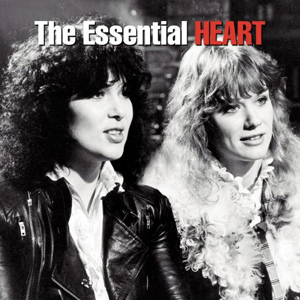
Essential

Perhaps missing their roots, the Wilson sisters formed an acoustic group called The Lovemongers with Sue Ennis and Frank Cox, which intermittently drew off their focus from Heart through the ‘90s. Heart returned in 1993 with the modestly performing Desire Walks On, which saw more action on the Adult Contemporary and Mainstream Rock charts than the Hot 100. In other words, while Heart was still popular, they were popular in a fading and nostalgic way.  In the mid-‘90s, Nancy Wilson took a break from music to focus on her family while Ann toured with her own band, before the sisters came back together in 1997 for Lovemongers album Whirlygig.

The Wilson sisters were active in all kinds of music and film projects during this slow period for Heart—Nancy had married film director and music geek Cameron Crowe—but the dormant band roared back to life in 2002 with a new lineup to tour and, after a couple years, release their first studio album in over a decade, Jupiter’s Darling, which found them refocusing on their early hard rock sound without ignoring what they had learned about pop production. But it was 2010’s Red Velvet Car that really felt like the old Heart and became the group’s first Top 10 album in two decades.

Though classic in sound, Red Velvet Car felt contemporary in inspiration, especially with a hit single called “WTF.” Followed in 2012 by the respectable Fanatic, the band’s 12th Top 25 album, Red Velvet Car put Heart back on track to remain relevant for a fifth decade. That’s a rare accomplishment for people of any gender in any field, let alone two women in the masculine—but, thanks in large part to the Wilson sisters’ fearless example, much less than it once was—world of rock music.

via Hall of Fame Flashback: Heart | Fender Artist News.

Posted in Blues, Folk, Guitar, Music, Pop, Rhythm and Blues, Rock, Rock 'n' Roll | Tagged , , , , , , , , , , , , , , , , , , , , , , , , , | Leave a comment

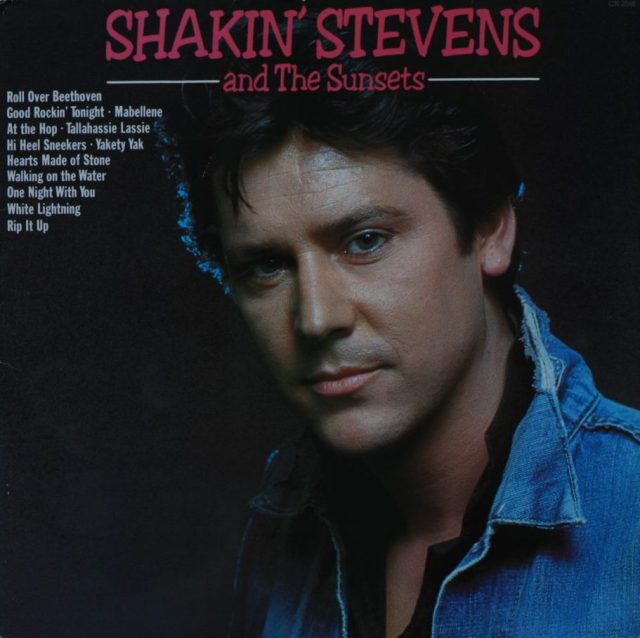
‘SHAKY’ and THE SUNSETS: Legends in the ‘Rockhouse’

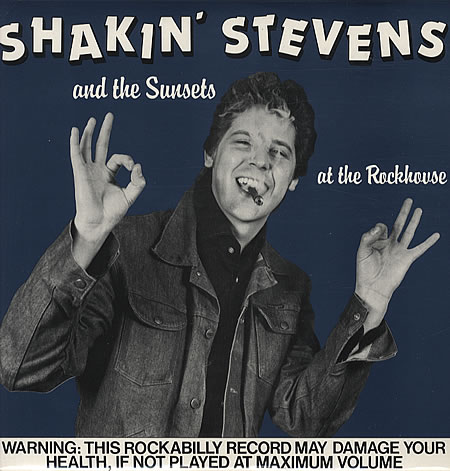
Shakin-Stevens-At-The-Rockhouse-260114

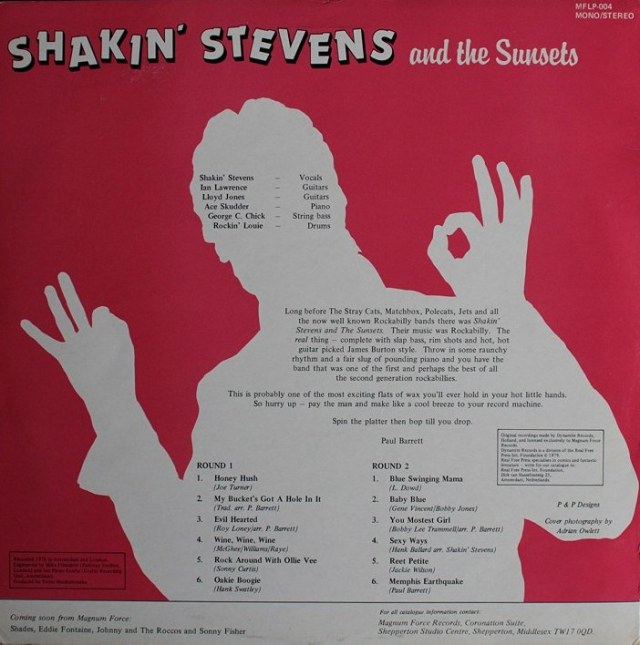
“Long before the Stray Cats, Matchbox, Polecats, Jets and all the now well known Rockabilly bands, there was Shakin’ Stevens and The Sunsets. Their music was Rockabilly.” – Paul Barrett, 1981.

The late 60’s and early 70’s Rock ‘n’ Roll Revival occurred at a time when Woodstock was happening, and Elvis had already made a television and stage comeback, and The Beatles were in the process of producing the music for their final two albums. Legendary 50’s rockers like Bill HaleyHis Comets and Gene Vincent were enjoying a career resurgence across the touring circuit. The Teddy Boys and the Greasers were out in fashioned-force spearheading such revival campaigns, and an effective air of nostalgia bathed in the live atmosphere of British rock giants such as The Who and Led Zeppelin – both including in their sets some mighty fine executions of Rock ‘n’ Roll and Blues classics combined from yesteryear. The Rolling Stones, post-Altamont Free Concert, had also given an opportunity to a hard-working ‘Oldies’ Rock band from Wales to support them on their next tour. This ‘support’ band was a flaming ball of energy, not only in the focused passion of its lead singer’s performances, but also within the band as a whole force of guitar posturing and piano ‘banging’ – sometimes the lead singer might take time out from dancin’ and struttin’ to assist with such machismo techniques that looked like they were honed directly from the entertainment circuit of 1950’s Holiday camps. However, entertainment was a prominent mainstay of this band’s stage act especially when it came to them delivering their much-loved fascination with any musical force or composition that was born out of that bygone era. Shakin’ Stevens and The Sunsets were a great ‘covers’ band and delivered the music with an authentic take on phrasing, instrumentation and raucous execution…

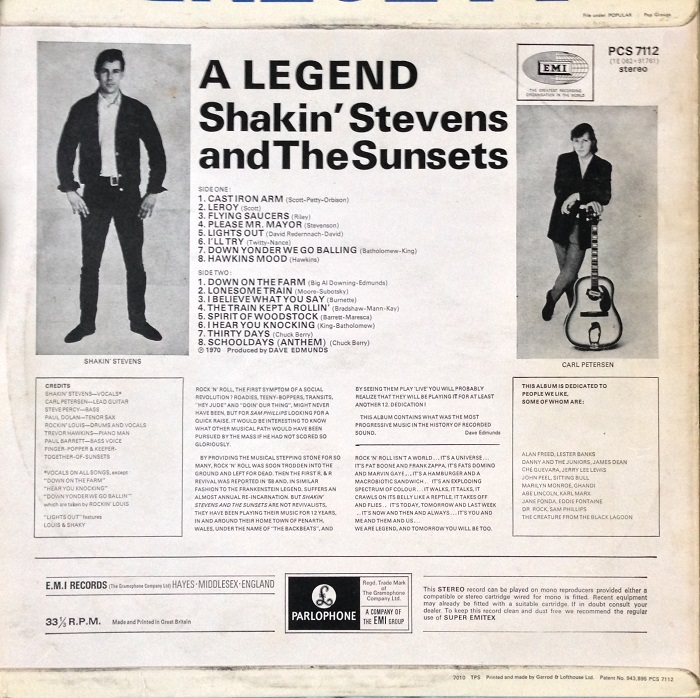
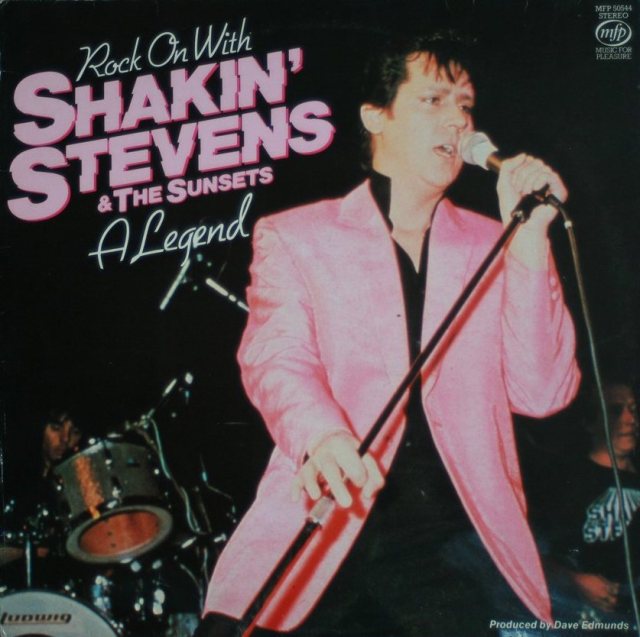
Born in Ely, Cardiff, South Wales in 1948, Michael Barratt was heavily influenced by a local band named ‘The Backbeats’ who had been formed in the late 1950’s and were fronted by Robert Llewellyn (‘Rockin’ Louie’). Barratt’s musical endeavours took him to performing with a band consisting of some of his former school friends calling themselves ‘The Olympics’ and subsequently became known as ‘The Cossacks’ and eventually ‘The Denims’. Thereafter, Michael Barratt formed a new band called ‘The Rebels’. In 1968, apparently at the request of manager, Paul “Legs” Barrett (no relation to him) he adopted the new stage name of ‘Shakin’ Stevens’ whilst fronting his new band, ‘The Sunsets’ who originated from South Glamorgan. However, in contrast to that, during a segment filmed for BBC1’s The One Show in 2016, Mr. Stevens states that his name change occurred due to a school days’ pal spontaneously shouting out the name whilst holding a cricket bat like a guitar during a game in the street! Nevertheless, Shakin’ Stevens’ new backing band, ‘The Sunsets’ had evolved from members of ‘The Backbeats’ and through the years went through several lineup changes. A very amusing and informative read about The Sunsets’ early years written by the band’s original bass player, Steve Prior can be found at the following book link entitled: “A Shakey Start”. Furthermore, an early consistent incarnation of the band featured Carl Petersen (guitar), Steve Percy (bass), Rockin’ Louie (drums), Paul Dolan (Saxophone) and Trevor Hawkins (piano). The band began to tour between Cardiff and London and following the gig supporting The Rolling Stones at the Saville Theatre, Radio 1 DJ John Peel offered them the opportunity to record several tracks for his Dandelion label. But, at the band’s request, the recording project was kept unreleased and put to rest almost immediately. Later in 1970, local singer-songwriter, guitarist and producer, Dave Edmunds of ‘Love Sculpture’ liked what he heard and saw of Shakin’ Stevens and The Sunsets and offered them a recording session at Rockfield Studios in Monmouth and the prospect of a record deal with Parlophone. During the sessions, controversies surrounding the recording and production of the first album arose: Producer Edmunds remembering Rockin’ Louie from his ‘Backbeats’ days insisted that the drummer perform lead vocal on some of the tracks (much to the chagrin of Shakin’ Stevens) including a song that was to become the band’s first single, “Spirit of Woodstock” and its ‘B’ side, “Down On The Farm”. Another song recorded at the sessions was Smiley Lewis’ “I Hear You Knocking”, but it was Dave Edmunds’ decision to record his own version of the song, which became a big hit single for him, that consequently kept The Sunsets’ version tucked away on their first album, the title of which was called “A Legend”:

A LEGEND” album –
Side 1:
Cast Iron Arm, Leroy, Flying Saucers, Please Mr. Mayor, Lights Out, I’ll Try, Down Yonder We Go Balling, Hawkins Mood.
Side 2:
Down On The Farm, Lonesome Train, I Believe What You Say, The Train Kept A Rollin’, Spirit of Woodstock, I Hear You Knocking, Thirty Days, Schooldays. 

Perhaps the titling of the album was somewhat premature in reference to future Pop-Rock sensation, Shakin’ Stevens (or ‘Shaky’ has he came to be known), therefore maybe the title was down to Dave Edmunds’ realisation that The Sunsets were born from the ‘legend’ of ‘The Backbeats’ in the 1950’s and Rockin’ Louie was prime evidence of this along with the band being a major influence on a very young Michael Barratt. Nevertheless, the album didn’t fare too well in the record-buying market albeit both sides of the single culled from it did receive considerable air-time.

As the band dusted themselves off following a further debacle concerning a breach of contract with the release of Dave Edmunds’ ‘I Hear You Knocking’ which resulted in them being struck off the Parlophone register of recording artists, it was back to the business of live performance. Furthermore, the live circuit brought with it a lineup change as the entertaining stage antics of George Chick replaced Steve Percy on bass guitar and Mike ‘Ace’ Skudder replaced Trevor Hawkins on piano. After recording a version of Fats Domino’s “All By Myself” for a compilation album entitled “Battle of the Bands”, the producer of the session, Donny Marchand, was in a position to get the band a contract with CBS Records and the next recording session was underway by the summer of 1971…

Halfway through the recordings of the second album, guitarist Carl Petersen left the band and guitar supremo, Mickey Gee took up the position of completing the ‘licks’ and solos for the rest of the album. “I’m No J.D.” was released in October, 1971 and considerably outsold their debut album. Unfortunately, the CBS Records label cut all ties with the band shortly after the second album’s release…

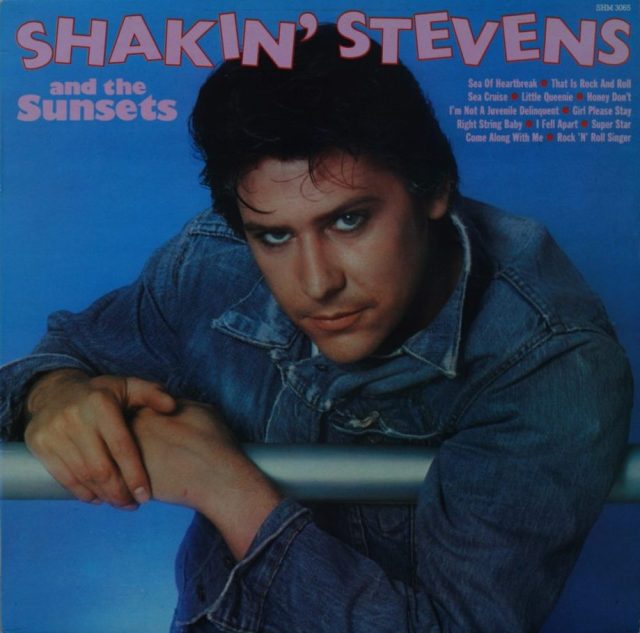
I'm No JD

I’M NO J.D.” album –
Side 1:
That Is Rock And Roll, Right String Baby, I Fell Apart, Super Star, Sea Cruise, Little Queenie.
Side 2:
Come Along With Me, Rock ‘n’ Roll Singer, I’m Not A Juvenile Delinquent, Honey Don’t, Girl Please Stay, Sea Of Heartbreak. 

Despite guitarist Mickey Gee playing a few gigs after the release of “I’m No J.D.”, his first tenure with Shakin’ Stevens was somewhat short-lived as Willie Blackmore took over for the recording of the band’s third album, “Rockin’ and Shakin'” in 1972. Subsequently, this album failed to sell, but fortunately didn’t prevent the band from receiving recognition as a popular live act which in turn garnered them the “Top British Rock And Roll Group (Of The Old School)” in the New Musical Express Poll that same year…

Rockin and Shakin

ROCKIN’ AND SHAKIN’” album –
Side 1:
Roll Over Beethoven, White Lightning, One Night With You, Hi Heel Sneakers, Tallahassie Lassie, Yakety Yak.
Side 2:
Maybelline, Hearts Made Of Stone, Good Rockin’ Tonight, At The Hop, Walk On The Water, Rip It Up (Saturday Night Rock). 

By 1973, Ian Lawrence had become the new guitar player and Tony Britnall the new Sax player, and the band had been thrown a lifeline by a Dutch production company called Tulip who had booked them for several European tours. Furthermore,  Dureco became the band’s new recording label and their first releases included a re-recording of their first single, “Spirit of Woodstock”. In 1974 the album, “Shakin’ Stevens & Sunsets” was released and the band were riding high on their successful reputation in the Netherlands and across Europe via concert and television exposure…

SHAKIN’ STEVENS & SUNSETS” album –
Side 1:
The Spirit Of Woodstock, It Came Out Of The Sky, Blue Moon Of Kentucky, Big River Boogie, Me And Bobby McGee, Tallahassee Lassie, Honey Honey.
Side 2:
That’s Rock ‘n’ Roll, Buzz Buzz Buzz, Don’t Jive Me No More, Train Kept A Rollin’, Return Of The Superstar, Holy Moley, Riot In Cell Block Number Nine. 

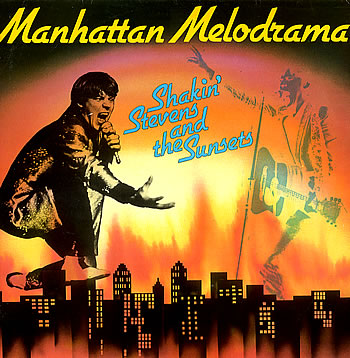
In early ’74, Mike Lloyd Jones and Malcolm Priest had replaced Ian Lawrence and George Chick on lead guitar and bass guitar, respectively. Also, Sax player, Tony Britnall had left the band. Soon after, Shaky recorded a version of Ricky Nelson’s “Lonesome Town” backed by Dureco musicians (albeit credited as ‘The Sunsets’) and this became a successful hit single in the Dutch Top 20. In 1975, the band’s manager, Paul Barrett outlined an idea for a Concept album which presented an exploration of the gangsters of the 1930’s in relation to the ‘outlaw’ music recorded by Rock ‘n’ Roll artists and bands of the 1950’s. “Manhattan Melodrama” was the title of the album and was taken from the film of the same name which John Dillinger had watched before his demise. The record was not very successful and was also met with both the band and manager’s disapproval of the way the production as a whole had been marketed by the Dureco label…

Manhattan Melodrama

MANHATTAN MELODRAMA” album –
Side 1:
Manhattan Melodrama, Alan Freed, California Cowboy, Lady Lizard, Punk, Outlaw Man.
Side 2:
I Told You So, Longer Stronger Love, Like A Teenager, Holy Roller, No Other Baby, Get Back John. 


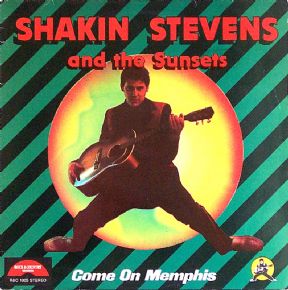
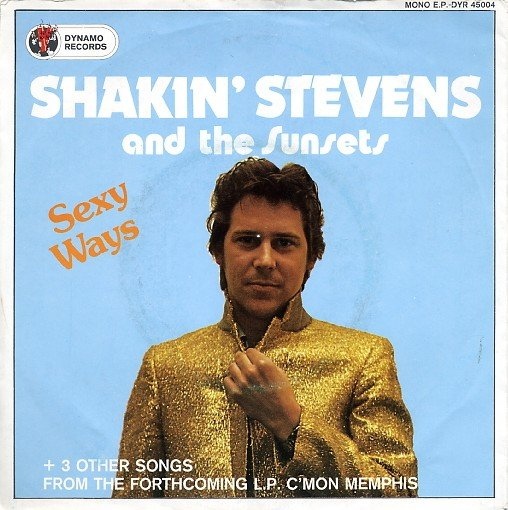
In 1976, the band switched to the Dynamite label who produced the tracks for the “Frantic” EP. Subsequently, their recording of “Jungle Rock” was released as a single in the UK. The band’s Dutch releases at this time came in the form of several vinyl formats: the 7″ single “You Mostest Girl”, the EP “Sexy Ways” and the 10″ album, “Come on Memphis”. Later that year, the band were offered a recording session with Track Records and this heralded the return of Ian Lawrence playing steel guitar and George Chick (replacing Mal Priest on bass). Thereafter, in 1977, Track Records made the decision to promote Shakin’ Stevens as a solo artist which brought forth the eventual disbanding of The Sunsets as a group. However, new horizons lay ahead for both solo artist and band…

“COME ON MEMPHIS” 10″ Mini-album –
Side 1:
Honey Hush, My Buckets Got A Hole In It, Evil Hearted Ada, Wine Wine Wine, Blue Swingin’ Mama, Oakie Boogie.
Side 2:
Reet Petite, Baby Blue, Rock Around With Ollie Vee, You Mostest Girl, Sexy Ways, Rockabilly Earthquake. 

SHAKIN’ STEVENS & THE SUNSETS SINGLE RELEASES: 

NETHERLANDS EXTENDED PLAYS RELEASED IN 1975 AND 1976 RESPECTIVELY:

Early 1980’s reissues by MFP, Hallmark and Pickwick of first 3 albums + C.J.S. Records reissue of “Manhattan Melodrama”:

* COMING SOON TO ‘COSMIC DWELLINGS’“SHAKY: AS LONG AS THERE’S A MOON ABOVE” *

Article concept/written content – Copyright ©2015 by
Tony G. Marshall and Cosmic Dwellings. All Rights Reserved.

Posted in Blues, Concert, Live, Music, Pop, Rhythm and Blues, Rock, Rock 'n' Roll, Rockabilly | Tagged , , , , , , , , , , , , , , , , , , , , , , , , , , , , , , , , , , , , , , , , , , , , , , , , , , , , , , , , , , | 1 Comment

THE WHO – A Love Affair With Festivals | uDiscover

The Who - Live

Given the way history is often written you may well be surprised to hear that The Who’s first major festival performance was not at The Monterey Pop Festival in 1967, but two years earlier, in August 1965 when they co-headlined the Friday night at The Fifth National Jazz and Blues Festival at Richmond with the Yardbirds. The following year on the last weekend of July they headlined the Saturday night of the same festival that had by then moved to Windsor racecourse in the west of London. Of course neither festival was made into a film so their playing there is confined to a line on a tatty old handbill.

660700-Windsor-Jazz-and-Blues

In March 1967 The Who made their first ever U.S. concert appearance at Murray The K’s Music in Fifth Dimension in New York City. Three months later, and the day after appearing at Christ’s College’s Summer Ball in Cambridge the band flew to Detroit and appeared in Ann Arbor, Michigan the day after on 14 June at a small club. Then following a gig in Arlington, Illinois they played Friday night and Saturday night at The Fillmore in San Francisco. On Sunday the band flew south to Monterey in California for an appearance at one of the first, and certainly the best, festivals of the Summer of Love.
“The first thing I felt when I got there was it was fantastically big,” said Pete Townshend. It was in fact a 7,000-seater open-air amphitheatre. Jimi Hendrix was also on the bill for Sunday evening and neither The Who nor Jimi wanted to have to follow the other. John Phillips of The Mamas and the Papas flipping a coin resolved it all. Pete won and the Who went on first. Their 30 minute set culminated in Pete destroying his Stratocaster and attacking his amps while Keith Moon wrecked his drum kit as their six song set climaxed with ‘My Generation’.

The following year The Who toured North America twice and played a number of outdoor shows during their second two-month stint from June through to the end of August. It was 1969 before they played another major festival and this one was in the UK at Plumpton Racecourse where they headlined the National Jazz and Blues Festival on Saturday night, 9 August.

Three nights later they were in Massachusetts to play the Tanglewood Music Shed, the traditional summer home of the Boston Symphony Orchestra. Here they were second on the bill to Jefferson Airplane, with B.B. King also appearing. Five days later they were at Woodstock for a performance that helped to elevate the band to even greater status than they had been enjoying for the previous year or so.

Yet it is an appearance that nearly didn’t happen. The organisers of Woodstock were having serious logistical problems with the shear size of the audience and they were in turn struggling to make the money side of things work. The Who’s road manager John Wolff had the job of dealing with the organisers, tackling them about the delicate subject of the band’s fee. He was offered a check, but this was not going to satisfy the band. For a long while no one from the organisers would talk to Wolff, when it was almost time to go on the organisers tried the old, “Well, you’ll have to go on.” There was no budging Wolff, or the Who, so eventually a helicopter had to be dispatched so that the money could be brought from the bank, having first picked up the bank’s manager, because the vault was on a time lock. The Who got the remainder of their $11,200, having already been paid a deposit, and the public that were still awake, got a great show.

The Who played at 5 am on Sunday morning and some of the 70 minute set was featured in the subsequent movie of the generation defining festival. As the Who’s set was reaching it’s climax the sun was coming up, it was 6.05am on Sunday morning, not the ideal time for any band to perform at their best, but despite that, they were magnificent. Roger Daltrey in particular was in fine voice, which must have been hard having been waiting for so long to even get on stage. The Who’s set was typical of their live performances at the time, featuring a scaled down version of Tommy along with some old hits and rock ‘n’ roll numbers – Eddie Cochran’s ‘Summertime Blues’ and Johnny Kidd and the Pirates’ ‘Shakin’ All Over’.

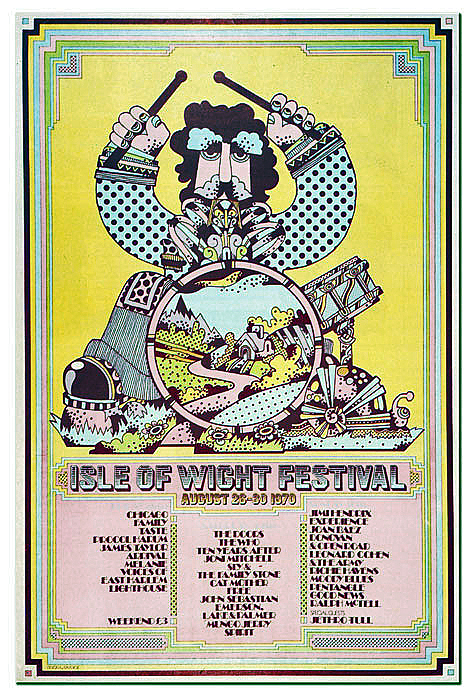
700830-iow-poster.l

Less than two weeks after Woodstock, The Who were at the 1969 Isle of Wight Festival where they headlined the Saturday night, Dylan was the headliner on Sunday. It was another towering performance on Saturday night, according to The International Times, “But The WHO got it on – and got it on good. Entwistle in skeleton suit Townshend in his usual white boiler suit, & a power & drive that virtually every other band lacked. By the time they came on, the press bar had shut, most of the alcoholic hacks had split back to their hotels, and the press arena was full of leaping freaks. Tommy was resurrected, but there was a lot of life left in the corpse. Daltrey was magnificent; the band played superbly, and for the first time the audience responded to the music. F**king incredible!

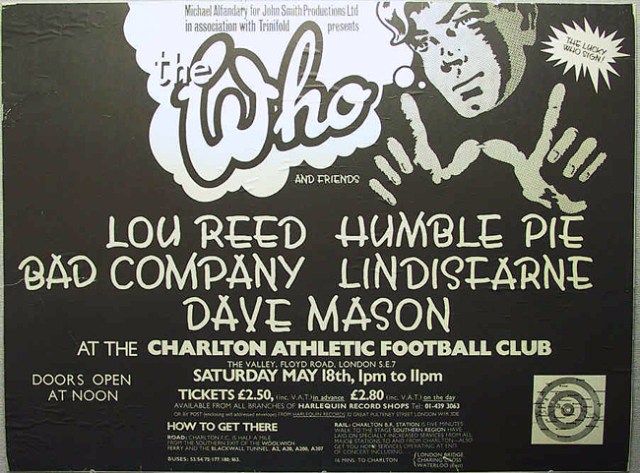
It was earlier in 1970 that the Who recorded their seminal Live at Leeds album that did so much to codify their position as one of the greatest live bands of the last 50 years. Over the coming decade their performances at gigs and outdoor gigs in the UK and North America were, for fans and converts, so very memorable. Among them was their appearance at the Oval Cricket Ground in the summer of 1971, The Summer of ’74 festival at Charlton Athletic’s football ground, The Valley in South London. Two years later they returned to The Valley for another gig that for a long while was billed as the “World Record Loudest Concert.”

The-Who-Charlton

With The Who on their 50th anniversary tour it is entirely appropriate that like The Rolling Stones in 2012 they should headline Glastonbury. Like the Stones they have also headlined in Hyde Park at The British Summer Time Festival.

Last evening’s show in London was another triumphal festival appearance. As the Telegraph’s Patrick Sawer says in today’s paper, “Only the most jaded would have failed to feel a thrill as the opening chords of ‘I Can’t Explain’ rang out… ‘The Seeker’, ‘Who Are You?’, ‘The Kids Are Alright’, ‘Pictures of Lily’, ‘I Can See For Miles’; Pete Townshend and Roger Daltrey delivered them with the energy and enthusiasm of performers half their age.” The 70,000 crowd was treated to a climax of ‘My Generation’ and ‘Won’t Get Fooled Again’.

The thing is they never have fooled us and we can’t wait for Sunday and their Glastonbury performance.

Listen to our exclusive Spotify playlist of The Who playing live at Festivals…and more

[spotify http://open.spotify.com/user/udiscover/playlist/2ACKE7dj0RNB1hAuExelyN]

via The Who – A Love Affair With Festivals – uDiscover.

Posted in Blues, Country, Festival, Live, Music, Rhythm and Blues, Rock, Rock 'n' Roll | Tagged , , , , , , , , , , , , , , , , , , , , , , , , , , , , , , | Leave a comment

JIMI HENDRIX EXPERIENCE: Miami Pop Festival | PopMatters

hendrix

BY J.C. MACEK III

12 December 2013

Previously unreleased live tracks of some of Hendrix’s best… in the RAW! Be they clichés or universally accepted facts, there are a few cover artthings that most every music fan knows about the late, great Jimi Hendrix. One is that Hendrix was among the greatest and certainly most innovative guitarists of all time, doing things with his upside-down axe that few artists had even thought of, much less accomplished. Another of these facts everyone knows is that The Jimi Hendrix Experience has released exponentially more music since the time of the guitarist’s death than they did while he was still strumming and singing.


The fact that Hendrix was taken from us far too early has always left the question of what he could have accomplished and released had he survived. This same fact, coupled with the evidence that Hendrix had not yet peaked (and, thus, had never “experienced” a career downturn or the musical tide turning against him), has left fans hungry for more Hendrix for the past four decades… in whatever form that “more Hendrix” might take.

Luckily, unreleased material continues to be discovered that outshines the myriad repackagings of Hendrix’s best known songs into mix after mix after mix of “Greatest Hits” releases. Thus the 2013 release of The Jimi Hendrix Experience’s Miami Pop Festival live album has been greeted by the public with a big “Yes please.”

How significant can this release be, considering the fact that it consists entirely of songs that have been released? The truth is, this release is very significant. For one thing, these recordings were made at the huge May 1968 Miami Pop Festival and were never made available in any form until this live album (released 45 years after the show). How huge was the Miami Pop Festival (the first so-named show of 1968)? The concert (only a month from inception to stage) attracted thousands of fans and sported a roster that included Chuck Berry, John Lee Hooker, Steppenwolf and Frank Zappa in addition to the headlining role for the Jimi Hendrix Experience. In addition, the first ever live recordings of “Tax Free” and “Hear My Train A Comin’” were captured at this show, both showcasing Hendrix’s experimental and jamming side. This performance also serves as the bridge between Hendrix’s amazing Monterey Pop Festival performance and his closing of the infinitely well-known Woodstock.

Of course the main attraction to any previously unavailable Hendrix tracks is the fact that Mister Jimi was such a virtuoso and experimenter that he never played the same song the same way twice, a fact especially evident in live performances. Sure, fans have heard each of these songs multiple times, but never performed quite this way and because of this, each track becomes immediately addictive.

The first track, containing only the concert’s “Introduction”, hardly lends itself to a promising album, however. This barely audible audio snippet is rife with tape hiss and indiscernible words and stage sounds. However, as the opening chords to “Hey Joe” thunder out from the stage (and your speakers 45 years later), the audio difficulties are overshadowed by the drums of Mitch Mitchell and the bass of Noel Redding… and especially the guitar of Jimi Hendrix himself. While the rhythm section has to undeniably be great to back such a performer, the dynamism and showy magnetism of Hendrix easily outshines the Experience’s other two capable members to the point that they are often, regrettably, forgotten. Over the ten included live tracks here, the band ravages and ravishes each song with wild love.

As good as “Hey Joe” is with Hendrix’s cool voice taking the lead, “Foxey Lady” practically blows it off the stage. Hendrix’s metallic chords are amplified by Redding’s rhythmic bass tapping while Mitchell goes into an almost Keith Moon haze with his wildly thrashing percussion sounds. When Hendrix hits the chorus and throws in guitar leads to echo his own voice, one is hard pressed to believe that there were only three people on that stage. Spoiler Warning: the solo has to be heard to be believed.

The Experience slows down for the funky “Tax Free”, which lasts eight minutes and twenty-one seconds in this version. “Tax Free” was made to be played live with Hendrix burning up the fretboard and forcing the song to speed itself up as he progresses through these amazing sounds. One can imagine the workout Redding and Mitchell experienced behind their frontman. This leads to our first of two versions of “Fire”, which exceeds the studio version in speed and energy by a country mile. “Fire” also shows how raw the concert was with the backing vocals to the chorus often missing, with Hendrix having to back himself, with difficulty. It’s a great listen for the real Hendrix fan.

“It’s nothin’ but a jam anyway, you know?” Hendrix says in his natural introduction to “Hear My Train A Comin’”, which he claims the band only did once before. The raw, loud blues coming from Hendrix’s inverted Stratocaster is anything but “nothin’”. This slow blues jam runs almost as long as “Tax Free” at seven minutes and forty one seconds and is infinitely listenable.

The proceedings speed up again with this show’s energetic performance of “I Don’t Live Today”, which features Hendrix smoothly singing over his tremolo-distorted guitar playing and gives way to Hendrix bellowing out the chorus before the rollercoaster ride of a guitar solo.

Another slow blues song follows in the form of “Red House” with Hendrix jamming for a full twelve minutes and seven seconds with Redding and Mitchell backing him at only the right times, letting Hendrix’s guitar blaze the trail. At any speed, Hendrix is anything but “safe”. The color theme continues with a relatively standard version of “Purple Haze”. While certainly not “unimpressive”, this version feels so close to the studio version that this closer feels nearly by the numbers. That is hardly dissatisfying, considering “the numbers” of this number are stellar, but if this feels like a slightly more raw version of the studio track, that’s because it pretty much is. That said, Hendrix’s wail of “Yea-ah, Purple HAZE” really brings that live feel back, as does the punching live finale of the track.

Many fans and casual listeners will decry the absence of such Hendrix classics as “Crosstown Traffic”, “Voodoo Chile”, “Have You Ever Been (To Electric Ladyland)” and Hendrix’s version of Bob Dylan’s “All Along the Watchtower”, but considering the fact that none of these would be released or recorded until October of 1968, simple math explains why these were impossible to include. However the Miami Pop Festival did continue to a second day… a day that was sadly rained out by fierce thunderstorms. Apparently, all that remains of the Saturday afternoon performance are reprises of “Fire” and “Foxey Lady”, both raw, great to hear and great to have included, but with only ten songs on the entire album the fact that two of them are repeats may turn off some fans.

That would, of course, be quite a shame as the entire package is an amazing groove and features Hendrix at a pivotal time for his band and sounding great. Also included in this set is a (mostly) full color booklet with a great many photos from the festival with Hendrix both on and off stage (almost always looking like he’s having a great time). These pictures accompany a very fine essay by Bob Santelli, which puts this performance in historical context. The cover photo alone, with Hendrix singing and jamming on his upside-down Strat, is enticing and captures in one frame the energy he delivers to this entire performance. If that’s not enough to raise the hackles of any true Jimi Hendrix Experience fan, then check your pulse… you may be dead.

via Jimi Hendrix Experience: Miami Pop Festival | PopMatters.

Posted in Album, Album, Blues, CD, CD, Concert, Festival, Guitar, Instrumental, Live, Music, Rhythm and Blues, Rock, Rock 'n' Roll | Tagged , , , , , , , , , , , , , , , , | Leave a comment

THE ROLLING STONES: “Sticky Fingers” | Album Reviews | Pitchfork

Sticky Fingers

The Rolling Stones

Sticky Fingers

Rolling Stones; 1971/2015

By Mark RichardsonJune 19, 2015


The story of the Baby Boomers, and their movement from adolescence to adulthood, has been documented and re-told endlessly. And few bands represent that story, and the move from the relative innocence of the mid-’60s into the hedonism and burnout of the ’70s, better than the Rolling Stones. They started out as seemingly polite boys in jackets and ties and they grew and changed in front of the cameras and the microphones. Their music grew darker and more cynical, just like the times. At one of their shows, the Altamont Speedway Free Festival, held just as the ’60s came to a close, a group of Hell’s Angels, possibly enlisted as security, killed a man, and the event, along with the Charles Manson murders four months earlier, have long been held up as the symbolic end of the peace-and-love ’60s. Seen in retrospect, the Stones were a Zelig-like band for a while there, somewhere in the mix whenever there was a cultural shift underway.

That post-Altamont moment was the setting for their 1971 album Sticky Fingers, an album reissued many times that was recently released in its most extensive re-packaging yet. From 1968’s Beggars Banquet and the following year’s Let It Bleed on through this album and 1972’s Exile on Main St., the Rolling Stones had one of the great four-album runs in pop music history. This was a time when—on record, at least—they could do no wrong, and Sticky Fingers could reasonably be called their peak. Beggars and Let It Bleed might have had higher highs, but both also had their share of tossed-off tracks; Exile’s tossed-off tracks, on the other hand, were pretty much the whole point—it’s the underground music’s fan’s favorite, but it never had the broader cultural impact of its predecessor. Sticky Fingers is where the myth met the songwriting; Keith Richards’ riffs and melodies were in full flower, Mick Jagger never sang better, their new guitarist, Mick Taylor, was upping the ante musically, and the whole thing was wrapped up in a brilliant packaging concept by Andy Warhol.

“Brown Sugar” launches the record with its quintessential blues-rock riff and lyrics that get more questionable the closer you listen (Jagger has since said it was a bit of a wind-up, “all the nasty subjects in one go”). But words were secondary for the band at this point—Sticky Fingers is about melody, and playing, and style. The Stones were always fascinated with American music, but after the death of Brian Jones in 1969 and their move away from psychedelia, their connection to blues, R&B, and country music grew even more intense. From the loping country-folk of “Wild Horses” and the tongue-in-cheek honky tonk of “Dead Flowers” to a Mississippi Fred McDowell cover (“You Gotta Move”) to the swelling Otis Redding-style R&B of “I Got the Blues” to the crunchy boogie of “Bitch” to the Latin-flavored Santana jams of “Can’t You Hear Me Knocking”, Sticky Fingers is a love letter to these forms, the culmination of obsessions these musicians had had since childhood. But where they once sounded like English boys doing their version of the blues, now their songs felt as lived-in as their inspirations.

By this point, the Stones were so convincing playing rootsy American music it made little sense to compare them to their British peers. Musically at least, the Rolling Stones of 1971 had more in common with the Allman Brothers than they did the Who. Along with the barrelhouse piano, pedal steel, and Stax-like horns, Sticky Fingers was also only the second album to feature the guitar work of Mick Taylor, and his clean, fluid, and highly melodic leads bear a strong resemblance to Duane Allman’s playing from this period.

But ultimately, this is Mick Jagger’s album, the same way Exile is Keith’s. Of all the iconic vocalists in ’60s and ’70s rock, Jagger remains the hardest to imitate, at least without sounding ridiculous. That’s partly because he himself never minded sounding ridiculous, and he turned his almost cartoonish swagger into a form of performance art. Jagger’s voice never sounded richer or fuller than it does here (Exile mostly buried it, to artful effect), but he’s doing strange things with it, mimicking and exaggerating accents, mostly from the American South, with an almost religious fervor.

When the Stones were coming up, the line on British singers is that they sounded American because they grew up listening to those records; on Sticky Fingers, Jagger pushes that kind of mimicry to places that run just short of absurd. His twang on “Dead Flowers” is obviously played for laughs, but “You Gotta Move” is harder to get a bead on, partway between homage and parody and delivered with abandon. “I Got the Blues” is utterly sincere, with Jagger flinging every ounce of his skinny frame into it. Wherever he stands in relation to the material, Jagger is selling it, hard, and by extension selling himself as a new kind of vocalist. “Sister Morphine” and “Moonlight Mile” are the two songs that stray furthest from American music reverence, and they are highlights, showing how well the Stones could convey weariness and a weird kind of blown-out and wasted beauty.

With reissue culture in overdrive, we’re seeing which classic bands kept the most in their vaults. The Stones, like Zeppelin, didn’t keep much. The 2010 version of Exile on Main St. pretty much cleaned out the vault as far as music from this era, so what we have here are alternate mixes, an inferior but still interesting different take of “Brown Sugar” with Eric Clapton, the one true rarity that has long circulated but never been officially issued. There’s also, depending on which version you get, a good deal of vintage live Stones, which is the main thing to get their fans excited. Selections from two 1971 gigs, both recorded well, capture the band in a peak year.

To my ears the Stones’ live prowess has never quite translated to recordings. The best live records are about more: more heaviness, more jamming, more crowd noise, more energy. And their music didn’t necessarily benefit from increasing any one of those things. Their songs were about a certain amount of balance between all of the elements, which is why their recordings sound so platonically perfect. With their live records, you can focus on the grooves and the riffs and the collective playing, but it’s easier to notice moments of sloppiness and mistakes. Still, as far as live Stones on record, the material here is about as good as you will get.

The Stones entered the ’70s still young and beautiful, but they’d have their share of problems just like everyone else; they got into disco and then in the ’80s they dressed like they were on“Miami Vice” and then finally they fully understood what nostalgia for them was really worth and they discovered the power of corporate synergy. Given the weight of history behind it and its centrality to the story of both the Rolling Stones and rock music as a whole, it can be difficult to put on Sticky Fingers and try and hear it for what it was: the highly anticipated new album from one of the biggest bands in the world, a group that at the time hadn’t released a new one in two years (in 1971, that was an eternity). They were called the World’s Greatest Rock’n’Roll Band for entirely too long, but if that designation ever applied it was here.

via The Rolling Stones: Sticky Fingers | Album Reviews | Pitchfork.

Posted in Album, Album, Blues, CD, Country, Folk, mp3, Music, Pop, Rhythm and Blues, Rock, Rock 'n' Roll | Tagged , , , , , , , , , , , , , , , , , , , | Leave a comment

MONTEREY POP: The First Rock Festival | Essay – The Criterion Collection

MI0002376396By Michael Lydon

The Monterey International Pop Festival is over, all over. And what was it? Was it one festival, many festivals, a festival at all? Does anything sum it up, did it mean anything, are there any themes? Was it just a collection of rock groups of varying levels of proficiency doing their bit for a crowd of thousands who got their fill of whatever pleasure or sensation they sought? Was it the most significant meeting of an avant-garde since the Armory show or some Dadaist happening in the ’20s? Was it, as the stage banner said, “Love, flowers, and music,” or was it Jimi Hendrix playing his guitar like an enormous penis and then burning it, smashing it, and flicking its pieces like holy water into a baffled, berserk audience?

Was it a hundred screaming freak kids with war-painted faces howling and bashing turned-over oil drum trash cans like North African trance dancers, or was it the thousands of sweet hippies who wandered, sat, and slept on the grass with flutes and bongos, beads and bubbles, laughing and loving softly? Was its spirit Simon and Garfunkel, singing like little lost lambie-pie castrati, or was it Ravi Shankar, rocking over his sitar and beating a bare foot while opening up a musical world to 7,000 listeners who, at his request, did not smoke for his three-hour concert? Rolling Stone Brian Jones was part of it, wandering for three days silent inside his blond hair and gossamer pink cape; so was a girl writhing on a bummer at the entrance to the press section; while no one helped, cameramen exhausted themselves recording her agony. Was it a nightmare and something beautiful existing together or a nightmare and many beautiful things existing side by side?

One is left only with questions that a mind be-sodden with sound and sound and sound and sound cannot answer. Saturday night Jerry Garcia of The Grateful Dead commented, “There’s a lot of heavy stuff going on.” Whether he meant music or acid or emotion or everything, he was right. Something very heavy happened at Monterey last weekend.

Those very odd three days began in Friday’s cool gray air as the first of the crowd began to circle through the booths of the fairground. The only word for it then was groovy. A giant Buddha stood in one corner, banners decorated with astrology signs waved, and everything the hippie needs to make his life beautiful was on sale: paper dresses, pins, earrings, buttons, amulets, crosses, posters, balloons, sandals, macrobiotic food, and flowers. There was a soul food stand, the Monterey Kiwanis had fresh corn on the cob, the Congregation Beth El had pastrami sandwiches, and hippies with the munchies snapped their fingers to the popping of the popcorn stand. In the Festival offices Mama Michelle of The Mamas and the Papas was hard at work doing everything from typing to answering the phone. Papa John was keeping his cool in his gray fur hat which he never once took off in the frantic chaos.

Nothing but chaos could have been expected. The whole Festival had been nothing more than an idea two months before in the head of publicist Derek Taylor and in the rush of preparation had changed itself many times.

At first it was to be a commercial proposition; then Taylor, unable to raise the money needed to pay advances to the invited groups, had gone to Phillips and Dunhill producer Lou Adler for bankrolling. Why not make it a charity and get everyone to come for free, they suggested, and suddenly it became not a money-spinning operation but a happening generated by the groups themselves, which hopefully would make some composite statement of pop music in June 1967.

The Festival was incorporated with a board of governors that included Donovan, Mick Jagger, Andrew Oldham, Paul Simon, Phillips, Smokey Robinson, Roger McGuinn, Brian Wilson, and Paul McCartney. “The Festival hopes to create an atmosphere wherein persons in the popular music field from all parts of the world will congregate, perform, and exchange ideas concerning popular music with each other and with the public at large,” said a release. After paying the entertainers’ expenses, the profits from ticket sales (seats ranged from $3.50 to $6.50; admission to the grounds without a seat was $1) were to go to charities and to fund fellowships in the pop field. Despite rumors that part of the money would go to the Diggers in both Los Angeles and San Francisco to help them cope with the “hippie invasions,” so far no decision has been made on where the money will go.

This vagueness and the high prices engendered charges of commercialism—“Does anybody really know where these L.A. types are at?” asked one San Francisco rock musician. And when the list of performers was released there was more confusion. Where were the Negro stars, the people who began it all, asked some. Where were The Lovin’ Spoonful, the Stones, the Motown groups; does a pop festival mean anything without Dylan, the Stones, and The Beatles?

“Here they are trying to do something new,” said the Fillmore’s Bill Graham, “and they end up with group after group just like the jazz festivals. Will anybody have the chance to spread out if they feel like it?”

But as the Festival unfolded it was clear that if not perfect, the Festival was as good as it could have been. The Spoonful could not come because of possible charges that could be brought on a pot bust they had helped to engineer to avoid a possession charge against themselves; it was rumored, moreover, that John Sebastian wants to spend all his time writing and that they are breaking up as a group. Two of the Stones are facing pot charges of their own in England. Smokey Robinson and Berry Gordy were enthusiastic about the Festival at first, John Phillips said, “then they never answered the phone. Smokey was completely inactive as a director. I think it might be a Jim Crow thing. A lot of people put Lou Rawls down for appearing. ‘You’re going to a Whitey festival, man,’ was the line. There is tension between the white groups who are getting their own ideas and the Negroes who are just repeating theirs. The tension is lessening all the time, but it did crop up here, I am sure.”

Phillips also reported that Chuck Berry was invited. “I told him on the phone, ‘Chuck, it’s for charity,’ and he said to me, ‘Chuck Berry has only one charity and that’s Chuck Berry. $2,000.’ We couldn’t make an exception.” Bob Dylan is still keeping his isolation after the accident which broke his neck last summer, and though rumors persisted up to the last minute Sunday night that The Beatles would show, or at least were in Monterey, they decided to keep their “no more appearances” vow. Dionne Warwick made a last minute bow out, and The Beach Boys, whose Carl Wilson faced a draft evasion charge, decided to lay low.

Yet as the sound poured out incessantly—the concerts with nary an intermission averaged five hours in length (can you imagine going to four uncut top volume Hamlets in three days, or sitting in the Indianapolis pits while they re-ran the race eight times over a weekend?)––gaps were not noticed. One dealt with what was at hand, and what was there was very, very good indeed. There were a few disasters who can be written off from the start. Laura Nyro, a melodramatic singer accompanied by two dancing girls who pranced absurdly; Hugh Masekela, whose trumpet is only slightly better than his voice—he did, however, do some nice backing for The Byrds on “So You Want to Be a Rock ‘n’ Roll Star,” and Johnny Rivers, dressed like an L.A. hippie, who had the gall to sing The Beatles’ “Help” not once but twice. Others, like The Association, with their slick high-schooly humor, didn’t fit in; still others, like Canned Heat, an L.A.-based blues band, had bad days. But the majority rose to new heights for the concert. There was the feeling that this was the place, that the vibrations were right, that one was performing for one’s peers and superiors, that anything and everything was one capable of was demanded. “I saw a community form and live together for three days,” said Brian Jones Sunday night. “It is so sad that it has to break up.”

That community was formed not only on the stage between the performers and the audience but backstage, at the artists’ retreat behind the arena called the Hunt Club, and in the motel rooms where parties went on till dawn. There was little off-stage jamming (no motels had the space, proper wall thickness, or power) except for a four-hour blast between the Dead, the Airplane, and Jimi Hendrix that carried the members to breakfast Monday morning after everyone else had gone home, yet everyone talked, listened, and grooved with everyone else. The variety of music was tremendous, blues to folk to rock to freak. There were big stars, old stars, comers, and groups who avoid the whole star bag. If one was good, in whatever bag, one was accepted. Music styles were not barriers; however disparate the criteria, there seemed to be some consensus on what was real music and what was not.

The Festival had a sort of rhythm to it that was undoubtedly coincidental—the organizers swore that there was no implicit ranking in the order of the acts—but which worked. Friday night was a mixed bag to get things moving, Saturday afternoon was blues, old and gutty and new and wild. Saturday night opened some of the new directions, then a return to peace with Shankar Sunday afternoon; and a final orgiastic freak-out Sunday night.

Montery 67_6283

The Association began it all in the cool gray of Friday night with a professional style and entertaining manner, doing a fine job on their sweetly raucous hit single, “Windy.” Then The Paupers, a four-man group from Toronto, provided the first surprise. The almost unknown group, managed by Albert Grossman, Dylan’s grandmotherly and shrewd mentor, was able to get a screaming volume and a racy quality unmatched by some of the bigger groups. “I found them at the Whisky A Go-Go in New York,” Grossman said. “They were cutting The Jefferson Airplane to pieces so I signed them up.” Only together seven months they are sure to get better. “We are trying to create a total environment with sound alone,” said lead guitarist Chuck Beale. “Sound is enough. We don’t use lights or any gimmicks. When we record we never double-track or use any other instruments. What the four of us can do is the sound we make. That’s all.”

Lou Rawls, the blues singer whose “Dead End Street” is currently in the charts, came next and pulled the audience back to what he called “rock ‘n’ soul.” Backed by a big band, he looked as if he would have been more at home in a night club, but his fine funky voice and from-the-heart monologues about the nitty-gritty of Negro life were soulful indeed. To watch him was to be back at the Apollo where rock is flashy, stylish, and flamboyant, but still communicating with the kids high in the balcony. “The blues,” he said as he came off exhilarated, “is the way of the future. The fads come and go, but the blues remain. The blues is the music that makes a universal language.” Other music at the Festival seemed also to speak to all, but Rawls, a solid member of the professional black school of music, hit one major thread: the new music is still close to the blues, and most of the far-out sounds in the three days were but new blues ideas. He also had his finger on another key truth: “I’m trying to portray the facts as they stand. A few years ago rock was all facade, all doo-wah-diddy-diddy, all prettied up. I get the feeling that people now are trying their best to be where it’s at.”

After Johnny Rivers stayed on too long, Eric Burdon, one of the best white blues singers around, romped through a half dozen numbers with his new Animals, the high point coming with “Paint it Black,” the Jagger-Richards masterpiece which he, unbelievably, improved upon, particularly with the zany screechings of an electric violin. Brian Jones, sitting in the dirt of an aisle, applauded wildly.

Simon and Garfunkel finished off the night, and what can one say about them? “Homeward Bound” brought back memories of the time when a sweet folk-rock seemed to be the new direction, but though the song sounded nice enough, they seemed sadly left behind. “Benedictus” had them harmonizing like choirboys, and they did an encore, a funny new nonsense song, “I Wish I Was a Kellogg’s Cornflake.” When the last note floated out about 1:30 A.M., the first night was over and the peace was extraordinary. While the lucky (or unlucky?) few drove to their motels, the mass of the crowd drifted to the huge camping area near the arena and to the football field at Monterey Peninsula College nearby. There, with the sweet smell of pot drifting over sleeping bags, the music continued in singing and talking and in just being.

In the bright hot sun of Saturday afternoon the serious blues shouting began. Canned Heat led off with an uninspired set, and then came one of the most fantastic events of the whole shebang: the voice of Janis Joplin, singer of Big Brother and the Holding Company, a San Francisco group almost entirely unknown outside of the Bay Area. A former folk singer from Port Arthur, Texas, Janis was turned on a year ago by Otis Redding, and now she sings with equal energy and soul. In a gold-knit pants suit with no bra underneath, Janis leapt, bent double, and screwed up her plain face as she sang like a demonic angel. It was the blues big mama style, tough, raw, and gutsy, and with an aching that few black singers reach. The group behind her drove her and fed from her, building the total volume sound that has become a San Francisco trademark. The final number, “Ball and Chain,” which had Janis singing (singing?––talking, crying, moaning, howling) long solo sections, had the audience on their feet for the first time. “She is the best white blues singer I have ever heard,” commented S.F.Examiner jazz critic Phil Elwood.

Country Joe and the Fish, the acid-political group from Berkeley came next, and while they did not reach their accustomed heights, their funny satirical words and oddly dissonant music went over well. They did two of their political songs. “Please Don’t Drop That H-Bomb on Me, You Can Drop It on Yourself,” whose title is the complete lyric, and “Whoopie, We’re All Going to Die,” which contains the memorable line, “Be the first on your block to have your boy come home in a box.” These were among the very few explicit protest songs at the Festival; nowadays rock musicians are musicians first and protesters a slow second. “There are two parts to music,” said the lead guitarist and music writer for Country Joe, Barry Melton, “the music and the lyrics. Music we have with everybody, but some say the lyrics shouldn’t be political. Everybody agrees with us on the war, but we feel that in this society, you have to make your stance clear. Others don’t want to speak up in songs, be right up front. That’s why we put politics in.” Melton’s songs, particularly “Not-So-Sweet Martha Lorraine,” a nightmarish song about a mysterious lady who “hides on a shelf filled with volumes of literature based on herself” and who gets high with death, have been called “pure acid,” but Melton says all music is psychedelic. “One part of LSD is liberation, do what you want to do. I feel I do that, do what I want to do. When I hear a sound that is groovy I use it. I try to find music all over the place. Listening to anything can give you musical ideas. That’s freedom, and maybe that’s psychedelic.” He spoke for most of the groups. It would be hard to find any of the musicians who had not taken LSD or at least smoked pot, but by now it has become so accepted that it’s nothing to be remarked on by itself. Acid opened minds to new images, new sounds, and made them embrace a wild eclecticism, but rather than being “acid” as such, it has become music.

Al Kooper, an organist who has often played with Dylan, took half an hour with some funky blues organ and vocal, but the action began again with The Paul Butterfield Blues Band, a newly constituted version of the group that, more than any other group, led the revival of white interest in blues bands. Led by Butterfield’s fine voice and better harmonica, and with the strange melancholic whimsy of Elvin Bishop’s guitar, the backup band of bass guitar, trumpet, sax, and drums rocketed through some very impressive work. They also returned for the Saturday night show, with Bishop showing off his odd voice on a gloomy blues, “Have Mercy This Morning.” The Butterfield group, which began years ago, gigging with Muddy Waters in Chicago, knew, unlike Quicksilver Messenger Service and The Steve Miller Blues Band who followed, precisely what it was doing. Without being uptight, Butterfield was precise. They swung deftly on a broad emotional range, but the strongest memory is the haunting, looping sound of Butterfield’s harmonica as it broke a small solo of just a few notes into tiny bits and experimented with their regroupings.

The blues afternoon ended with a group that had no idea (apparently) what it was doing but did it with such a crazy yelping verve that it looked like in time it could do anything it wanted. Billed as The Electric Flag, it was the first time it had ever played together, and under that name it never will play again. Its leader, guitarist Mike Bloomfield, has been gradually building the band after leaving Butterfield’s group a few months ago. Its name in the future will be “Thee, Sound.” “As in ‘dedicated to thee, sound,’” says Bloomfield, “the whole world of sound, not just music.” Its set was an astounding masterpiece of chaos with rapport. Drummer Buddy Miles, a big Negro with a wild “’do” who looks like a tough soul brother from Detroit and who is actually a prep school-educated son of a well-to-do Omaha family, sings and plays with TNT energy, knocking over cymbals as he plays. Barry Goldberg controls the organ, and Nick “the Greek” Gravenites writes the songs and does a lot of the singing. The group was, for the groups present as well as the audience, a smash success. The Byrds’ David Crosby announced from the stage Saturday night, “Man, if you didn’t hear Mike Bloomfield’s group, man, you are out of it, so far out of it.”

The afternoon concert rode out with The Electric Flag on a wave of excitement that faltered in the evening concert. There was a curious feeling around late Saturday; everything was still very groovy, but the sweetness was going. The excitement of the music was getting too high. That stalled Saturday night but the level did not diminish. San Francisco’s Moby Grape led off the concert overshadowed by the rumor, fed by the ambiguous statements of the Festival management, that The Beatles would appear for the record arena audience of 8,500. The Grape had a driving excitement and some very nice playing with the four guitars, but no particular impression stands out. Masekela was terrible but Big Black, his conga player, was brilliant, holding up his reputation as the best conga player in the business. The Byrds were disappointing. Considered by many to be America’s Beatles, they were good, doing several new songs, but they lacked the excitement to get things moving. Butterfield was not as good as he had been in the afternoon and went on too long, and the evening hit bottom with Laura Nyro.

From there on things got better. Jefferson Airplane were fantastically good. Backed with the light show put on by Headlights, who do the lights at the Fillmore, they created a special magic. Before they came on the question hung: is the Airplane as good as its reputation? They thoroughly proved themselves. As they played, hundreds of artists, stagehands, and hangers-on swarmed on to the stage dancing. Grace Slick, in a long light blue robe, sang as if possessed, her harshly fine voice filling the night. In a new song, “Ballad of You and Me and Prunielle,” they surpassed themselves, playing largely in the dark, the light show looming above them, its multicolored blobs shaping and re-shaping, primeval molecules eating up tiny bubbles like food then splitting into shimmering atoms. The guitar sounds came from outer space and inner mind, and while everything was going—drums, guitar, and the feedback sounds of the amplifiers, Marty Balin shouted over and over the closing line, “Will the moon still hang in the sky, when I die, when I die, when I die.” They were showered with orchids as they left the stage.

In no time Booker T. and the MG’s were on rocking through some dynamic blues, and suddenly Otis Redding was there, singing the way Jimmy Brown charged in football. “Shake,” he shouted, “Shake, everybody, shake,” shaking himself like a madman in his electric green suit. What was it like? I wrote at the time, “ecstasy, madness, loss, total, screaming, fantastic.” It started to rain and Redding sang two songs that started slow, “to bring the pace down a bit,” he said, but in no time the energy was back up again.

“Try a Little Tenderness,” he closed with, and by the end it reached a new orgiastic pitch. A standing screaming crowd brought him back and back and back.

Day two was over and Sunday came gray and cold but the excitement was still there and growing. Could anyone believe what had happened, what might happen? Hours of noise had both deafened and opened thousands of minds. One had lived in sound for hours: the ears had come to dominate the senses. Ears rung as one slept; dreams were audible as well as visual.

Sunday afternoon was Shankar, and one felt a return to peace. And yet there was an excitement in his purity, as well as in his face and body, and that of the tabla player whose face matched Chaplin’s in its expressive range. For three hours they played music, and after the first strangeness, it was not Indian music, but music, a particular realization of what music could be. It was all brilliant, but in a long solo from the 16th century Shankar had the whole audience, including all the musicians at the Festival, rapt. Before he played, he spoke briefly. The work, he said, was a very spiritual one and he asked that no pictures be taken (the paparazzi lay down like lambs). He thanked everyone for not smoking, and said with feeling, “I love all of you, and how grateful I am for your love of me. What am I doing at a pop festival when my music is classical? I knew I’d be meeting you all at one place, you to whom music means so much. This is not pop but I am glad it is popular.” With that he began the long melancholic piece. To all appearances he had 7,000 people with him, and when he finished, he stood, bowed with his hands clasped to his forehead, and then, smiling, threw back to the crowd the flowers that had been showered on him.

Sunday night the Festival reached its only logical conclusion. The passion, anticipation, and adventure into sound had gone as far as any could have thought possible, and yet it had to go further. Flowers and a groovy kind of love may be elements in the hippie world, but they have little place in hippie rock. The hippie liberation is there, so is a personal kindness, openness, and pleasantness that make new rock musicians easy to talk to, but in their music there is a feeling of a stringent demand on the senses, an experimenting with the techniques of assault, a toying with the idea of beautiful ugliness, the creativeness of destruction, and the loss of self into whatever may come.

One of the major elements in this open-mindedness is feedback. Feedback is nothing new; anyone who has played an electric guitar has experienced it. Simply, feedback happens when a note from a vibrating string comes out of the amplifier louder than it went in and re-reverberates the string. The new vibration adds to the old, and thus the note comes out of the amp louder still. Theoretically the process could go on, the note getting louder and louder, until the amp blows out. In practice it can be controlled so that the continuing note is held as with a piano’s sustain pedal. That means that behind their strumming and picking, the musicians can build up a level of pure electronic noise, which they can vary by turning to face the amp or face away, moving toward it or moving away. Feedback can tremendously increase a group’s volume, produce yelps, squeals, screams, pitches that rise and rise, that squeak, blare, or yodel wildly. If nothing else, this Festival established feedback. One major test of each group was their ability in using feedback, and though it has many uses and effects, overall it creates a musical equivalent of madness. Every night featured feedback, but Sunday night was feedback night and a complete exploration of a new direction in pop music.

296_large_1

The night was foreshadowed by the first group, The Blues Project, the New York band that shares the new blues limelight with Paul Butterfield. Their first song featured electric flute in the hands of Andy Kulberg. It was part blues, part Scottish air, part weird phrases that became images of ambiguity. Big Brother and the Holding Company came back and were weaker than they had been, but one short number, “Hairy,” was a minute composed of short bursts of utter electronic blare, chopped up into John Cage-like silences. A group too new to have a name—The Group With No Name—was their billing—were terrible and may well not last long enough to get a name. Buffalo Springfield was totally professional, but largely undistinguished, except for a closing song, “Bluebird,” which alternated from the sweet sound to the total sound.

And then came The Who. Long popular in England where they achieved notoriety for their wild acts at London’s Marquee Club, they had never been seen in America. They were dressed in a wild magnificence, like dandies from the 17th, 19th, and 21st centuries. They opened with one of their English hits, “Substitute” (“I’m just a substitute for another guy, I look pretty tall but my heels are high”), with singer Roger Daltrey swirling around the stage in a gothic shawl decorated with pink flowers, and Keith Moon defining the berserk at the drums—he broke three drumsticks in the first song and overturned one of his snares. They had a good, very close sound, excellent lyrics, and the flashiest guitar presence of any group to appear.

Then John Entwistle, bass guitar, stepped to the mike and said, “This is where it all ends,” and they began “My Generation,” the song that made them famous. A violently arrogant demand for the supremacy of youth—“Things, they say, look awful cold, Hope I die before I get old”—the song has Daltrey stammering on “my g-g-generation” as if overcome by hatred or by drugs. After about four minutes of the song, Daltrey began to swing his handheld mike over his head; Townshend smashed his guitar strings against the mike stand before him, building up the feedback. Then he ran and played the guitar directly into his amp. The feedback went wild, and then he lit a smoke bomb before the amp so it looked like it had blown up, and smoke billowed on the stage. He lifted his guitar from his neck and smashed it on the stage, again, again, again, and it broke, one piece sailing into the crowd. Moon went psychopath at the drums, kicking them through with his feet, knocking them down, trampling on the mikes. The noise continued from the guitar as everything fell and crashed in the smoke. Then they stopped playing and walked off unconcerned, leaving only the hum of an amp turned on at full volume.

It was known to be a planned act, but, like the similar scene in the film BlowUp (inspired by The Who), had a fantastic dramatic intensity. And no meaning. No meaning whatever. There was no passion, no anger, just destruction. And it was over as it began. Stagehands came out and set up for the next act.

That was The Grateful Dead and they were beautiful. They did at top volume what Shankar had done softly. They played pure music, some of the best music of the concert. I have never heard anything in music which could be said to be qualitatively better than the performance of the Dead Sunday night. The strangest of the San Francisco groups, the Dead live together in a big house on Ashbury Street, and living together seems to have made them totally together musically. Jerry Garcia, lead guitarist, and owner of the bushiest head at the Festival, was the best guitarist of the whole show. The Dead’s songs lasted twenty minutes and more, each a masterpiece of five-man improvisation. Beside Garcia there is Phil Lesh on bass, Bob Weir on rhythm guitar, Bill Sommers on drums, and Pigpen (who seldom talks) on organ. Each man’s part was isolated, yet the sound was solid as a rock. It is impossible to remember what it was like. I wrote down at the time: “accumulated sound like wild honey on a moving plate in gobs…three guitars together, music, music, pure, high and fancy…in it all a meditation by Jerry on a melancholy theme…the total in all parts…loud quiets as they go on and on and on…sounds get there then hold while new ones float up, Jerry to Pigpen, then to drums, then to Lesh, talking, playing, laughing, exulting.”

That sounds crazy now, but that’s how it seemed. The Dead built a driving, unshakable rhythm which acted not just as rhythm, but as a wall of noise on which the solos were etched. The solos were barley perceptible in the din, yet they were there like fine scrolls on granite. At moments Garcia and Weir played like one instrument, rocking toward each other. Garcia could do anything. One moment he hunched over, totally intent on his strings, then he would pull away and prance with his fat ungainly body, then play directly to some face he picked out in the crowd straining up to the stage. Phil Lesh called to the audience as they began, “Anybody who wants to dance, dance. You’re sitting on folding chairs, and folding chairs are for folding up and dancing on.” But the crowds were restrained by ushers, and those who danced on stage were stopped by nervous stagehands. It was one of the few times that the loose reins of the Festival were tightened. Was it necessary? Who knows? But without dancing, The Dead didn’t know how well they had done. Lesh was dripping with sweat and nervous as he came off, but each word of praise from onlookers opened him up. “Man, it was impossible to know how we were doing without seeing people moving. We feed on that, we need it, but, oh, man, we did our thing, we did our thing.”

They certainly did. The Dead Sunday night were the definition of virtuoso performance. Could anybody come on after the Dead? Could anyone or anything top them? Yes, one man: Jimi Hendrix, introduced by Brian Jones as “the most exciting guitar player I’ve ever heard.” Hendrix is a strange-looking fellow. Very thin, with a big head and a protuberant jaw, Hendrix has a tremendous bush of hair held in place carelessly by an Apache headband. He is both curiously beautiful and as wildly grotesque as the proverbial Wild Man of Borneo. He wore scarlet pants and a scarlet boa, a pink jacket over a yellow and black vest over a white ruffled shirt. He played his guitar left-handed, if in Hendrix’s hands it was still a guitar. It was, in symbolic fact, a weapon which he brandished, his own penis which he paraded before the crowd and masturbated; it was a woman whom he made love to by straddling and by eating it while playing the strings with his teeth, and in the end it was a torch he destroyed. In a way, the heavily erotic feeling of his act was absurd. A guitarist of long experience with Little Richard, Ike and Tina Turner, and the like, he had learned most of his tricks from the masters in an endless series of club gigs on the southern chitlin’ circuit.

But dressed as he was and playing with a savage wildness—again, how to describe it? I wrote at the time: “total scream…I suppose there are people who enjoy bum trips…end of everything…decay…nothing louder exists, 2,000 instruments (in fact there were three: guitar, bass, and drums)…five tons of glass falling over a cliff and landing on dynamite.” The act became more than an extension of Elvis’ gyrations, it became an extension of that to infinity, an orgy of noise so wound up that I felt that the dynamo that powered it would fail and fission into its primordial atomic state. Hendrix did not only pick the strings, he bashed them with the flat of his hand, he ripped at them, rubbed them against the mike, and pushed them with his groin into his amplifier. And when he knelt before the guitar as if it were a victim to be sacrificed, sprayed it with lighter fluid, and ignited it, it was exactly a sacrifice: the offering of the perfect, most beloved thing, so its destruction could ennoble him further.

But what do you play when your instrument is burnt? Where can you go next? “I don’t know, man,” said Hendrix with a laugh after the show. “I think this has gone about as far as it can go.” “In England they’ve reached a dead end in destruction,” said Brian Jones. “Groups like The Move and The Creation are destroying whole cars on stage.” Asked what it all meant, Andrew Loog Oldham, whose Rolling Stones have pushed far into their own violence kick, said, “If you enjoy it, it’s okay,” and the screaming, frightened but aroused audience apparently enjoyed it very much.

After a short and only mildly recuperative silence, on came The Mamas and the Papas, backed by vibes, drums, tympani, piano, and John Phillips’ guitar. They were great, everything The Mamas and the Papas should be. Mama Cass was in fine form, joking, laughing, and hamming it up like a camp Queen Victoria. Introducing “California Dreamin’,” she said, “We’re gonna do this song because we like it and because it is responsible for our great wealth.” When they finished, a wave of applause swept from the furthermost reaches of the crowd up to the stage and the hundred or more musicians, stagehands, and hangers-on dancing and shouting in the wings. “We’re gonna have this Festival every year,” said Mama Cass, “so you can stay if you want.” The roar of renewed applause almost convinced me that the crowd would patiently wait through the summer, fall, and winter, never stirring until next June.

* * *

Now that the Monterey Pop Festival is a day in the past, what did it prove about pop music? In a way, it proved little. Pop has few of the formal identifying qualities of jazz or folk, and so it did not prove that pop music is now here or there or anyplace. It did show that pop is still in a continuum with the blues, still loves and gets inspiration from the blues. It also showed that LSD and the psychedelics have tremendously broadened the minds of the young people making the new music.

It also demonstrated the continuing influence of The Beatles. Dozens of the other Monterey performers owe their being there to The Beatles. John Phillips was a folk singer until he heard The Beatles. “They were not so much a musical influence,” he said, “as an influence because they showed that intelligent people could work in rock and make their intelligence show.” Moreover, Monterey Pop ratified the shift away from folk music that has been going on for over two years. The Festival was, among other things, the largest collection of former folk singers and guitarists ever gathered in one place. Musicians trained in folk make up the bulk of the new rockers. This means that they came to rock ‘n’ roll, not as the only form, not the one they were trained in, but as an experiment, as a form they looked at first from the outside and rather distantly considered its possibilities.

That sense of experiment makes rock so lively today. The years of folk training, in which the two marks of status were knowledge of esoterica and the quality of performance, mean that the new rockers feel a need to push further and further ahead, and also that they are excellent players. The general level of musical competence was extremely high, and the heights hit by Mike Bloomfield and Jerry Garcia were as high as those reached by Chuck Berry, Bo Diddley, Doc Watson, and other immortal folk and rock guitarists.

In some ways it was surprising that there was little experimentation in some directions. No group went far afield from the basic instrumental lineup, staging, song lengths, and musical form. This indicates that rock is still rather traditional, that it is still a commercial art, that the public will not take leaps forward that are too wild, that the performers are still young and unsure of themselves, and that the rock revolution is still new.

This may all change, and if it does, the Festival will have played an important role. Brian Jones was right: for three days a community formed. Rock musicians, whatever their bag, came together, heard each other, praised each other, and saw that the scene was open enough for them to play as they liked and still get an audience. They will return to their own scenes refreshed and confident. The whole rock-hippie scene was vindicated. Even the police thought it was groovy. Monterey police chief Frank Marinello was so ecstatic that Saturday afternoon he sent half his force home. “I’m beginning to like these hippies,” he told reporters. “When I go up to that Haight-Ashbury, I’m going to see a lot of friends.” The fairgrounds, which at times held 40,000 people, far more than any other time in its history, were utterly peaceful. The tacit arrangement that there would be no busts for anything less than a blatant pot orgy was respected by both sides. When Mama Cass introduced “California Dreamin’” at 12:30 Monday morning, she said, “This whole weekend was a dream come true.”

Michael Lydon, a writer and musician, began reporting on pop music in the sixties. He is the author of the book Flashbacks. This piece originally appeared in the Criterion Collection’s 2002 edition of Monterey Pop.

via Monterey Pop: The First Rock Festival – From the Current – The Criterion Collection.
Posted in Concert, Documentary, Festival, Film, Folk, Instrumental, Live, Music, Pop, Rhythm and Blues, Rock, Rock 'n' Roll, Song, Soul | Tagged , , , , , , , , , , , , , , , | Leave a comment

MONTEREY INTERNATIONAL POP FESTIVAL: The DVD Journal | Reviews : The Complete Monterey Pop Festival

Monterey-Pop-Festival-Poster-1967

The Complete Monterey Pop Festival:
The Criterion Collection

Home Vision Entertainment

Starring Jimi Hendrix, Otis Redding, The Mamas and The Papas, The Who,
Simon & Garfunkel, Jefferson Airplane, Janis Joplin, Ravi Shankar, and more

Directed by D.A. Pennebaker

Review by Mark Bourne                    

It’s now decades after the event. Jimi, Janis, Cass, Otis, Keith, and so many others aren’t with us anymore. Still, somewhere out there are thousands of former “flower children” who can load up these three DVDs and show their children (or grandchildren!) what it was like back in the day. Back when they were there, man, at Monterey. Back when the Monterey International Pop Festival brought together an era-defining confluence of rock, blues, soul, ballads, psychedelia, and jazz that spoke for a generation in ways that scared hell out of the old folks. Whether you were there or not — even born or not — fans of the music that played for three days in June 1967 should jump on this superb Criterion release as if it were the last chopper out of ‘Nam.

DVD cover

The concert

Over the June 16-18 weekend in the Summer of Love and Sgt. Pepper, 200,000 young people traveled to Monterey, a small coastal city about 80 miles south of San Francisco, to experience something good. Little did they know. The first and arguably greatest of the Woodstock-era outdoor rock concerts, the Monterey Festival altered the landscape of popular music while giving a public face to the “love, flowers, and music” youth culture that helped shape the fractious Vietnam War years. “Be happy, be free; wear flowers, bring bells — have a festival” entreated the program book. The country’s social frictions, which would soon boil over in bloody ways, faded to the background while 100,000 Hawaiian orchids fluttered from an airplane over the peaceful gathering of the tribes. The Byrds’ Chris Hillman told Billboard magazine that Monterey was “the best rock festival ever” not only because of its wide spectrum of talent — it didn’t have the drug overdoses, mud, and lack of any amenities that marred Woodstock two years later. “There were no negatives at all. Everything worked, and it was such a well-run show that it set a precedent never to be equaled.”

Many of the performers — such as The Mamas and The Papas, The Grateful Dead, and Jefferson Airplane — were already familiar to this audience. Monterey is, though, best remembered for the new talent it introduced, breakout performers who would soon shape rock music for generations afterward. An underground legend in England yet all but unknown in his home country, Jimi Hendrix became famous at Monterey by bringing his guitar to a masterful screaming orgasm before setting his pink, hand-painted Stratocaster ablaze on stage. The Who were popular in England, but it wasn’t until Monterey that Pete Townshend, Roger Daltrey, John Entwistle, and drumstick-flinging Keith Moon’s new sophisticated sound and equipment-smashing theatrics concluding “My Generation” were steel-press stamped into the American pop rock scene. Janis Joplin rips open her heart and soul to rise from relative obscurity in the Bay Area clubs. An established star with black audiences, soul singer Otis Redding found a permanent new audience with Monterey’s largely white “love crowd.” Similarly, Indian sitar master Ravi Shankar mesmerized his throng with a three-hour virtuoso set of something utterly new and transcendent.

(The Beatles and The Rolling Stones were two obvious omissions from the guest roster. The Beatles had quit touring in favor of studio work, with Sgt. Pepper’s Lonely Hearts Club Band released two weeks earlier. Paul McCartney, though, was on the the Festival board, and it was his insistence that Hendrix appear on the bill. The Stones were not allowed to tour America thanks to the recent drug trials of Mick Jagger and Keith Richard. But Stones guitarist Brian Jones did attend. He introduced Hendrix’s performance and, likely due in no small part to his flowing psychedelic attire, was hailed King of the Festival.)

Monterey marked the first rock benefit concert. All the performers played for free, and today the non-profit MIPF Foundation still receives income from Festival merchandizing such as recordings, photos, and, naturally, the films.

Then of course there was the audience. They arrived bedecked in beads and fringe and peace symbols, their faces and balloons and kites and banners and buses painted in cheerful colors and purple-hazy patterns, their heads adorned with flowers to literalize the Festival’s unofficial theme song, Scott McKenzie’s “San Francisco.” And indeed, those who made sure to wear some flowers in their hair really found that “summertime will be a love-in there.”

completemonterey_01

The film

Also present was seminal documentarian D.A. Pennebaker with a phalanx of cameras and crew that included “Direct Cinema” pioneer Albert Maysles (eventually of Gimme Shelter fame). Born in 1925, Pennebaker was more than a decade older than the “never trust anyone over thirty” generation he had begun chronicling in Don’t Look Back, a cinéma vérité portrait of Bob Dylan. When ABC TV hired him to film the Monterey event for a television special, no one could have predicted that “not family-friendly” footage such as Hendrix’s sexually charged performance would keep Pennebaker’s reels off the air. With those ties cut, Pennebaker worked with festival coordinators “Papa” John Phillips and recording mogul Lou Adler to assemble the footage into a feature film. He edited three days and thirty-two acts into 1968’s Monterey Pop, a beatific 79-minute document that set out to catch the look, the feel, and especially the sounds of a seminal moment in American popular culture.

In the mid-1980s, Pennebaker restored some of his most electrifying “lost” footage in two mini-documentaries: Jimi Plays Monterey preserved the full Jimi Hendrix Experience at its peak, and Shake! Otis at Monterey highlighted Redding’s entire rafter-rattling brand of R&B.

completemonterey_03

The DVDs

Now after 35 years, Criterion’s The Complete Monterey Pop Festival presents Pennebaker’s original film struck from a gorgeously restored print. A second disc holds both Jimi Plays Monterey and Shake!, and a third delivers more than two hours of first-rate outtake footage, including more from The Who and numerous acts who never made it into the final cut of Pennebaker’s film at all, such as The Byrds and Buffalo Springfield. Moreover, new commentary tracks, archival video and audio interviews with performers, and a terrific 64-page booklet contribute to one of the all-time great DVD releases. Criterion has put together a release essential for concert film collectors and those for whom the late Sixties are worth remembering with affection and perhaps a little awe.

Disc 1: Monterey Pop

Pennebaker himself supervised this disc’s beautiful restoration and remastering, transforming the original 16mm A and B rolls into a high-def digital transfer that’s clean, crisp, color-corrected, spotless, and grain-free. The audio is, of course, absolutely vital, and it’s a stunner — renowned recording engineer Eddie Kramer, a 30-year veteran studio guru, crafted each room-filling, newly remastered mix on hand here. Extraordinary stadium ambiance shines through in the clear-as-crystal, balls-to-the-wall Dolby 5.1 option, and even that’s surpassed by a phenomenal DTS 5.1 option. The rear channels surround you with vocal and instrumental presence and audience cheers. For purists, the cleaned-up original 2.0 stereo mix is here too.

Monterey Pop opens with a sweet-faced young girl extolling the groovy love vibes to come. Then we’re backstage with John and Michelle Phillips on the phone with Dionne Warwick (who’d dropped out at the last minute), and out front while the audience arrives. With final preparations underway, McKenzie’s “San Francisco” establishes the occasion’s anthem, followed by The Mamas and The Papas’ “Creeque Alley.” In this disc’s commentary track, Adler tells us that one of their goals as festival producers was to give the best possible venue experience to the performers, who worked gratis (Chuck Berry refused his invitation because he wouldn’t be paid). The hope was that years later the musicians would look back at Monterey as a really good gig. Everything from hotel accommodations to backstage food was top-notch, probably the best the musicians had experienced so far in their careers, and that held true for the stage equipment as well. In these first few minutes of Monterey Pop, a pleased David Crosby observes, “Groovy, a decent sound system at last!”

Pennebaker’s vérité style, with its with hand-held cameras and tight close-ups on the performers’ intensity, is plenty familiar nowadays, but here it’s also not too slick or overproduced, arrows sometimes aimed at later projects such as Michael Wadleigh’s documentary Woodstock. Here that “real feel” is a raw-edged and ever-moving virtue. Cameras pan over or zoom into the audience, or across the booths and blankets that turned the fairgrounds into an exotic marketplace. We watch lovers dance or kiss, follow a bald head painted like a hippie phrenologist’s dream, and visit a police chief who notes that there’s talk of the Hell’s Angels and Black Panthers coming down. Pennebaker exhibits an affectionate eye for the pretty girls, in particular one expressive short-cropped blond he returns to several times, and he keeps our sense of days passing by intercutting pre-concert sleepers in their bedrolls or an Illinois girl happy with the privilege of wiping thousands of folding chairs before a day’s events begin. But his emphasis is squarely on the bands. Pennebaker keeps us at arm’s length through a film that doesn’t strive for the intimacy of Woodstock; instead of a documentary emblemizing the “youth movement’s” melding of music with counterculture politics, here we have a dynamic record of a three-day concert, pure and simple.

Paul Simon and Art Garfunkel (looking barely old enough to shave) prove that the Greenwich Village acoustic sound isn’t dead yet with “The 59th Street Bridge Song.” Simon, a member of the Festival’s board of directors, had wanted “Sounds of Silence” to represent the duo in the film, but Pennebaker felt that “feelin’ groovy” better fit his ideal of the more playful pop music sound. Less famous today, regrettably, are Canned Heat, who pump down-and-dirty energy into the Mississippi blues standard “Rollin and Tumblin’,” and South African Hughy Masekela’s head-snapping, brassy “Bajabula Bonke (Healing Song).”

Jefferson Airplane with Grace Slick were better in a studio than on stage, though their set of “High Flyin’ Bird” and “Today” gives us a rare look at the group live. (Their performance in this film so impressed French New Wave director Jean-Luc Godard that in ’68 he shot footage of the group performing a rooftop concert atop a New York hotel. The police arrived and stopped the performance, so Godard’s film, titled One A.M., for “One American Movie,” was never completed.)

We’re there on stage when Cass Elliot and her fellow Mamas and Papas start with “California Dreamin’,” then later when they come back singing “Got a Feelin’.” In one of the film’s highlights, Mama Cass Elliot stares in open-mouthed rapture, and so do we, as Janis wails “Ball & Chain” like a woman feeling in her bones every word she sings. In an audio interview elsewhere on this disc, Cass dubs Janis Joplin the star of the Festival, and here it’s easy to understand why.

Eric Burdon and the Animals offer a straight-ahead rendition of The Stones’ “Paint it Black,” followed by The Who igniting smoke bombs and smashing their kit at the pow! kaboom! climax of “My Generation.” Their destructive finale was already old-hat for them in England, and there had been some backstage tussling over whether they’d appear before or after Hendrix, who also had a big finish in mind.

Country Joe and the Fish’s “Section 43” represents the San Francisco psychedelic rock scene (two years before the band achieves its immortality with Woodstock’s “Fish Cheer”). Then Otis Redding shouts “We all love each other, right? … Let me hear you say YEAH!” and shows the white boys how to kick down the doors with “Shake” and “I’ve Been Loving You Too Long.”

After Rolling Stone Brian Jones introduces Jimi Hendrix and joins the awestruck audience, the cameras are right there on stage when the master, clad like a messiah from outer space, dry-humps his Marshall amps, drives full-thrusters into “Wild Thing,” and ends with his famous fire-ritual exit. The broken guitar neck he hurls into the audience is now on display in Seattle’s Music Experience museum.

Closing out the film is a long set from the third day’s meditative afternoon of Indian ragas, Ravi Shankar’s 18-minute “Raga Bhimpalasi,” which builds into a blurred-fingers frenzy of Eastern rhythms that blisses out the 7,000 people seated at Shankar’s bare feet. Shankar, by the way, nearly backed out of this historic gig. The legendary sitarist, who had just been introduced to the West through his association with George Harrison and The Beatles, admired Hendrix’s virtuosity as a musician, but Jimi’s movements with the guitar — and finally burning it up — were too much. Then when The Who broke their instruments, Shankar was so disturbed that he decided not to play at all. After discussions, it was arranged that Shankar would play a separate three-hour afternoon session with no one before or after. Up there with Jimi and Janis, that session is one of the things people talk about when they talk about Monterey.

completemonterey_04

The commentary track

Aside from the movie itself, Disc One’s full-length audio commentary with Pennebaker and Adler is packed with first-hand information. The wealth of memory from the two men is remarkable. Their fluff-free dialogue focuses on what went on behind the scenes of the Festival’s inception and organization, plenty of observations and reminiscences about performers as we see them, some of the editorial thinking behind who did or didn’t make the final cut, the film’s influence on later work by others, and the troubles and rewards of pulling the whole thing off.

“I was the most ignorant person there,” says Pennebaker, a New Yorker who knew nothing about the bands he was hired to film. “It was a strange kind of Martian adventure for me.” During Shankar’s set, the filmmaker notes that his intention had been to devote the footage to the audience’s reactions to the exotic Indian music, therefore two inexperienced cameramen filmed Shankar on stage. “It turned out to be,” Pennebaker recalls, “the most extraordinarily dramatic piece of music we ever ran across.” Mama Cass Elliot pressured him to cut the lengthy instrumental by saying that nothing could possibly follow it. It took encouragement from writer Truman Capote for Pennebaker to retain the piece, which closes the film with a tremendous standing ovation.

Some of the reminiscing is more personal than historical. For instance, Pennebaker recalls how, the year before recording this track, he got out of a speeding ticket when he appeared before the traffic court judge and she recognized his name; she told him he could park anywhere he wanted and never be fined in her court — she had been at Monterey, knew his connection with the movie, and associated him with that life-changing event in her life.

Supplements

A treasure box labeled Supplements begins with a new half-hour video interview in which Pennebaker and Adler interview each other about the Festival’s roots in a meeting with Paul McCartney at Cass Elliot’s house, the aborted ABC deal, Pennebaker’s Don’t Look Back, and more. Excerpts from four informative archival audio interviews with John Phillips, publicist Derek Taylor, and performers Cass Elliot and David Crosby fill out details of their experiences with the Festival.

Clicking the Scrapbook menu opens a fine selection of ancillary items. For starters, we get an extensive click-through catalog of photos by Elaine Mayes, who shot the Festival for Hullabaloo magazine. Her images, which come with captions, capture performers whose stage time didn’t make Pennebaker’s final cut. She also provides a 12-minute photo essay with her commentary (recorded in 2002 and a must for the serious photojournalist) plus a text bio. The Festival’s massive original program is a fascinating full-color time capsule, so we get it in a click-through page-by-page facsimile of its photos, artwork, and essays written by some of the Festival’s organizers and participants, even Leonard Bernstein on the worthiness of pop as a musical form. A clickable Text option lets you read the essays and poetry blown up and reformatted for your screen.

Finally, Disc One holds the film’s original theatrical trailer; five rather ragged-sounding radio spots with Hendrix, Joplin, Redding, and The Mamas and The Papas; and The Remix, click-through text pages on Eddie Kramer and the exemplary work he did on this DVD set’s audio tracks.

completemonterey_02

Disc 2: Jimi Plays Monterey and Shake! Otis at Monterey

I: Jimi Plays Monterey (49 minutes)

Jimi Plays Monterey isn’t just a collection of previously excised footage. It’s a standalone documentary, introduced by John Phillips, culminating in a lengthy cut of Hendrix’s revolutionary Monterey performance. It opens with Hendrix’s early years as working sideman “Jimi James” in Greenwich Village bars before he’s discovered and coaxed to England by Chas Chandler of The Animals. Early footage of The Jimi Hendrix Experience performing in London (“Sgt. Pepper’s Lonely Hearts Club Band” and “Wild Thing”) includes Hendrix mingling with the rock royalty that he had immediately and explosively joined — Marianne Faithfull, Mick Jagger, Paul McCartney, John Lennon, Ringo Starr, and George Harrison.

Then, accompanied by Eric Burdon and The Animals’ ode to the Festival, “Monterey,” we’re taken to the concert that graduated Hendrix from a rumor to a legend. Starting with Howling Wolf’s “Killing Floor,” Hendrix goes on to “Foxy Lady” before audaciously making Dylan’s “Like a Rolling Stone” all his own. Then comes B.B. King’s “Rock Me Baby,” “Hey Joe,” “The Wind Cries Mary,” and of course his reinterpretation of The Trogs’ “Wild Thing,” complete with hand-painted pink Strat, the lighter fluid, and one tossed match. It got everyone’s attention.

As with Monterey Pop, here Jimi Plays Monterey comes in a splendid new high-def transfer supervised by Pennebaker. Again, audio options are Dolby 2.0 stereo, DD 5.1, and DTS 5.1, all engineered by Eddie Kramer.

Music critic and historian Charles Shaar Murray dishes out a spirited audio commentary track. A lively encyclopedia of all things Hendrix and the rock scene of the time, Murray has the enthusiasm of a long-time fan and keeps us informed on Hendrix’s casual guitar fluency, showmanship, and thunderous energy. We’re pointed to examples of Hendrix’s astonishing technique, other musicians’ influences on Hendrix and his own on those who came after him, the background of the “teeth routine,” and shots of the shocked audience who’d never seen or heard anything like this before. Murray isn’t a stuffy academic, and keeps a brittle British wit showing through. (He describes The Troggs as the “most magnificently simple-minded rock group of all time prior to the invention of The Ramones.”)

Here also are the original theatrical trailer for Jimi Plays Monterey and a video excerpt, Pete Townshend on Monterey and Jimi Hendrix (4:35). Part of a longer piece videotaped for VH1 is 1987, the excerpt gives Townshend’s bittersweet version of what happened backstage when he and Hendrix, who both knew that they planned to wreck their guitars in front of the audience, used a rancorous coin-toss to decide who was going to go on first.

II: Shake! Otis at Monterey (19 minutes)

Backed by Booker T. and the MGs, Otis Redding was a polished showman who had just returned from a tour of Europe, where he’d learned to play R&B and soul for white audiences. It’s one o’clock in the morning when Otis hits the stage. It has started to rain, but when he launches into Sam Cooke’s “Shake” he takes command of the elements with fast, foot-stompin’, hands-in-the-air rhythm & blues in its classic, purest form. After the propulsive “Shake” and “Respect,” he slows things down with the soulful “I’ve Been Loving You Too Long.” Then he transforms The Stones’ “Satisfaction” into a natural R&B showpiece before closing with “Try a Little Tenderness,” which Pennebaker places over a montage of audience shots from throughout the Festival, notably more of the pretty girls who personified Redding’s dedication to “all the mini-skirts out there.”

Shake! Otis at Monterey, lovingly remastered and remixed exactly like Monterey Pop and Jimi Plays Monterey, comes with two audio commentary tracks by soft-spoken music critic and historian Peter Guralnick, author of the book Sweet Soul Music. The first is on Redding’s Monterey performance, song by song; the second on Redding before and after Monterey. Also here is a 19-minute interview, recorded in 2002, with Phil Walden, Redding’s manager from 1959 until Redding’s death six months after Monterey in December ’67.

Disc 3: The Outtake Performances

Often a performance was cut from Monterey Pop simply because it didn’t represent the group’s best efforts — a singer sang off key, say, or that elusive onstage “magic” just didn’t happen. Sometimes the footage itself turned out to be subpar. And Pennebaker just had to make many difficult editorial (meaning aesthetic, political, or personal) calls.

Therefore, for some aficionados this third disc will be The Complete Monterey Pop‘s mint on the pillow. In 1997 Pennebaker assembled 123 minutes of performances not included in the original film, and much of it is material worthy of a longer recut of Monterey Pop. However, while it’s evident that some visual composition has taken place — for instance, musical numbers intercut with audience shots or Monterey’s crashing sunset surf — this footage is in more of a raw, unrestored state. Likewise, the audio is a clean and strong DD 2.0 stereo, with only two cuts enhanced with optional 5.1 mixes.

The main menu bar’s Artist Index lets you access bio info on each of the bands plus easy-click jumps to their performances. The two cuts remixed to 5.1 are accessible from here.

The multitudinous pleasures here are not solely historical. When Pennebaker edited Monterey Pop, he cut out numerous guest announcer introductions and almost all interaction between the bands and their audiences. One benefit of this disc’s “grab bag” approach is that we get a lot of that back, starting with The Association’s humorous (and unselfconsciously pretentious) self-intro before they dig into their hit “Along Comes Mary.” When David Crosby, then of The Byrds, introduces “He Was a Friend of Mine” by saying that multiple assassins murdered JFK, that witnesses had been killed and information suppressed, he strikes one of the few political notes of the Festival.

In some cases, this lineup merely offers a chance to see performed songs now trapped in the timeless limbo of “Classic Oldies” radio stations. Laura Nyro’s pleasant but bloodless “Wedding Bell Blues” can stand for all such heavy-rotation staples. On the positive side, we get Simon & Garfunkel’s “Homeward Bound” and the fine presentation of “Sounds of Silence” that Simon had wanted included in Pennebaker’s feature film. Soon after comes Jefferson Airplane’s bona fide classic “Somebody to Love,” and Buffalo Springfield’s “For What It’s Worth,” a more relevant battle hymn of The Sixties than Scott McKenzie’s cloying airiness ever was.

completemonterey_05

The Who get 16 minutes, half of which is a tasty portion of a Townshend rock opera, “A Quick One While He’s Away” (use the Artist Index to find its oomphed-up new 5.1 mix). Also given the Artist Index 5.1 treatment is Janis Joplin’s “Combination of the Two,” one of the highlights of these discs. When The Mamas and The Papas close the show with a 20-minute set, we get not only the ethereally adorable (and one month pregnant) Michelle Phillips in her only solo (“Somebody Groovy”), but also Cass Elliott charming the audience with her rapport and her lovelorn hello to John Lennon, for whom she recorded “I Call Your Name.”

Here’s what’s on board — some great footage of great bands in action, mixed among curios that now are just footnotes in rock music’s collective memory:

  • The Association — “Along Comes Mary,” a hit from the Festival’s bow to buttoned-down, nerdy white bands
  • Simon & Garfunkel — “Homeward Bound,” “Sounds of Silence”
  • Country Joe & The Fish — “Not-So-Sweet Martha Lorraine”
  • Al Kooper — “(I Heard Her Say) Wake Me Shake Me”
  • The Paul Butterfield Blues Band — “Driftin’ Blues”
  • Quicksilver Messenger Service — “All I Ever Wanted To Do”
  • The Electric Flag — “Drinkin’ Wine”
  • The Byrds — “Chimes of Freedom, “He Was a Friend of Mine,” “Hey Joe”
  • Laura Nyro — “Wedding Bell Blues,” “Poverty Train”
  • Jefferson Airplane — “Somebody to Love”
  • The Blues Project — “Flute Thing,” a jazz-hued pass-the-roachclip oddity introduced by Tommy Smothers and Paul Simon.
  • Janis Joplin, Big Brother and the Holding Company — “Combination of the Two” (with an optional 5.1 remix under Artist Index)
  • Buffalo Springfield — “For What It’s Worth.” Introduced by Monkee Peter Tork, who gushes “they’re my favorite group,” the band is minus Neil Young, who’d quit the month before, and adds David Crosby on vocals signaling his imminent departure from The Byrds.
  • The Who — “Substitute,” “Summertime Blues,” “A Quick One While He’s Away” (with an optional 5.1 remix under Artist Index)
  • The Mamas and The Papas — “Straight Shooter,” “Somebody Groovy,” “I Call Your Name,” “Monday, Monday,” joined by Scott McKenzie for “San Francisco,” and finally “Dancing in the Street.” (The performance order is as you read it here, rather than the slightly misarranged order printed on the disc’s case.) This closing set all but closed the door on The Mamas and Papas as a group. After years of internal conflicts and romantic tensions, which included Michelle Phillips being kicked out of the band until shortly before Monterey, their final concert happened two months later at the Hollywood Bowl and soon the group disbanded.

Concluding the disc is a nifty snippet tossed in from the archives. Lit only by the flame from a Zippo cigarette lighter in the below-stage commissary called The Hunt Club isTiny Tim (10m: 32s). Tiny Tim was a falsetto-voiced, ukulele-playing novelty act in Greenwich Village clubs and was familiar on TV by being a regular on Laugh-In and other variety shows (he was later married on The Tonight Show in front of Johnny Carson and a studio audience). Pennebaker captures an impromptu performance of this guileless eccentric strumming and singing some old ditties from the vaudeville era. He’s sort of an Antimatter Universe Leon Redbone.

But what about Moby Grape?

The true-blue Monterey cognoscenti have, no doubt, already noted the bands who played the Festival but aren’t represented on any of these discs. Audiences there saw Moby Grape, Lou Rawls, Johnny Rivers, Steve Miller Band, and others, most notably The Grateful Dead, all MIA except for the Mayes photo collection and a very quick glimpse of The Dead in Jimi Plays Monterey. Everything from camera failures to permissions disputes kept some of the Festival unpreserved. According to some accounts, the Dead refused to allow Pennebaker to film their set, which happened Sunday night smack dab between The Who and Jimi Hendrix. Pennebaker himself offers a different take within the exhaustive little book accompanying this DVD set. Other bands were filmed but refused to sign releases for the movie. Janis Joplin’s manager tried to refuse full permission, but her band basically winked at Pennebaker, who recorded their Disc Three set when the manager’s back was turned.

The book

Deserving its own special mention is the thorough 64-page tome prepared for this release. Cut to the same dimensions as each disc’s packaging, this well-produced collection of artwork, photos, and essays spotlights then-and-now perspectives of the Monterey experience, all behind a colorful cover greeting created for the Festival by The Beatles.

A 2002 statement by Pennebaker addresses the absence of some bands, acknowledging that “It’ll never be complete…here’s the best we could put together.” The meat of the book comes from reprints of feature articles about the Festival. Michael Lydon’s in-the-moment account written for Newsweek only forty-eight hours after the event, “Monterey Pop: The First Rock Festival,” is printed here in full for the first time. Next, “Bloody Battle Over Monterey Pop Festival” is Rolling Stone founder Jann Wenner’s retrospective from one year later. It presents a darker view of what went on behind the scenes as it exposes the local and business politics that destroyed the possibility of another Monterey Pop Festival. (The photos of alleged “open fornication” don’t make it into the book.) Looking back after 35 years, music writer Barney Hoskyns sees Monterey as a pivotal moment for the L.A. and San Francisco music scenes and for pop music in general. Finally, film critic Armond White quickly looks at Pennebaker’sMonterey Pop as a pioneering record of the moment. The book concludes with comprehensive production credits plus details about the DVD transfers.

The packaging

Criterion’s painstaking quality standards reach all the way to the packaging. Each disc gets its own book-hinged digipak with a tastefully illustrated paperboard cover. Enclosing them is an attractive and sturdy paperboard box. (Note too, while you’re there, the fun bit of original Festival cartoon art hidden inside the box’s spine.)

Wild thing, I think you mooove me

Criterion’s The Complete Monterey Pop is not just a beautifully produced record of an event important when viewed through the lenses of popular music, cultural history, and simple nostagia. It also represents everything we love about DVD and home theater systems. This one’s among the greats, and it’ll be a long, long time before we see a concert film as mindfully presented as Monterey Pop. Maybe you won’t feel like wearing flowers in your hair. But if you think you can’t groove to these vibrations, man, then it’s time to put away the Austin Powers movies, crank up the volume, and find out what feelin’ groovy was really all about.

—Mark Bourne

  • Color
  • 1.33:1 full screen
  • Single-sided, dual-layered disc (SS-DL)
  • Dolby Digital 2.0 stereo, DD 5.1, DTS 5.1
  • Commentary by Festival producer Lou Adler and D.A. Pennebaker
  • New video interview with Lou Adler and D.A. Pennebaker
  • Audio interviews with Festival producer John Phillips, Festival publicist Derek Taylor, and performers Cass Elliot and David Crosby
  • Photo catalog by Elaine Mayes
  • Photo essay with commentary by photographer Elaine Mayes
  • Original theatrical trailer
  • Orginal theatrical radio spots
  • Facsimile Festival program book
  • Audio commentary on Jimi Plays Monterey by music critic and historian Charles Shaar Murray
  • Original theatrical trailer for Jimi Plays Monterey
  • Video excerpt: Pete Townshend on Monterey and Jimi Hendrix
  • Two audio commentaries on Shake! Otis Redding at Monterey by music critic and historian Peter Guralnick
  • Interview with Phil Walden, Otis Redding’s manager from 1959 to 1967
  • 64-page information book
  • Three covered digipaks inside a paperboard box

via The DVD Journal | Reviews : The Complete Monterey Pop Festival.

Posted in Album, Blues, CD, Concert, Country, Documentary, Documentary, DVD, Film, Folk, Instrumental, Jazz, Live, Music, Pop, Rhythm and Blues, Rock, Rock 'n' Roll, Soul | Tagged , , , , , , , , , , , , , , , , , , | 1 Comment

THE BEATLES: “Sgt. Pepper’s Lonely Hearts Club Band” | Album Reviews | Pitchfork

Cover-shoot-for-Sgt-Pepper-2Alternate photo cover

The Beatles

Sgt. Pepper’s Lonely Hearts Club Band

EMI; 1967/2009

By Scott PlagenhoefSeptember 9, 2009

Finally free of touring, the Beatles next sought to be free of themselves, hitting on the rather daft concept of recording as an alias band. The idea held for all of two songs, one coda, and one album sleeve, but was retained as the central organizing and marketing feature of the band’s 1967 album Sgt. Pepper’s Lonely Hearts Club Band. Hailed on its release as proof that popular music could be as rich an artistic pursuit as more high-minded media such as jazz and classical, the record’s reputation and sense of ambition ushered in the album era. Its influence was so pervasive and so instructional regarding the way music is crafted and sold to the public that this is still the predominant means of organizing, distributing, and promoting new music four decades later, well after the decline of physical media. The concept, of course, is that the record was to be recorded by the titular fictional band, a washed-up rock’n’roll group on the comeback trail. (This was actually the second concept earmarked for the Beatles’ next LP; the original, a record of songs about Liverpool, was abandoned when its first two tracks were needed for the group’s next single, “Strawberry Fields Forever”/ “Penny Lane”.) Probably for the best, little of the fictional-band vision for the record made it through; what did last from that conceit are a few tangential ideas– a satirical bent on popular entertainment and a curiosity with nostalgia and the past.

The record opens with a phony live performance by the Lonely Hearts Band, a sort of Vegas act– the sort of thing that, in 1963, people thought the almost certainly soon-to-be-passé Beatles would be doing themselves in 1967. Instead, the Beatles had completed their shattering of the rules of light entertainment, even halting their own live performances, which they’d never again do together for a paid audience.

Even as they mocked this old version of a performing band, ironically Sgt. Pepper’s and its ambitions helped to codify the rock band as artists rather than popular entertainers. In the hands of their followers, the notion of a pop group as a compact, independent entity, responsible for writing, arranging, and performing its own material would be manifested in the opposite way– rather than holing up in the studio and focusing on records, bands were meant to prove in the flesh they could “bring it” live. Notions of authenticity and transparency would become valued over studio output. (To be fair, upstart bands had to gig in order to get attention and a reputation, while the Beatles, of course, could write, break, and rewrite their own rules; they had the luxury and freedom to take advantage of a changing entertainment world and could experiment with different, emerging models of how to function as a rock band in much the same way that Trent Reznor or Radiohead can today.)

The freedom from live performance didn’t necessitate that Beatles songs now sounded practiced or rehearsed, and indeed they weren’t. Instead, they were studio creations assembled in sections and pieces. As the band splintered, this practice would spill over into releasing song sketches on the White Album and inspire, in part through necessity, the lengthy song cycle at the close of Abbey Road. On Sgt. Pepper’s, the most rewarding manifestation of this shift was the record’s most forward-looking piece, “A Day in the Life”. Complex in construction and epic in feel, “A Day in the Life” nevertheless seems enveloping and breezy to listeners. Indeed, the sustained, closing ringing chord of the song comes a mere 4:20 into the track.

“A Day”‘s only best-in-show competitor was McCartney’s “She’s Leaving Home”. (As on Revolver, the peaks here were a mold-breaking closer and classically inspired story-song). “A Day in the Life” has only grown in estimation, rightfully becoming one of the most acclaimed Beatles tracks. “She’s Leaving Home”, by contrast, has slid from view– perhaps too maudlin to work on classic rock radio and too MOR for hipster embrace, it was nevertheless the other headline track on Sgt. Peppers when it was released. The story of a runaway teen, it misses as a defiant generational statement in part because it’s actually sympathetic to the parents in the song. In the second verse, McCartney defies expectations by not following the young girl on her adventure but keeping the track set in the home as her parents wake to find her goodbye letter.

In the end, we learn “She” left home for “fun”– a rather churlish reason, and when paired with McCartney’s simplistic sentiments in “When I’m 64” (the aging couple there will be happy to “scrimp and save”), the young girl seems more selfish than trapped. In fact, for a group whose every move was a generational wedge, and for such a modern record, the Beatles’ Sgt. Pepper’s is oddly conservative in places: “Being For the Benefit of Mr. Kite” takes inspiration from a Victorian-era carnival; “When I’m 64” is a music-hall parody that fantasizes about what it would be like to be the Beatles’ grandparents’ age; “Fixing a Hole” has a rather mundane domestic setting; the fantasy girl in “Lovely Rita” is a ‘cop’ (Cosmic Dwellings note: The reviewer may be referring to the character in the latter song as a ‘traffic cop’ with the use of his ‘cop’ expression. However, The Beatles terminology refers to her as a “Meter Maid” which technically is a ‘Traffic Warden’, sometimes referred to as a Police Traffic Warden).

Lyrically, it’s an atypical way to usher in the Summer of Love, but musically, the record is wildly inventive, built on double-tracking, tape effects, and studio technology. The dream-like haze of “Lucy in the Sky With Diamonds”, the fairground, sawdust feel of “Mr. Kite”, and the cavalcade of sound effects at the end of “Good Morning Good Morning” were the most demonstrative sounds on the record, but otherwise benign passages were also steeped in innovation, whether recording from the inside of a brass instrument or plugging instruments directly into the sound board instead of capturing them through mics.

Almost everything done on Sgt. Pepper’s turned out to be new and forward-thinking, from the iconic record sleeve to the totemic ending to “A Day in the Life”. There are very few moments in pop music history in which you can mark a clear before and after, in which almost everything changed. In the UK, it’s arguably happened only five times, and on just four instances in the U.S. (Thriller here; acid house and punk there, and Elvis everywhere, of course); in both nations, the Beatles launched two of those moments.

In retrospect, it almost seems like this time the band itself was taken aback by its own accomplishments, not only shying from directly living up to Revolver via the smoke and mirrors of the Lonely Hearts Club Band but then never again throwing themselves into their work as a collective unit. Sgt. Pepper’s, possibly as a corrective to the hushed tones with which it’s been received for decades, has slipped in estimation behind a few of the band’s other records, but it’s easy to hear how it achieved that reputation in the first place. Even if John, Paul, George, and Ringo would arguably go on to best a handful of its moments, the amazing stretch of music created in 1966-67 was the peak of the Beatles as a working band.

[Note: Click here for an overview of the 2009 Beatles reissues, including discussion of the packaging and sound quality.]

via The Beatles: Sgt. Pepper’s Lonely Hearts Club Band | Album Reviews | Pitchfork.

Posted in Album, CD, Music, Pop, Rhythm and Blues, Rock | Tagged , , , , , , , , , , , , , , , , , , , , , , , | Leave a comment

THE BEACH BOYS: ‘Smiley Smile’ / ‘Wild Honey’ | Album Reviews | Pitchfork

Smile Smile

The Beach Boys

Smiley Smile

Capitol; 2001

By Spencer OwenMarch 29, 2001


In the mid-60’s, Brian Wilson declared a race to the next major development in record production techniques. Everything looked good in Wilson’s Beach Boys camp. He’d just produced one of the most revolutionary albums pop music had yet seen with 1966’s Pet Sounds, and the reports of the follow-up, Smile, were extremely promising. “Our new album will be better than Pet Sounds,” he pledged. “It will be as much an improvement over Sounds as that was over Summer Days.” One can only imagine how great an improvement that must have originally been, and how exhilarating it would have been to look forward to such a dramatic shift occurring again after such a short period of time.

So who were his worthy competitors? Well, there were The Beatles, and then… well, really, that was all. Always the tough competitors, the Beatles were the group with Rubber Soul, the album that inspired Wilson to create Pet Sounds in the first place. He respected and admired them, and felt he could beat them to a pulp. And with Smile set for release in late ’66, Wilson felt that he had the race “in the bag.”

That is, until December of 1966, at which time label disputes and tension within the group had reached such a level that Wilson forced himself to abandon the Smile project as he had envisioned it. To fulfill contractual obligations, the Beach Boys recorded Smiley Smile in the first three quarters of 1967. The hype died, the album failed, Sgt Pepper came out, and Wilson began a quick descent into madness. He stopped taking sole production credits, and lost all confidence, fully aware that, without the possibility of Smile ever being completed, he could never top Sgt. Pepper.

It’s truly a shame that Smile failed the way it did. And like any modern everyday thief in the age of Napster, I’ve been afforded the opportunity to hear the Smile recordings, or at least what’s out there, unfinished, with an “unofficial” tracklist. It’s hard to imagine how it would have sounded if completely finished; as it stands, however, it sounds like the beginning of something that could have changed popular music history. Perhaps we wouldn’t be so monotheistic in our pop leanings, worshipping only at the Beatles’ altar the way some do today. With the Smile material, full of vignettes, lush harmonies, unique arrangements and some of the most gorgeous of melodies, Brian Wilson proved that he was a man of virtually limitless genius.

So now that the history business is out of the way, let’s talk about what the Boys and Capitol Records chose to release in lieu of SmileSmiley Smile is a near-masterpiece. Without any awareness of Smile‘s existence, this album could have been a contemporary classic. Remnants of the vignette style are still there, along with a sense of humor both musical and lyrical. Group harmonies shine just as beautifully as any on Pet Sounds, and although the album isn’t anywhere close to the sonic revolution that Sgt. Pepper had already brought, Wilson’s innovative production and arrangements still bring out the best in every single track. And one of his best melodies can be found in “Wonderful,” matching, if not topping, anything on Pet Sounds.

As someone who’s heard the Smile sessions, I find many moments sorely missing, of course; if I had to choose, the most notable exclusion is the lounge-psychedelic mini-epic “Cabin Essence.” And the songs that do appear from Smile are pretty radically reworked, with the exception of “Good Vibrations,” already a #1 single from ’66, which can be found in its final and perfect form here. Strangely enough, the most disappointing re-recording is of “Wonderful”; standing on its own, the Smiley Smile version is gorgeous enough, but it nearly pales in comparison to the stripped-down harpsichord and heartbreaking harmonies of the original.

As for bonus tracks or outtakes included here, the centerpieces are those culled from the “Good Vibrations” sessions. There are some takes from the original recording sessions, in which we’re given a fascinating glimpse of Wilson’s way in the studio; he directed most of the players live, as if he were conducting minor symphonies in pop music. Also included is an early alternate version with different lyrics and even a slightly differing melody, which, while interesting to compare to the final version, just doesn’t fully succeed.

“Heroes and Villains” also appears in two forms. As Smiley Smile‘s opener, it remains a multi-part, multi-layered, harmonious pop single, true to the form of Wilson at his peak. Luckily, Van Dyke Parks collaborated on the lyrics as he did for much of Smile, ensuring a poetic success rather than a hit-or-miss Wilson affair, since Brian’s lyrics tended to miss more often than not. As a bonus track, it appears the way it may have been originally premiered on Smile, with even more random sections, unpredictable twists and vocal samples. Surprisingly, the re-recorded “Heroes” works even better; rather than relying on twists and turns, it’s based more on the voices of the gorgeous “psychedelic barbershop quartet,” as Jimi Hendrix once referred to it.

Indeed, Capitol were smart to include 1968’s Wild Honey on the disc as part of their two-for-one Beach Boys re-release series. But when comparing it to such an album as the one preceding it here, it barely deserves a paragraph. One or two of its tracks succeed, mostly when it’s either a classic bittersweet Wilson melody (“I’d Love Just Once to See You”) or a throwback to 50’s dance-pop (“How She Boogalooed It”). And naturally, the production still sounded good as long as Brian was at least in the studio. The rest of the record is in the R&B vein as interpreted by white surfer boys– Beach Boys, even. There’s also a Stevie Wonder cover sung with as much faux-soul as Carl Wilson could have possibly mustered. It’s not pretty, and, to be blunt, neither is the majority of Wild Honey.

Back to 1967, on the day the Beach Boys recorded the bare and light-hearted “Vegetables,” another track written for Smile: Paul McCartney decided to drop by the studio. He can be heard chewing vegetables for the track’s only percussion. And, as Al Jardine recalls, McCartney and Wilson could be seen together behind the console at one point, and McCartney even ventured to play Wilson the just-finished “A Day in the Life” before Sgt Pepper was even released. While a supposedly “burned-out” genius was creating the most simplistic recording he’d made in years, he became a first-hand witness to the popular sonic revolution that he could have been. In the public eye, the Beatles were the clear victors, and the people simply weren’t satisfied with second place. Now, with Smiley Smile finally reissued in America after years of out-of-print status, hopefully people will begin to analyze the whole race again. In my mind, it was a photo finish.

via The Beach Boys: Smiley Smile/Wild Honey | Album Reviews | Pitchfork.

A further appreciation of The Beach Boy’s original 1967 album release of “Smiley Smile” can be found at the following website: smileysmileheader
You can further check out the other ‘Smiley Smile’ links below starting with a review of The Beach Boys’ “The Smile Sessions”:
smile-box-set

Followed by “Brian Wilson Presents SMiLE” vs. The Beach Boys’ “SMiLE”
at this link:
Smile vs Smile Sessions

Posted in Album, CD, Music, Pop, Rhythm and Blues, Rock, Soul | Tagged , , , , , , , , , , , , , , , , , , , , , | Leave a comment