“FANTASTIC PLANET” (1973) | Weird Fiction Review

Knowing the Alien: René Laloux’s “Fantastic Planet”


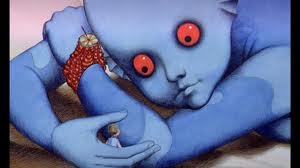
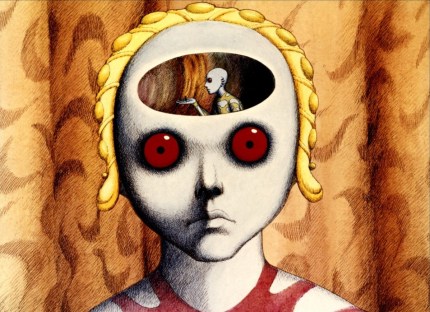
A father and his daughter, while strolling through a field, come across a tiny orphaned creature. The poor thing’s mother has just been killed by a callous group of children and the girl takes pity on it, asking if she can keep it as a pet. After a lecture on responsibility, her father agrees to let her bring it home with them. The girl plays games with this little stray, chases it around the house, and even cradles it while she does her homework. Their bond seems only threatened by her animal’s disinclination to wear the costumes she picks out for it, as well as her father’s increasing doubts as to the suitability of this new animal.  This is a scenario familiar from any number of “pet” narratives, but we are in the world of René Laloux’s cult classic Fantastic Planet (1973): the girl and her father are massive, blue-skinned members of the Draag species and their new pet is a baby human boy. Fantastic Planet follows this boy, Terr, through his childhood and into a rebellious adolescence. The girl, Tiva, telepathically absorbs her school lessons through a headset device, lessons in which she innocently allows Terr to participate. All the trivia a reluctant student may be expected to memorize (geography, biology, philosophy) acts as a primer in discontent for the young human. Laloux presents this information in disorientating chunks, a pleasantly realistic depiction of what it would really be like to be exposed to an alien world. Terr comes to resent his treatment as a pet, to yearn for a freedom he can only find outside this gilded cage. Humans (known to the Draag as “Om”) age far more rapidly than their giant keepers, setting the stage for strange conflicts between this boy and his owner. Not much more than a season passes for her, while Terr grows into a headstrong youth. Tiva’s father, one of the leaders of the Draag, shows more and more distrust of his daughter’s pet, and is inclined to see the Om as more a pest than anything else. Eventually, Terr sees his chance and takes it: he escapes the dubious comforts of Tiva’s care and flees into the wilderness beyond this Draag city. Beyond, he will find a rough-hewn tribe of free humans, as well as a world filled with bizarre and dangerous creatures. This community faces the possibility of genocide by way of pesticide, as many of the Draag wish to rid their planet of this nuisance species forever. The newest member of the Om society, however, may bring them their salvation in an unexpected form. The struggles of this tiny society, and the attempts the Draag make to squelch it, form the majority of this tale.Though such a brief summary may make Fantastic Planet sound like any number of dystopian/revolutionary movies, a number of factors converge to make this one unique in the history of Weird cinema. The animation, to begin with the most obvious component, is unlike anything an audience is likely to have seen before. Laloux used a cutout technique now made more familiar to American audiences by the series South Park; in Fantastic Planet, though, this process lends a dreamy cast to the story, and not simply a silly one. The sensation it gives is one of watching a bizarrely illustrated storybook coming to life. Humans, here, resemble gaunt, often haunted paper dolls, scrambling through a world too massive to take much notice of them. On this weird planet, humanity occupies a place not much higher than ants do in ours.Giant birds, insects and even plants threaten their existence. Watching tiny humans picked off, swallowed whole, or crushed by massive aliens disorients Laloux’s audience, reminding us that our own ecological niche, secure as it so often seems to be, is far more fragile than we’d like to think. In an environment abounding in surrealistic grotesques, the Om seem oddly out of place. The landscape itself resembles something like a collaboration between Jonathan Swift and Salvador Dali, somehow simultaneously stark and horrifically lush. Laloux, though, gives us a world more complex than a hellscape. The Draag, for instance, with their blue skin and wide red eyes, are ethereal beings, beautiful and not simple monstrosities. Crystal dew forms in the mornings and even temporarily encases a terrified Terr. We see animals trapping and devouring one another in surprising, often funny little vignettes. These visions, as well as others, may remind one of the works of the great Weird author Clark Ashton Smith. This “savage planet” (a more accurate translation of the film’s title) certainly would not have been out of place in his tales of the Earth in the far future. And the world beyond that occupied by the Draag? That moon to which the Om dream of escaping? Well, that proves to be even more mysterious… 
Early on, Terr witnesses strange meditative practices somehow central to Draag society, in a sequence rendered in psychedelic imagery. The out-of-body trips these meditations send the aliens on mark them as a fascinating, spiritually complex species, a fact vital not only to the climax of the movie, but also as an indicator that they are more than the genocidal monsters they might otherwise appear to be. This spiritual component is no doubt one reason Fantastic Planet attained, and retains, a place in cult film history. After the mechanisms of the plot have been resolved, after the fate of these two species has been decided, the image of the Draag and their metaphysical journeys persists. Laloux, as well as Stefan Wul (author of the novel, Oms en série, upon which the film was based), clearly have more to say than “Fight the Power,” that simplistic motto of so many dystopian narratives. As has been mentioned, Terr absorbs weird knowledge from Tiva’s learning device. The function this serves is far more than a matter of simple, useful information. This knowledge helps him awaken to consciousness, to a reality not immediately perceptible from the confines of his comfy prison house. It is gnosis, divine wisdom which enables not only salvation, but also the ability to rise psychically above his place as an alternately beloved and pesky pet. It is, as several of the ancient Gnostic sects interpreted the story of Genesis, the fruit of knowledge which spells the end to innocence and which introduces the possibility of greater spiritual growth. It would be a spoiler to say anything more direct about this facet of the plot, but suffice it to say the Om find they must bring their struggle to another level if they are to win anything more than a temporary reprieve from the cruelties of the Draag. 
Fantastic Planet
was made during a time of cultural tumult. It is hard not to read any number of themes into this film, as it seems to invite so many. A post-colonial reading would not be far off the mark, as evidenced by the mixture of paternalism and sadism the Draag show the tiny Om. The peoples of Africa, Asia and the Middle East found they needed more than weapons to combat the weight of European hegemony, and the Western powers learned (and are still learning) a great deal about themselves from their colonial adventures. Counter-cultural identification with Fantastic Planet has also been persistent in the forty years since it was made, and may be an echo of institutional conflicts within both European and American societies at the time. The Om, with their wild, natural lifestyles and their dogged resistance to an industrial civilization determined to either tame or annihilate them, sometimes resemble the 60’s counter culture which was already, in 1973, collapsing beneath its own weight. The arms race which develops between the Om and the Draag may even be a gesture toward the Cold War, though it is hard to imagine either the Soviet Union or the United States in the position of the brutalized Om. Those mystical elements, both Gnostic and vaguely Eastern, encourage interpretations more internal, as well as ideological. An understanding deeper than that necessitated by strictly physical survival has proven vital down through history, a need to fulfill psycho-spiritual yearnings without which society can become a horrible simulation of itself. The clash between the cold, yet mystical Draag and the wild, vital Om may be meant to say something about a conflict deeply embedded within our own civilization. 
However one interprets this film, this plasticity of meaning, far from being a detriment, is a strength the film possesses. Where many anti-authoritarian fantasies of its era have suffered with the passage of time, have come to seem too utopian or naïve, Fantastic Planet retains an essential weirdness which protects it from simplistic analysis. The bizarre set-pieces with which the film is filled are not easy to forget, nor are they easy to explain away as facile allegories. The film veers close to being a dream, at times, threatening to lose coherence and dissolve into mere sequences of phantasmagoria.Fantastic Planet does, however, speak some message, be it theological, political, internal, or even ecological. That it does so in such an alien tongue is only fitting in a tale about being lost in such a strange world.

Source: Knowing the Alien: René Laloux’s “Fantastic Planet” | Weird Fiction Review

Details of the Criterion Collection’s Blu-Ray/DVD release of “Fantastic Planet” at the following link:
criterion_fantasticplanet_cover

Posted in Animation, Book, Film, Movie, Science Fiction | Tagged , , , , , , , , , , , , , , , , , , , , , , , , , , , | Leave a comment

ELVIS PRESLEY’S Guitars | Official Graceland Blog

Elvis Presley’s Guitars
double

Posted by Elvis Presley’s Graceland on Dec 30, 2015

It’s hard to picture Elvis Presley without a guitar in his hand.From his iconic first album cover to his many movies, from the ’68 Special to “Aloha from Hawaii,” from Graceland to Vegas, Elvis always had a guitar nearby, and he was always ready to play. He enjoyed playing both the guitar and bass guitar.Elvis received his first guitar when he was 11, and for many years, that was his only guitar. But as he grew older – and eventually became the King of Rock ‘n’ Roll – he started collecting guitars, and many of them are part of pop culture history. Here are a few of the guitars made famous by The King:

1955 Martin D-28

Elvis used this guitar at many concerts, including in Tampa, Florida, where this photo was taken, and at the Overton Shell (now Levitt Shell) in Memphis.

Elvis used a 1942 Martin D-18 in 1954-55, until he traded it in for the newer D-28 in 1955 at O.K. Houck Piano Co. in Memphis, and he used it for a little over a year. Elvis often purchased his instruments from that store.

This guitar is the one Elvis is playing on the cover of his first album. It’s also well-known for its gorgeous leather cover, handmade by an employee at the music store where Elvis purchased the guitar.

1956 Gibson J200

Elvis’ 1956 Gibson J200.

This guitar definitely looks like it belongs to a member of rock ‘n’ roll royalty.

Elvis loved this guitar and used it often. He used it in many of his 1957 concerts and appearances.

After returning home from the Army, he asked his guitarist Scotty Moore to send the well-worn guitar out to be refurbished. The work wasn’t done in time for Elvis’ March 20 recording session in Nashville, so he was given a brand-new 1960 J200 that looked almost identical.

Meanwhile, the 1956 model got a beautiful facelift: Gibson replaced the red pick guard with a new black one, and Elvis’ name was inlaid on the finger board. The stylish new guitar was debuted in publicity shots for “Wild in the Country” and can be seen in “Elvis: That’s The Way It Is.” He loved the 1960 J200, too, so he kept it. He used it in the ’68 Special and many live performances.

These guitars were favorites of the king. They’re both part of the permanent archival collection at Graceland.

Fender Precision Bass

Even in his free time, Elvis made music.

Many fans know this guitar as the one Elvis is seen playing in Graceland’s living room in this March 1965 photo.

This pretty guitar can also be spotted in his film “Spinout”.

But maybe the most famous guitar seen in “Spinout” is the…

1965 Gibson EBS-1250 Double Bass

This red double bass is featured in many publicity shots for “Spinout.”

This stunning instrument is seen in lots of publicity shots and artwork for “Spinout,” but it’s only seen being played by Elvis very briefly, and toward the end, of the film. (His co-star, Jimmy Hawkins, is seen playing it earlier in the movie)

Elvis owned the Gibson after production wrapped, and it became one of his favorite guitars. This Gibson is part of the Graceland Archives.

Gibson Ebony Dove

This guitar is the one on everyone’s lips right now.

This Gibson Ebony Dove, which Elvis played on his groundbreaking “Aloha from Hawaii” special, will go on the auction block in next week’s Auction at Graceland. The guitar (and all items in the auction) is from a third-party collector; nothing in the Graceland Archives will ever go up for auction. Like in all previous auctions, Graceland will be bidding to try to bring these beloved Elvis artifacts home to Graceland.

In addition to “Aloha,” Elvis used this guitar during many concerts. The guitar features a Kenpo Karate Decal and Elvis’ name inlaid in the fingerboard. Elvis gave it to a fan in the front row of an Asheville, North Carolina concert, and that fan is the one who has consigned it to the Auction at Graceland.

Many of the items in the auction, including the guitar, are currently on display at the car museum here at Graceland, and they’ll be on display until the auction.

Learn more about all the guitars used or owned by Elvis.

Want to learn more about the King of Rock ‘n’ Roll? Visit Graceland and explore the life and career of Elvis Presley!

Source: Elvis Presley’s Guitars | Official Graceland Blog

Posted in Guitar, Music, Pop, Rhythm and Blues, Rock, Rock 'n' Roll, Rockabilly | Tagged , , , , , , , , , , , , , , , , , , , , , , , , , , , , , , , , , , , | Leave a comment

‘SAM PHILLIPS: The Man Who Invented Rock ’n’ Roll,’ by Peter Guralnick – The New York Times

Five hundred forty-one pages into Peter Guralnick’s 763-page biography of Sam Phillips, the impresario enshrined in the subtitle as “the man who invented rock ’n’ roll,” we get the moment when many people probably saw Phillips for the first time. It was the night of May 15, 1986, a few months after he had been inducted into the charter class of the Rock and Roll Hall of Fame for having produced the first recordings by Elvis Presley, Jerry Lee Lewis, Johnny Cash and Carl Perkins, among others, more than 30 years earlier. Phillips was appearing as a guest on “Late Night with David Letterman,” and he was behaving strangely, deflecting questions with an indifferent glare or changing the subject to ask how Letterman could be so successful with such bad teeth. Letterman, trying to keep things under control and failing, asked: “Now, Sam — now tell me about the early days there at Sun Records. What kind of a sound were you trying to establish there?”Phillips fiddled with his bracelet, stared at Letterman and repeated the question in his lumbering Tennessee drawl.Letterman, visibly frustrated, prodded him: “Or would you just record anybody who came through?” Phillips leaned slowly toward Letterman’s face and said, “Why certainly, ­David.” Nearly 30 years after that show aired, we finally get lucid answers to the not inconsequential questions of how and why Sam Phillips led an ad hoc assemblage of unknown and untested poor young musicians to combine the sounds of blues and country music, harnessing a raw carnality to make what would become known as rock ’n’ roll. Guralnick, a veteran scholar of vernacular American music whose eight previous books include a majestic and definitive two-volume biography of Elvis Presley, first met Phillips in 1979 (for an interview for The New York Times), and he interviewed him many times over the ensuing 24 years before Phillips’s death in 2003. Guralnick draws from his deep mine of knowledge about Phillips and his world — a mine with passageways to some dark places — to produce a book so thoroughly steeped in its subject that it is almost an autobiography in the third person. As Phillips admitted proudly to Letterman, the doors of his physically humble but grandly ambitious studio in Memphis were open — if not quite to anybody who came through, then to a great many people who, by virtue of their inexperience or unconventionality, might not have been so welcome at larger, more commercially oriented record companies. “The very foundation of Sam’s story,” in Guralnick’s view, was Phillips’s belief in “the vast, untapped talents of those who had been ignored, set aside, scorned and reviled by a world that, without even knowing it, was waiting for the bestowal of their gifts.”
                              The artists in the raw whom Phillips sought and cherished — “untried, untested, unspoken-­for people,” as Guralnick writes in words that echo through the pages of his book — had “an eloquence and a gift that sometimes they did not even know they possessed.” That is to say, neither the musicians themselves nor their public necessarily saw the value of the music Phillips recorded until Phillips interceded to enlighten them all. 
       This conception of Phillips as a quasi-­messianic figure, a charismatic visionary of the American vernacular, is the driving idea of Guralnick’s biography. Only from artists who were “pure,” “unspoiled” and “raw” could Phillips “get the results he was looking for.” It is essential to this scheme, of course, that Phillips be the active element, the one with the vision, grooming naïfs from whom he alone could extract golden results. As Guralnick describes the canonical first sessions by Presley, at which Elvis, the guitarist Scotty Moore and the bassist Bill Black break away from the romantic ballads they had been playing for hours to mess around with a blues tune called “That’s All Right” — originally recorded by Arthur (Big Boy) Crudup in 1946 — the sound they made “was the very essence of everything Sam had dreamt of but had never been able to fully imagine.”

The proposition that Presley’s music began with Sam Phillips’s dreams, fulfilled through his agency as a talent scout and record producer, lays the foundation for the inflated subtitle of this book. In the romantic image of dreams begins the idealization of Phillips as the man who not only discovered rock ’n’ roll but also carries responsibility for it.

Like many books about the early history of rock, including the first volume of Guralnick’s biography of Presley, “Sam Phillips” gives due attention to the racially hybrid character of the music. Quoting Phillips in his new book, Guralnick relays how the singer and the producer together crossed far over “the color line.” Elvis sang an idiosyncratically countrified, hypersexed version of rhythm and blues, a music that had been invented (not discovered) by African-American musicians in the rural South, and he did so with both palpable admiration for it and true affinity with it, as a poor Southerner.

Yet, as we rarely learn in books about rock, including Guralnick’s latest, the color line had been fairly well crossed long before Sam Phillips recorded white boys like Elvis, Jerry Lee Lewis and Carl Perkins singing songs originally recorded by African-Americans. From the era of Stephen Foster, the white popularizer who produced pop hits on sheet music by appropriating and adapting “plantation songs” for minstrel shows, American popular music has been a racial amalgam rooted, elementally, in black expression. In the generation immediately preceding Elvis — and Little Richard, Fats Domino and Chuck Berry — American teenagers of all races were swing-dancing to the hits of the big bands. Swing, like rock ’n’ roll, was essentially a black invention hybridized as it was taken up by musicians and fans of all colors.

Undeterred by humility, Phillips was a great talker and a good-looker in full command of his gifts, at least in his prime. At one point in his “Late Show” appearance, Letterman shows Phillips a photograph of Elvis teaching him how to finger a chord on the guitar, and Phillips says, “Gregory Peck ain’t got a damn thing on me in that photo, has he?” He attracted women easily and did not decline the attention, carrying on several extramarital affairs with women involved in his various business ventures in recording and radio broadcasting. Guralnick handles these incidents matter-of-factly, without judgment or prurience. Similarly, he deals squarely but briskly with the debilitating bouts of anxiety and other psychological problems Phillips faced early in his professional life, issues that called for multiple hospitalizations and treatments of electroshock therapy.

At one point in their long association, Guralnick and Phillips had some conversations (described in this book) about collaborating on an as-told-to memoir. They abandoned the idea, Guralnick says, though the spirit of literary companionship infuses the work Guralnick ended up doing. Most of the book is written from Phillips’s point of view in language often designed to emulate Phillips’s speech: “Sam couldn’t really blame him for that. Hell, that was just business.” Or, in reference to an early business dealing: “The Bihari boys might think they were the only game in town, but he’d be damned if he’d be yoked to those pissants for life.” You could practically use a “replace” command to turn every “he” to an “I,” and have Sam Phillips’s autobiography, notwithstanding the sections about how Guralnick became friends with Phillips’s son Knox and grew closer and closer to the elder Phillips.

“This is a book written out of admiration and love,” Guralnick states frankly in an author’s note. As such, it honors Sam Phillips elegantly, by devoting itself to the one subject Phillips seemed to admire and love as much as he did ­music: Sam Phillips himself.

S. PhillipsSAM PHILLIPS

The Man Who Invented Rock ’n’ Roll

By Peter Guralnick

Illustrated. 763 pp. Little, Brown & Company. $32.

Source: ‘Sam Phillips: The Man Who Invented Rock ’n’ Roll,’ by Peter Guralnick – The New York Times

Posted in Blues, Book, Country, Folk, Gospel, Music, Pop, Rhythm and Blues, Rock, Rock 'n' Roll, Rockabilly | Tagged , , , , , , , , , , , , , , , , , , , , , , , , , , , , , , , , , , , , , , , , , , , , , , , | Leave a comment

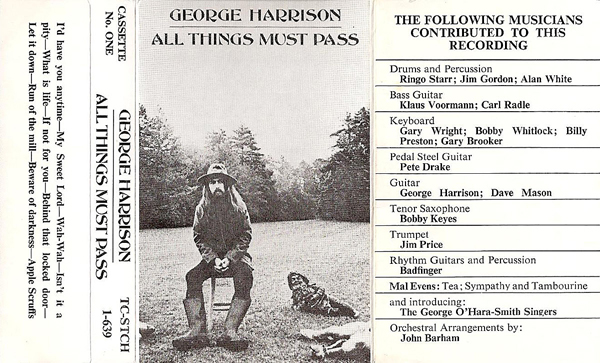
GEORGE HARRISON: “All Things Must Pass” – An Appreciation – uDiscover

Classic album is a term that’s used way too much when describing records from the golden era of rock music; of course, one person’s classic album is another’s long-forgotten record, but we think that without fear of contradiction George Harrison’s All Things Must Pass is a CLASSIC album…

45 Years ago it made the Billboard album charts on 19 December 1970 and two weeks later it was No.1. There’s an old adage in the music business that talks of, ‘the difficult third album’, well this was George’s third solo album and there’s nothing difficult about it, every track is worthy of its place, there’s no filler, just killers… and it was originally released as a triple album when it came out on 27 November 1970. Ben Gerson of Rolling Stone described the sound as “Wagnerian, Brucknerian, the music of mountain tops and vast horizons,” and who are we to disagree? Truth is George considered this to be his first solo album proper, having originally released his movie soundtrack, Wonderwall Music and his synthesizer album, Electronic Sound.The genesis of All Things Must Pass can be said to have begun with George’s visit to America in November 1968 when he established his long-lasting friendship with Bob Dylan while staying in Woodstock. George’s songwriting output was increasing and becoming increasingly more self-assured, for example he co-wrote ‘Badge’ with Eric Clapton for Cream’s Goodbye album that came out in early 1969. George’s involvement with Apple Record’s signings, Billy Preston and Doris Troy in 1969, as well as his tour with Delaney and Bonnie that included Eric Clapton, Leon Russell, Dave Mason, Bobby Whitlock, Carl Radle and Jim Gordon, began to influence his writing with elements of gospel and the kind of sounds that we have come to call ‘Americana’.
George’s spiritual journey saw him involved with the Hare Krishna movement that would also become another vital piece in the jigsaw of sound that makes up All Things Must Pass. In February 1969, on his 26th birthday, George recorded a demo of his song, ‘All Things Must Pass’, along with ‘Old Brown Shoe’ and ‘Something’. The latter two songs went on to be recorded by the Beatles and for whatever reason ‘All Things Must Pass’ was not recorded by the Beatles; the song is based on a translation of part of chapter 23 of the Tao Te Ching, “All things pass, A sunrise does not last all morning. All things pass, A cloudburst does not last all day.”

A month earlier George also made a demo of ‘Isn’t It A Pity’, one of the standout tracks on All Things Must Pass, but this song too failed to make the cut for a Beatles album. It wasn’t until early 1970 that initial preparatory work began on George’s solo album; it was at this time that he played producer Phil Spector demos of songs that he had been writing while with the Beatles.

Some of these songs went back as far as 1966, specifically, ‘Isn’t It a Pity’ and ‘Art of Dying’ and he had written ‘’I’d Have You Anytime’ with Bob Dylan in late 1968 while in Woodstock. George had tried to get the Beatles interested in ‘All Things Must Pass’, ‘Hear Me Lord’ and the beautiful, ‘Let It Down’, during rehearsals for the Get Back album, but the other Beatles seemed not to be interested. ‘Wah-Wah’ and ‘Run of the Mill’ both dated from early 1969, while ‘What Is Life’ came to George while he was working with Billy Preston on his album, That’s the Way God Planned It. ‘Behind That Locked Door ‘ was written in the summer of ’69, just before Dylan’s performance at the Isle of Wight Festival and he started to write the epic, ‘My Sweet Lord’ in Copenhagen while on tour with Delaney and Bonnie in late 1969.

It was while on tour with Delaney Bramlett that the American asked George to play slide guitar and his ‘I Dig Love’ is an early experiment with a sound that George came to make his own. Other songs on All Things Must Pass were all written in the first half of 1970, these include ‘Awaiting on You All’, ‘Ballad of Sir Frankie Crisp (Let It Roll)’, a tribute to the original owner of George’s home, Friar Park and ‘Beware of Darkness’. Shortly before the sessions for his album began, George was at a Dylan session in New York, which is where he heard, ‘If Not for You’ and in turn George was inspired to write the Dylanesque, ‘Apple Scruffs’ as the All Things Must Pass sessions were winding up, it was in tribute to the girls who hung around outside Apple Corps offices where he was working, or Abbey Road Studios in the hope of meeting a Beatle.
Recording the album began in late May 1970 and such was the frustration within George at being unable to get his songs on Beatles’ albums that it is of little surprise that there were so many on All Things Must Pass. The third record included in the original triple album is entitled Apple Jam and four of the five tracks – ‘Out of the Blue’, ‘Plug Me In’, ‘I Remember Jeep’ and ‘Thanks for the Pepperoni’ – are i instrumentals put together in the studio. According to George “For the jams, I didn’t want to just throw [them] in the cupboard, and yet at the same time it wasn’t part of the record; that’s why I put it on a separate label to go in the package as a kind of bonus.” The fifth track, It’s Johnny’s Birthday was a present for Lennon’s 30th and it is sung to the tune of Cliff Richard’s ‘Congratulations’.

Such is the big sound of All Things Must Pass that it is hard to be precise as to who appears on what track. Aside from those already mentioned there is Ringo Starr, Billy Preston, and German bassist Klaus Voormann who also did the artwork for the cover of the Beatles’ Revolver album. Members of Apple band, Badfinger were included, helping to create the wall of sound effect on acoustic guitars, and besides future Derek and the Dominos’ keyboard player Bobby Whitlock the other principal keyboardist was Gary Wright who had been a member of Spooky Tooth and later in the 1970s had some big hits in America. Other keyboard players included, Tony Ashton, and John Barham who both played on Wonderwall Music

The drummers were future Yes man, and member of the Plastic Ono Band, Alan White, Phil Collins in his pre-Genesis days and Ginger Baker on the jam, ‘I Remember Jeep’. Other musicians included Nashville pedal steel player Pete Drake and Procol Harum’s Gary Brooker.
Eric Clapton, Bobby Whitlock, Jim Gordon and Carl Radle (not Jim Keltner as the advert says) played London’s Lyceum in the Strand on Sunday 14 June 1970 and decided shortly before going on stage to call themselves, Derek and The Dominos. Earlier in the day they were at Abbey Road for an All Things Must Pass session when they cut ‘Tell The Truth’ that became Derek and The Dominos first single release in September 1970. The b-side of which was ‘Roll It Over’, recorded at an All Things Must Pass session on 25 June and this included George along with Dave Mason of Traffic on guitar and vocals.

Originally George had thought it would take just two months to record All Things Must Pass but in the end recording lasted for five months, not finishing until late October. George’s mother was ill with cancer during the recording and this meant that he needed to head back to Liverpool on a regular basis to see her; she died in July 1970. Phil Spector also proved somewhat unreliable and all this led to George himself doing much of the production work himself.

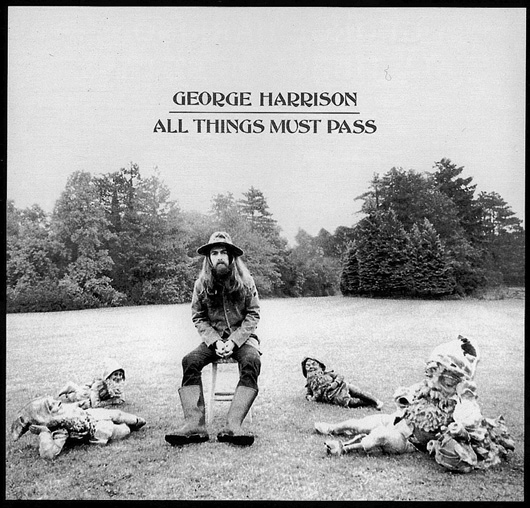
Final mixing of the record started at the very end of October in New York City with Phil Spector. George was not entirely happy with what Spector did, but nothing can take away from the brilliance of this record that still stands up to the test of time. Tom Wilkes designed the box to hold the three LPs and Barry Feinstein took the iconic photos of George and the four garden gnomes on the grass in front of Friar Park.

Scheduled for release in October, the delays meant it came out in America on 27 November 1970 and three days later in the UK. The first triple album by a single artist, it captivated audiences everywhere, entering the Billboard album chart in December it spent 7 weeks at No.1 in America starting with the first chart of 1971. In the UK it only made No.4 on the ‘official’ album chart, although it topped the NME’s chart for 7 weeks. George’s lead single from All Things Must Pass was, ‘My Sweet Lord’ and it topped the singles chart on both sides of the Atlantic.
As time passes we have come to love this amazing record even more. It is the kind of record that says so much about what made music so vital as the 1960s became the 1970s. It is full of great songs, and lyrics that not only meant something then but still resonate today. As future decades come and go, and new generations of music lovers look back, this is the kind of record that will take on almost mythical status. It’s one thing being able to read about its making, it’s quite another thing to allow it to envelop you, to caress you and to make you feel the world is a better place in which to live having listened to it.

All Things Must Pass is George’s spiritual high, truly a classic and unquestionably one of the greatest albums ever made…triple, double or single.

All Things Must Pass has been remastered for 2014 and is included in George Harrison’s The Apple Years 1968-1975 box set.

You can order the Apple Years 1968-75 box set from the Official George Harrison store here
Or from Amazon or iTunes 

Source: All Things Must Pass – An Appreciation – uDiscover

Posted in Album, Album, CD, CD, Music, Musician, Pop, Rhythm and Blues, Rock, Rock 'n' Roll, Singer, Songwriter | Tagged , , , , , , , , , , , , , , , , , , , , , , , , , , , , , , , , , , , , , , , , , , , , , , , , , | Leave a comment

TV: MONTY PYTHON’S FLYING CIRCUS

TV: MONTY PYTHON’S FLYING CIRCUS

by PETER TATCHELL (revised and updated version of article in TELEFILE #3, September 1997)

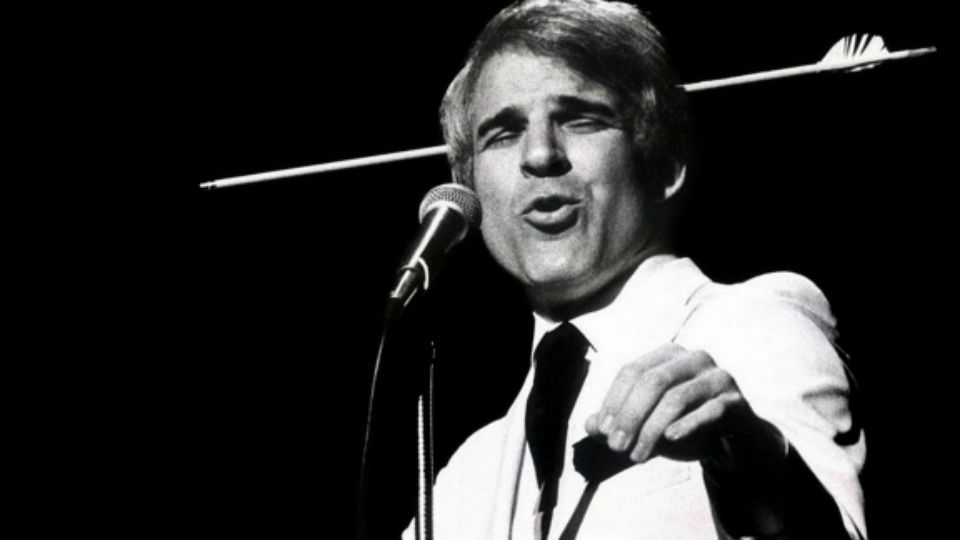
pythonIn late 1969, BBC television unleashed a sketch comedy series that broke new ground in surreal, off-the-wall craziness. It was a mesh of physical lunacy, literate wordplays and colourfully vicious animations all jigsaw-puzzled together in a kaleidoscope of inspired silliness. For all its success though, it didn’t actually change the course of TV humour from that day forth, as the schedules weren’t suddenly full of imitations. And after several years of silly walks, dead parrots, inquisitive Spaniards and people with their heads nailed to coffee tables, the participants simply thanked their hosts and moved on to the more financially lucrative world of the movies.

Monty Python’s Flying Circus did not spring fully-formed from the head of a BBC programme planner, nor the combined heads of writer/performers Graham Chapman, John Cleese, Eric Idle, Terry Jones, Michael Palin and (animator) Terry Gilliam. Its roots go back to the weekly broadcasts of The Goon Show listened to by Python’s creators in their formative years of the 1950s. A stint of university education led to student revues and script contributions to popular BBC television shows like That Was The Week That Was and The Late Show.

Cleese was the first to achieve public recognition, in the radio series I’m Sorry I’ll Read That Again (along with Goodies-to-be Tim Brooke-Taylor, Graeme Garden and Bill Oddie) and on TV’s The Frost Report (with Ronnies Barker and Corbett).

The success of the latter series led Frost himself to back his supporting players in individual ventures, in Cleese’s case a sketch programme calledAt Last The 1948 Show which ran for thirteen episodes in 1967 for British commercial television’s Associated-Rediffusion company. Screened in Australia by the ABC, it also starred Tim Brooke-Taylor, Graham Chapman, Marty Feldman and (as a dumb-blonde hostess to link the unrelated skits) “the lovely” Aimi MacDonald. One of Miss MacDonald’s links happened to be “and now for something completely different …”.

Many 1948 Show scripts were performed again on Python LPs and in stage shows, as well as at Amnesty International fundraising concerts – famous sketches such as Bookshop, Four Yorkshiremen, Beekeeping andTop Of The Form all debuted on At Last The 1948 Show. Taped in black-and-white and with a number of episodes lost, At Last The 1948 Showremained largely forgotten for more than three decades.  It was, however (in this writer’s opinion anyway), the best sketch-comedy television show ever produced and the official DVD release of a large percentage of retrieved footage was welcome indeed.

Rediffusion also produced an early-evening show called Do Not Adjust Your Set starring several other university writer/performers – Eric Idle, Terry Jones and Michael Palin. After two seasons (in which a young David Jason and the occasional Terry Gilliam animation also appeared), Palin and Jones created a mock-educational programme The Complete And Utter History Of Britain.

In 1968, David Frost financed the one-hour colour special How To Irritate People (for airing on US television) with 1948 Show participants Cleese, Brooke-Taylor and Chapman joined by Michael Palin and Connie Booth. It’s a fascinating (if somewhat disappointing) mix of material from the earlier show plus items which would soon appear on a Marty Feldman special and within Python itself. (The complete special has been available on commercial video and DVD for several years.)

By 1969, Cleese and Chapman had approached Palin and Jones and suggested they might work together. They, in turn, thought Idle would be a useful recruit and were keen to explore a flowing transition from one item to another in a manner similar to that used in one of Gilliam’s cartoons from Do Not Adjust Your Set.

With scriptwriter Barry Took (Marty Feldman’s former writing partner on radio’s Round The Horne) acting as a go-between, the six approached the BBC, which agreed to commission a season of thirteen episodes. Coming up with a title for the project did not prove easy. Eventually suggestions such as Owl Stretching Time, A Horse A Spoon And A Bucketand Gwen Dibley’s Flying Circus gave way to Monty Python’s Flying Circus and the show premiered just in time for BBC1 ‘s conversion to colour in late 1969.

Despite launching such popular routines as Nudge Nudge, The Funniest Joke In The World, Lumberjack Song, Crunchy Frog and Dead Parrot, the participants themselves weren’t altogether satisfied with the early episodes and felt the format and material integrated better in later seasons. With four “teams” of contributors (Cleese/Chapman, Palin/Jones, and Idle and Gilliam working as separate entities), it’s not surprising many fans note a degree of unevenness in the finished product.

Though allocated an unfriendly late Sunday night timeslot (with occasional editions pre-empted) the programme managed to build up sufficient audience figures to become something of a cult favourite – not yet well-known to the general public, but successful enough for the BBC to agree to a follow-up season.

In 1970 the BBC set up its own record label (prior to this, soundtrack extracts from such TV hits as Hancock’s Half Hour, Steptoe And Son, Till Death Us Do Part and Not Only … But Also were released through the Pye or Decca labels), and one of its first issues was a collection of highlights from Monty Python’s Flying Circus. In reality, the disc didn’t feature actual soundtracks from the show, but pieces specially rerecorded for the LP before a somewhat bemused and muted audience. It was the first of what would ultimately become a veritable industry of Python spinoff material – compact discs, videos, DVDs, souvenir books and script collections (not to mention diaries, calendars and coffee mugs) are still in plentiful supply decades later.
 
The latter months of 1970 saw the Pythons back for a second season (again of thirteen programmes) with the first edition introducing probably their most famous routine of all… The Silly Walk. Later shows saw Scott Of The Sahara, a sitcom starring Attila The Hun, an unfortunate commercial campaign for Conquistador Coffee and a soccer match between Long John Silver Impersonators and Bournemouth Gynaecologists.

By now, the team had touched on such subjects as gratuitous violence (both live and in Gilliam’s animations) and often entered the realm of sex and nudity. The last programme of the second series was particularly notable for pushing back the boundaries of acceptable content on television. Following a scene in which shipwreck survivors discuss the prospect of cannibalism, the show concludes with possibly the most notorious Python TV creation, The Undertakers Sketch, in which an undertaker (Chapman) offers a client (Cleese) various alternatives as to how he might wish to dispose of his mother’s remains. As the credits roll, audience members are seen to invade the set in a display of disgust (a somewhat confusing vehicle insisted upon by the producer in order to balance the scales of taste), but following its broadcast the routine caused quite a degree of genuine controversy and was discussed on legitimate current affairs programmes. The offending item was omitted from repeat screenings for a number of years, and is believed to have disappeared from BBC videotape archives entirely (its inclusion in commercial releases of the episode is thanks to the existence of an American master copy).

After two TV seasons on television and one LP, Monty Python’s Flying Circus next foray was to the big screen. The series’ best routines were refilmed for a movie titled And Now For Something Completely Different. The team also signed with Charisma Records to produce a series of discs, initially using scripts from the TV series, but later including new material (and occasional reworkings of items previously used on unrelated 1960s productions).

These other ventures delayed the airing of a third television series until late 1972 and by now the show had very much gained the attention of the general public. Though containing fewer well-known sketches, the writing and performance quality were very much on a par with the preceding season but with the added (then highly unusual) innovation of title and credit sequences appearing at unexpected points in the show. One episode even offered a continuing theme throughout, as we follow the cycling tour of the decidedly boring Mr Pither. (It was a format variation that would be explored more fully in the fourth season at the end of 1974).

In 1973 the Pythons filmed two 40-minute specials for German television. Both titled Monty Python’s Fliegende Zirkus, the first saw the team actually speaking their dialogue in German, whilst the second was made in English and subtitled for the German audience. As a result, only the latter programme was given much airplay. 1973 also saw the Pythons in a stage version of the show, initially touring the north of England, then Canada before opening in London’s West End at the Theatre Royal Drury Lane. A recording of this version of the show was issued.

With a fourth television season in preparation John Cleese, feeling the spectre of repetition was marring his enjoyment of his involvement, decided it was time to move on to other ventures. The BBC considered dropping the show altogether but finally gave the green light to a 6-part series now carrying the abridged title of Monty Python (though the full “Flying Circus” moniker appears in the animated opening sequence). Generally considered less successful than its predecessors, it was the last batch of episodes to be commercially released.

By now, American audiences were able to view the show as well, with PBS screening the series (without commercial interruption). Its increasing popularity on the public channel eventually led the giant ABC network to purchase rights to the fourth season, but executive wisdom decided to edit the six half hours into two 90-minute specials (in the process, removing a significant amount of programme material to fit in adverts).

When their US agent alerted them to ABC’s indiscretion the Pythons were horrified and – arguing that the injudicious editing, amounting to censorship in many cases, created a result that bore little relation to their original work and was potentially damaging to their artistic integrity and future marketability – the team took the mighty network to court. In a landmark outcome, the Pythons won the case. TV networks were put on notice that similar infractions would no longer be tolerated, and the Pythons themselves gained video rights for all their programmes (outside the UK).

1975 saw the full Monty Python team (complete with Cleese) back on the big screen for the first time in a plotted story, rather than sketches. Monty Python And The Holy Grail was an historical send-up of the legend of King Arthur, with Gilliam and Jones sharing the directors chair. (The first draft of the script was reworked into the fourth series Python episodeMichael Ellis.) Holy Grail‘s success paved the way for future films, and a great deal of controversy.

Individually, Python members were creating new projects for television – Cleese in the hugely successful Fawlty Towers, Idle in Rutland Weekend Television and Palin (with Jones as co-writer) in Ripping Yarns.

In 1976 they reunited for another live show, this time at New York’s City Center (highlights of which were released on disc) and a half a dozen years later appeared on the west coast at the Hollywood Bowl (the TV specialMonty Python Live at the Hollywood Bowl was released cinematically, then to video, laser disc and DVD).

For their next movie venture, they opted to lampoon the gullibility of certain religious followers in Monty Python’s Life Of Brian, which told of an ordinary man (a contemporary of Jesus Christ) who is mistakenly thought to be a messiah. When word of the plot spread, church groups around the world became incensed, thinking the film would be sending up the Lord Himself, and organised protests. The storyline was controversial enough to cause major studios to refuse financial backing but eventually ex-Beatle George Harrison put up the money (his confessed motive being that, having read the script, he simply wanted to watch the thing up on the screen). Despite – or possibly due to – the notoriety, the movie ended up a huge success.

The Pythons continued to issue LPs. Their 1980 release Monty Python’sContractual Obligation Album resulted in yet more court action – but this time as defendants. Singer/songwriter John Denver objected to the unauthorised R-rated mockery of his Annie’s Song in the track Farewell To John Denver and took legal action against the troupe shortly after the album’s release. Denver won the case which forced a withdrawal of the first edition, the offending track replaced by A Legal Apology. Consequently, early versions of the LP are now regarded as collector’s items.

In 1983 the Pythons made their last film, returning to the familiar territory of their original segment format rather than a continuous plotline. Monty Python’s Meaning Of Life poked fun at sex-education, contraception, birth, death and gluttony. Whilst enjoyable and memorable in places, the movie tended to miss the mark artistically and (ultimately) financially. Although generally regarded as a lesser work, at the time of its release Cleese was quoted as saying the Mr Creosote sketch – in which a deplorably obese man (Jones) enters a restaurant, copiously vomits and later explodes – was the one he believed “will run in our obituary columns”.

The team continued to go their separate ways – Cleese with fishes called Wanda and Palin trotting the globe – until 1989 when 20th anniversary get-togethers and TV specials were planned. Celebrations were abandoned though when tragedy struck. Graham Chapman (who had conquered alcoholism and battled throat cancer) finally succumbed to the latter literally on the eve of the anniversary.

Never ones to let hypocrisy rear its head, Jones commented that “it was the biggest case of party pooping in history” and Cleese, in his funeral oration, became the first (and possibly only) person to utter the word “fuck” in a eulogy.  A later TV appearance by the surviving members, to which the remains of their fallen comrade were brought along, included a routine in which Chapman’s ashes were accidentally upended onto the stage and vacuumed up.

Though a reunion is now impossible, all the remaining five have made contributions to various Python-related projects in the years following Chapman’s death, perhaps the most notable being a lengthy 30th anniversary Python Night tribute which aired in 1999 on BBC2, introduced by Cleese in typically manic form.

For theatre-goers, the spirit of Python has been revived with the successful Broadway musical Spamalot, based on Monty Python And Holy Grailand comprising an amalgam of adapted excerpts from the movie together with songs and new material.

Reissues of Python television shows, movies and albums now carry various bonuses – amongst them a lost sketch from Series 3, deleted movie scenes, documentaries and featurettes.  Remastered CD versions of the albums now contain rare and previously unreleased bonus tracks.  With the advent of internet file sharing, avid collectors have made available further items including extraordinarily rare filmed corporate presentations, and even a complete record album thought to have been compiled for release and then shelved.

In an effort to prevent internet ripoff by fans, the Monty Python team announced the formation of their own channel on the YouTube website in 2008 where many of the more famous sketches and rare footage can be viewed, and where visitors are encouraged to purchase official items.


TELEVISION EPISODES

Series One
BBC1 – October 5 1969 to January 11 1970 (not November 2 or 9)
1    It’s The Arts / Arthur “Two­ Sheds” Jackson / Funniest Joke In The World
2    Flying Sheep / Man With Three Buttocks / The Mouse Problem
3    Court Scene / Dirty Fork / Nudge Nudge
4    Art Gallery / Self-Defence From Fresh Fruit / Secret Service Dentists
5    Confuse-A-Cat / Neurotic Job Interviewer / Door-To-Door Burglar
6    Johann Gambolputty.. / Crunchy Frog / 20th Century Vole
7    Camel Spotting / Giant Blancmanges Turning People Into Scotsmen
8    Army Protection Racket / Dead Parrot / Hell’s Grannies
9 Kilimanjaro Expedition / Lumberjack Song / Awful Visitors
10  It’s A Tree / Vocational Guidance Counsellor / Pet Conversions
11  Murder Mystery / Interesting People / Women’s Guild Battle Of Pearl Harbour
12  Falling Bodies / Minehead By-election / Upper-Class Twit Of The Year
13  Albatross / Chatting Up A Policeman / Squatters Inside Man

Series Two
BBC1 – September 15 to December 22 1970
1    New Cooker / Silly Walks / Piranha Brothers
2    Spanish Inquisition / Jokes And Novelties / Semaphore version of Wuthering Heights
3    Flying Lessons / The Poet McTeagle / Deja Vu
4    Architect / The Bishop / Chemist
5    Blackmail / Rude And Polite Man / Boxer Documentary
6    School Prize Giving / Raymond Luxury Yacht / Election Night Special
7    Attila The Hun Show / Idiot In Society / Spot The Brain Cell
8    Wife Swap / Poofy Judges / Beethoven’s Mynah Bird
9    Bruces / Naughty Bits / Penguin On The TV Set
10  Scott Of The Sahara / Fish Licence / Soccer Match
11  Conquistador Coffee / Train Timetables Whodunnit / How Not To Be Seen
12  Hungarian Phrasebook / Ypres 1914 / Spam
13  The Queen Will Be Watching / Lifeboat / Undertakers

Series Three
BBC1 – October 19 1972 to January 18 1973 (not December 28)
1    Njorl’s Saga / Jean-Paul Sartre / Whicker Island
2    Schoolboys’ Insurance Company / How To Do It / Fish Slapping Dance
3    Money / Salvation Fuzz / Argument Clinic
4    Anagram Speaker / Pantomime Horse / Gestures
5 Summarise Proust Competition / Travel Agent / Anne Elk
6    Gumby Brain Specialist / Expedition To Lake Pahoe
7    Biggles / Cheese Shop / Peckinpah’s Salad Days
8    Mr. Pither’s Cycling Tour
9    Literary Housing Project / Olympic Hide-And-Seek Final / Planet Algon
10  Elizabethan Pornography / Silly Disturbances / Thripshaw’s Disease
11  Sir Kenneth Clark Boxing / Dennis Moore / Astrology
12  Kamikazi Scotsmen / No Time To Lose / Spot The Loony
13  Entertainment Awards / Mrs Zambesi’s New Brain / International Wife-Swapping

Monty Python’s Fliegender Zirkus (German TV specials – 40 min)
1  Albrecht Durer / Little Red Riding Hood / Silly Olympics / Stake Your Claim / Holzfäller Song (1972, performed in German)
2  Mouse Ranch / Chicken Mining / Philosophical Football / Hearing Aid & Contact Lens Shop / The Princess With Wooden Teeth (screened on BBC2 – October 6 1973, performed in English)

Series 4
BBC2 – October 31 to December 5 1974
1    The Golden Age Of Ballooning
2    Michael Ellis
3    Light Entertainment War
4    Hamlet
5    Mr. Neutron
6    Party Political Broadcast


TELEVISION DOCUMENTARIES

The Pythons… Somewhere In Tunisia (Making of ‘Life of Brian’)
(BBC1, June 20 1979)

Parrot Sketch Not Included
(BBC1, November 18 1989)

Monty Python Live In Aspen
(Paramount Comedy Channel, October 24 1998)

Python Night
(BBC2, October 9 1999)
includes new material performed by John Cleese, Michael Palin and Terry Jones:
It’s… The Monty Python Story
Pythonland (Palin travelogue of Python locations)
Lost Python (a found Python sequence from the early 1970s)
From Spam To Sperm: Monty Python’s Greatest Hits

Movie Connections: Monty Python And The Holy Grail
(BBC1, January 7 2009)


RADIO DOCUMENTARIES

Long Live The Dead Parrot
(BBC Radio 4, September 14 1999)

Something Completely Different
(BBC Radio 2, October 5 1999)

Comedian’s Comedians
(BBC Radio 2, episode of January 18 2003)


FILMS

And Now For Something Completely Different (1971, 88 min)
Monty Python And The Holy Grail (1975, 90 min)
Monty Python’s Life Of Brian (1979, 93 min)
Monty Python Live At The Hollywood Bowl (1982, 78 min)
Monty Python’s Meaning Of Life (1983, 90 min)


DISCS

Where no official track itemisation is listed, titles given are those created by Warwick Holt for LAUGH MAGAZINE #1, 1991

Monty Python’s Flying Circus (1970)
BBC LP REB 73M, CD BBCCD 73 (UK);  Pye LP 12116 (US)
sketches specially re-recorded for record release:
Flying Sheep
Television Interviews
Trade Description Act
Nudge Nudge
The Mouse Problem
Buying A Bed
Interesting People
The Barber
Interviews
More Television Interviews
Children’s Stories
The Visitors
The Cinema
The North Minehead By-Election
Me, Doctor
Pet Shop
Self Defence

Flying Sheep / Man With Three Buttocks
BBC single (not confirmed)

Another Monty Python Record (1971)
Charisma LP CAS 1049, Virgin CD CASCD 49 (UK), Buddah LP CAS 1049 (US),
Apologies
Spanish Inquisition (longer version on Buddah release)
World Forum (not on Charisma release)
Gumby Theatre (longer version on Buddah release)
The Architect
Piranha Brothers
Death Of Mary Queen Of Scots
Penguin On The TV (not on Charisma release)
Comfy Chair
Sound Quiz
Be A Great Actor
Theatre Critic
Royal Festival Hall Concert
Spam
The Judges
Stake Your Claim
Still No Sight Of Land
The Undertaker
Early pressings included a “Be A Great Actor” kit, with scripts and cut-outs.

Spam Song / The Concert
Charisma single CB 192 (UK)

Eric The Half-A-Bee / Zambezi Song
Charisma single CB 200 (UK)(1972)

Monty Python’s Previous Record
Charisma LP CAS 1063, Virgin CD CASCD 1063 (UK), Buddah LP CAS 1063 (US)
Embarrassment
A Bed Time Book
England 1747 — Dennis Moore
Money Programme
Dennis Moore Continues
Australian Table Wines
Argument Clinic
Putting Down Budgies And So Forth
Eric The Half-A-Bee
Travel Agency
Radio Quiz Game
A Massage
City Noises Quiz (Silly Noises Quiz)
Miss Anne Elk
We Love The Yangtse
How-To-Do-It Lessons
A Minute Passed
Eclipse Of The Sun
Alastair Cook
Wonderful World Of Sounds
A Fairy Tale

Teach Yourself Heath
Flexi-disc included with the December 1972 issue of Zigzag magazine

The Monty Python Matching Tie And Handkerchief (1973)
Charisma LP CAS 1080, Virgin CD VCCD 003 (UK), Arista LP AL 4039 (US)
Dead Bishop On The Landing
The Church Police
Who Cares
The Surgeon And The Elephant Mr. Humphries
Thomas Hardy
Novel Writing
Word Association
Bruces
Philosophers’ Song
Nothing Happened
Eating Dog
Cheese Shop
Thomas Hardy
Tiger Club
Great Actors
Infant Minister For Overseas Development
Oscar Wilde’s Party
Pet Shop Conversions
Phone-In
Background To History
Medieval Open Field Farming Songs
World War 1 Soldier
Stuck Record
Boxing Tonight With Kenneth Clark
(originally released with two concentric tracks on side 1)

Lumberjack Song* / Spam Song
Charisma single CB 268 (UK)
(*new version, produced by George Harrison)

Monty Python Live At Drury Lane (1974) 
Charisma LP CLASS 4, Virgin CD (UK)
Introduction
Llamas
Gumby – Flower Arranging
Secret Service
Wrestling
Communist Quiz
Idiot Song
Albatross
Colonel
Nudge, Nudge
Cocktail Bar
Travel Agent
Spot The Brain Cell
Bruces
Argument
Four Yorkshiremen
Election Special
Lumberjack Song
Parrot Sketch

Monty Python’s Tiny Black Round Thing
Charisma SO 1259 (UK)
included with New Musical Express of May 1974

The Single
Arista AS 0130 (US)(1975)
promotional single for The Monty Python Matching Tie And Handkerchief
featuring edited versions of
Who Cares
Infant Minister For Overseas Development
Pet Shop Conversions

The Album Of The Soundtrack Of The Trailer Of The Film Of Monty Python And The Holy Grail
Charisma LP CAS 1103, Virgin CD VCCD 004 (UK), Arista LP AL 4050 (US)
Congratulations
Welcome To The Cinema
Opening
Coconuts
Bring Out Your Dead
King Arthur Meets Dennis
Class Struggle
Witch Test
Professional Logician
Camelot
The Quest
The Silbury Hill Car Park
Frenchmen Of The Castle
Bomb Threat
Executive Announcement
Story Of The Film So Far
The Tale Of Sir Robin
The Knights Of Ni
Interview
Director Carl French
Swamp Castle
The Guards
Tim The Enchanter
Great Performances
Angry Crowd
Holy Hand Grenade
Announcement — Sir Kenneth Clark
French Castle Again
Close

Monty Python On Song
Charisma double-single NP 001 (UK)
Lumberjack Song (Harrison-produced version)
Spam Song
Bruces’ Song (Drury Lane version)
Eric The Half-A-Bee

The Worst/Best Of Monty Python
Kama Sutra 2LP KSBS 2611-2, Buddah 2LP BDS 5656-2 (both US)
2LP reissue of Another Monty Python Record and Monty Python’s Previous Record

The Least Bizarre
Buddah promotional EP CMP-EP (US)

Monty Python Live At City Center
Arista LP AL 4075, CD 18957-2 (US)
Introduction
Llama
Gumby Flower Arranging
Short Blues (Neil Innes)
Wrestling
World Forum
Albatross
Colonel Stopping It
Nudge, Nudge
Crunchy Frog
Bruces’ Song
Travel Agent
Camp Judges
Blackmail
Protest Song (Neil Innes)
Pet Shop
Four Yorkshiremen
Argument Clinic
Death Of Mary, Queen Of Scots
Salvation Fuzz
Church Police
Lumberjack Song

The Monty Python Instant Record Collection (British release version, 1977)
Charisma LP CAS 1134 (UK)
compilation disc, with one previously-unreleased track*
Introductions
Alastair Cook
Nudge, Nudge
Mrs . Nigger-Baiter
Constitutional Peasants
Fish Licence
Eric The Half-A-Bee
Australian Table Wines
Silly Noises
Novel Writing
Elephantoplasty
How To Do It
Gumby Cherry Orchard
Oscar Wilde
Introduction
Argument
French Taunter
Summarized Proust Competition*
Cheese Emporium
Funerals At Prestatyn
Camelot
Word Association
Bruces
Parrot
Monty Python Theme

Monty Python’s Life Of Brian (1979) 
Warner Bros. LP K 56751, Virgin CD VCCD 009 (UK), LP BSK 3396 (US)
film soundtrack plus links by Graham Chapman and Eric Idle
Introduction
Three Wise Men
Brian Song
Big Nose
The Stoning
Ex-Leper
Bloody Romans
Link
People’s Front Of Judea
Short Link
Latin Lesson
Missing Link
Revolutionary Meeting
Very Good Link
Ben
Audience With Pilate
Meanwhile
The Prophets
Haggling
Lobster
Sermon On The Wall
Lobster Link
Simon The Holy Man
Sex Link
The Morning After
Lighter Link
Pilate And Biggus
Welease Bwian
Nisus Wettus
Crucifixion
Always Look On The Bright Side Of Life
Close

Always Look On The Bright Side Of Life / Brian
Warner Bros. single K 17495, W 7653 (UK)

The Warner Bros. Music Show – Monty Python Examines The Life Of Brian
Warner Bros. LP WBMS 110 (US)
promotional LP issued to radio stations, featuring an hour-long interview by Dave Herman, including soundtrack excerpts.

Monty Python’s Contractual Obligation Album
Charisma LP CAS 1152, Virgin CD CASCD 1152 (UK), Arista LP AL 9536 (US)(1980)
Sit On My Face
Announcement
Henry Kissinger
String
Never Be Rude To An Arab
I Like Chinese
Bishop
Medical Love Song
Farewell To John Denver*
Finland
I’m So Worried
I Bet You They Won’t Play This Song On The Radio
Martyrdom Of St. Victor
Here Comes Another One
Bookshop
Do What John
Rock Notes
Muddy Knees
Crocodile
Decomposing Composers
Bells
Traffic Lights
All Things Dull And Ugly
A Scottish Farewell
(* replaced on later pressings by A Legal Apology, following litigation)

I Like Chinese / I Bet You They Won’t Play This Song On The Radio / Finland
Charisma single CB 374 (UK)

Monty Python’s Contractual Obligation Album Sampler
Arista LP SP 101 (US)
A promotional sampler of material from the album issued for broadcast.

The Monty Python Instant Record Collection (U.S. release version, 1981)
Arista LP AL 9580, CD ARCD 8296
The Executive Intro
Pet Shop
Nudge, Nudge
Premiere Of Film Live Broadcast From London
Bring Out Your Dead
How Do You Tell A Witch
Camelot
Argument Clinic
Crunchy Frog
The Cheese Shop
The Phone-In
Sit On My Face
Another Executive Announcement
Bishop On The Landing
Elephantoplasty
The Lumberjack Song
Bookshop
Blackmail
Farewell To John Denver
World Forum
String
Wide World Of Novel Writing
Death Of Mary Queen Of Scots
Never Be Rude To An Arab

Monty Python’s The Meaning Of Life (1983)
CBS LP SBP 237921, Virgin CD VCCD 010 (UK), MCA LP MCA 6121 (US)
soundtrack excerpts with new links
Introduction
Fish Introduction
The Meaning Of Life Theme
Birth
Birth Link
Frying Eggs
Every Sperm Is Sacred
Protestant Couple
Adventures Of Martin Luther
Sex Education
Trench Warfare
The Great Tea Of 1914-18
Fish Link
Terry Gilliam’s Intro
Accountancy Shanty
Zulu Wars
Link
The Dungeon Restaurant
Link
Live Organ Transplants
The Galaxy Song
The Not Noel Coward (Penis) Song
Mr. Creosote
The Grim Reaper
Christmas In Heaven
Dedication (To Fish)

Galaxy Song / Every Sperm Is Sacred
C.B.S. single A 3495, picture disc single (in the shape of a fishbowl) WA 3495 (UK)

The Final Rip Off
Virgin 2LP MPD 1 (UK), Virgin 2LP 7 90865-1 (US)(1987)
compilation, with one new track *, plus several new links
Introduction*
Constitutional Peasant
Fish Licence
Eric The Half-A-Bee Song
Finland Song
Travel Agent
Are You Embarrassed Easily?
Australian Table Wines
Argument
Henry Kissinger Song (* longer version than previously issued)
Parrot
Sit On My Face
Undertaker
Novel Writing (Live From Wessex)
String/Bells
Traffic Lights
Cocktail Bar
Four Yorkshiremen
Election Special
Lumberjack Song
I Like Chinese
Spanish Inquisition Part 1
Cheese Shop
Cherry Orchard
Architects Sketch
Spanish Inquisition Part 2
Spam
Spanish Inquisition Part 3
Comfy Chair
Famous Person Quiz
You Be The Actor
Nudge Nudge
Cannibalism
Spanish Inquisition Revisited
I Bet You They Won’t Play This Song On The Radio
Bruces
Bookshop
Do Wot John
Rock Notes
I’m So Worried
Crocodile
French Taunter
Marilyn Monroe
Swamp Castle
French Taunter Part 2
Last Word

Monty Python Sings
Virgin LP MONT 1, CD (UK)(1989)
compilation, with one new track*
Always Look On The Bright Side Of Life
Sit On My Face
Lumberjack Song (George Harrison produced version)
Not The Noel Coward (Penis) Song
Oliver Cromwell*
Money Song
Accountancy Shanty
Finland
Medical Love Song (longer version than previously issued)
I’m So Worried
Every Sperm Is Sacred
Never Be Rude To An Arab
I Like Chinese
Eric The Half-A-Bee
Brian Song
Bruces’ Philosophers Song
Meaning Of Life
Knights Of The Round Table
All Things Dull And Ugly
Decomposing Composers
Henry Kissinger
I’ve Got Two Legs (studio version)
Christmas In Heaven
Galaxy Song
Spam Song

The Instant Monty Python CD Collection
Virgin 6CD set
reissues of 8 previous releases:
Another / Previous / Matching Tie / Drury Lane / Holy Grail / Contractual /Brian / Meaning

Always Look On The Bright Side Of Life
Virgin CD PYTHD 1 (1991)
Always Look On The Bright Side Of Life
I’m So Ashamed
I Bet You They Won’t Play This Song On The Radio
Holzfaller Song (German version of The Lumberjack Song)

The Ultimate Monty Python Ripoff
Virgin CD CDV 2748 (1994)
Introduction
Finland
Travel Agent
I Like Chinese
French Taunter
Australian Table Wines
Spanish Inquisition
The Galaxy Song
Every Sperm Is Sacred
Grim Reaper
Sit On My Face
Argument
Mary Queen Of Scots
Four Yorkshiremen
Lumberjack Song
Albatross
Nudge, Nudge
Parrot
Bruces Philosophers’ Song
Fish Licence
Eric The Half-A-Bee
The Spam Song
Big Nose
Stoning
Link 1
Welease Wodger
Link 2
Always Look On The Bright Side Of Life
Spanish Inquisition (ending)

The Pythons Autobiography By The Pythons – The Interviews That Made The Book (2003)
Orion Audio Books 2CD 0-75286-065-8

BOOKS

Monty Python’s Big Red Book
(Methuen, 1971)

The Brand New Monty Python Bok
(Eyre Methuen, 1974 – paperback edition titled The Brand New Monty Python Papperbok)

Monty Python And The Holy Grail
(Eye Methuen ppk, 1975)

Monty Python Scrapbook/The Life Of Brian
(Eyre Methuen ppk, I 979)

Monty Python – The Case Against
by Robert Hewison (Eyre Methuen, 1981)

Life Of Python
by George Perry (Pavilion/Michael Joseph ppk, 1983)

Monty Python’s Flying Circus – Just The Words (Two volumes)
compiled by Roger Wilmut (Methuen, 1989)

The First 20 Years Of Monty Python
by Kim “Howard” Johnson (St. Martin’s Press ppk, 1989)

Monty Python – A Chronological Listing
Compiled by Douglas L. McCall (McFarland & Co., 1990)

And Now For Something Completely Trivial
by Kim “Howard” Johnson (St Marlin’s Press ppk, 1991)

Life Before And After Monty Python
by Kim “Howard” Johnson
(St. Martin’s Press ppk, 1993)

The Fairly Incomplete & Rather Badly Illustrated Monty Python Song Book
(Methuen, 1994)

The 1995 Monty Python Datebook
(The Ink Group, 1994)

Monty Python And The Holy Grail 1997 Diary
(The Ink Group, 1996)

Monty Python Encyclopedia
by Robert Ross (Batsford, 1997)

Monty Python Speaks!
by David Morgan (Avon Books, 1999)

The Pythons Autobiography By The Pythons
edited by Bob McCabe
(Orion, 2003)

Michael Palin Diaries 1969-1979 – The Python Years
by Michael Palin (Weidenfeld and Nicolson, 2006)

Monty Python Live
by Eric Idle (Simon and Shuster, 2009)
laughterlog's avatarLaughterlog.com

View original post 5,309 more words

Posted in Comedy, Film, Series, Stage, Television, Theatre | Tagged , | Leave a comment

FLASH GORDON On the Planet Mongo by Alex Raymond

Posted in Uncategorized | Tagged , , , | Leave a comment

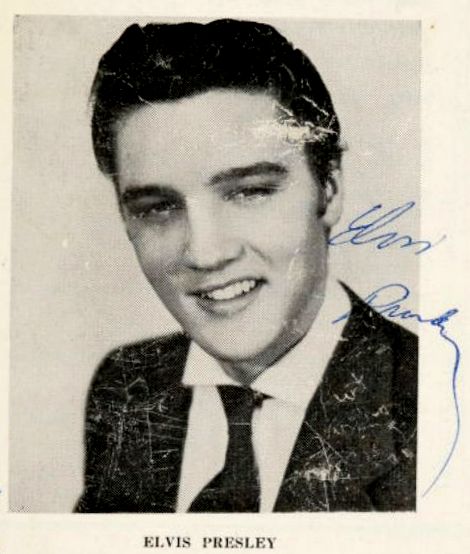
ELVIS at the Big D Jamboree — 1955

Really cool little find on the ‘WordPress’ network! It was posted earlier this year to commemorate the anniversary of Elvis’ 80th Birthday, and it’s an homage to his ‘Big D Jamboree’ appearance on September 3rd, 1955…

Paula Bosse's avatarFlashback : Dallas

elvis_big-d-jamboree_program_090355-photo

by Paula Bosse

Today is Elvis Presley’s birthday — a perfect time to present a nostalgic look back at the early days of his fame, before he broke nationally and when it was still pretty easy to get a ticket to see him. Here are a few tidbits from his appearance on Sept. 3, 1955 at the legendary Big D Jamboree (held at the legendary Sportatorium). Happy Birthday, E!

elvis_big-d-jamboree-program_090355Big D Jamboree program, Sept. 3, 1955 (click for larger image)

*

elvis_big-d-jamboree_090355That night’s schedule — E’s all over it (click for larger image)

*

elvis_big-d-jamboree-ad_dmn_090355Typos like this wouldn’t be a problem soon (click for larger image)

***

Photo of Elvis and the two clippings from the Big D Jamboree program to that night’s show, Sept. 3, 1955.

Cool ad from The Dallas Morning News, Sept. 3, 1955.

*

Copyright © 2015 Paula Bosse. All Rights Reserved.

View original post

Posted in Uncategorized | Leave a comment

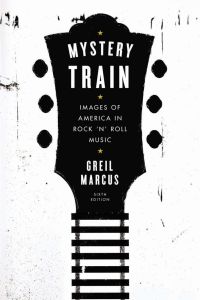
GREIL MARCUS: ‘Mystery Train’ at 40 | Rolling Stone

A Conversation With Greil Marcus: ‘Mystery Train’ Keeps Rolling at 40. “These artists just keep reverberating,” says Marcus of figures that populate landmark 1975 work

BY ROB SHEFFIELD October 19, 2015

Source: A Conversation With Greil Marcus: ‘Mystery Train’ at 40 | Rolling Stone

“That’s part of what rock & roll is … hearing something once that will haunt you the rest of your life,” says Greil Marcus. Adoc-photos/Corbis

Ever since Greil Marcus published Mystery Train in 1975, it’s been hailed as the greatest book ever written about rock & roll. The world was a different place 40 years ago — Elvis Presley was alive; Robert Johnson was just another forgotten dead bluesman; there were barely any rock tomes for competition. But Mystery Train is still the best and funniest book ever written about America or its music. Marcus takes a few key artists — Presley, Johnson, Sly Stone, Randy Newman, the Band — as a map to the country, making the whole story sound like a crazed adventure anyone can join by reading.

The idea, as Marcus wrote in 1975: “To deal with rock & roll not as youth culture, or counterculture, but simply as American culture.” The book takes in history, politics, philosophy, literature, cars, movies, sex, death, dread, connecting folk heroes from Superfly to Abe Lincoln to Little Richard to Moby Dick. Mystery Train is like reading Queequeg’s tattoos — the whole country’s secrets seem to be in here somewhere.

Generation of fans have gotten their minds blown by it, as I did at a tender age — it was like a “mystery train to your brain,” as Sonic Youth sang. Over the years, one of the strangest things is how much music it’s inspired, from Nick Cave to Wilco to Bruce Springsteen — the Clash echoed it all over their classic London Calling. And since the saga never ends — Elvis, Robert Johnson and crew keep showing up all over our culture — the book keeps growing, as Marcus updates the ever-expanding “Notes and Discographies” section to catch up with the story so far. (The 2015 anniversary edition is definitive, though hardcore fans also prize the 1997 and 1982 versions).

Marcus’ work has kept that same restless spirit — his “Treasure Island” discography in the anthology Stranded; the Lester Bangs collection he edited, Psychotic Reactions and Carburetor Dung; the 2014 History of Rock & Roll in Ten Songs; the wildly ambitious 1989 Lipstick Traces, using the Sex Pistols as the departure point for “A Secret History of the 20th Century.” Not to mention his 1970 Rolling Stone roasting of Bob Dylan’s Self-Portrait, with the immortal opening line: “What is this shit?”

Marcus, 70, has two superb new books this fall — Three Songs, Three Singers, Three Nations, a study of three folk performances, and an anthology of his “Real Life Rock” columns since 1986. In person he’s a virtuoso argument-starter, whether going off about True Detective Season 2 (he loved it) or obscene Elvis bootlegs. He recently spent a Friday afternoon in NYC discussing the long strange story of Mystery Train, including Dylan, Lana Del Rey, the Clash, Barack Obama singing Robert Johnson, Pauline Kael, the car radio and why he loved the Great Gatsby movie.

After 40 years, every edition of Mystery Train is still a brand-new book.
I’m just so lucky that every seven or eight years, they’ve always let me do a new edition, and I get to play around with the back section, which originally was around 25 pages, and now it’s longer than the actual text of the book.

There’s always more to all these stories.
There’s always more. Robert Johnson — his presence in the culture gets bigger and bigger, as he becomes more of a focus of fascination. Not just because Barack Obama is there in the White House singing “Sweet Home Chicago” — and that’s a big part of it; it’s wonderful — but there’s also things like the brewery that made Hellhound on My Ale.

Then there was this thing on Alabama Public Radio where some folklorists tracked down the daughter of Robert Johnson’s legendary guitar teacher in Mississippi. He was always referred to in the literature as “Ike Zinnerman” or “Zinnman,” all these different names. But they’re interviewing his daughter, and she knows what the family name is. It’s “Zimmerman.” I think if Bob Dylan knew that, he would have connected himself to Robert Johnson’s teacher — “that’s my third cousin on my father’s side” or something.

Ike Zimmerman was a preacher in Compton, California. He was considered the devil because he had an ability to teach people to play guitar. But she stressed that mainly the people he taught were women. All those kinds of stories, they make it fun to keep up. These artists just keep reverberating. Whenever I finish a new edition, I start a new file.

The stories go on, even for careers that ended soon after the book came out. Elvis, Sly Stone and the Band were still active artists when you wrote it.
The second edition came out after Elvis died, and I was asked to put the whole Elvis chapter in the past tense, and I said no. The reason was that Elvis’ presence was so powerful, I felt he’s always in the present tense. When you listen to anything that says Elvis Presley to you, whoever you are, whether it’s “Long Black Limousine” or “Jailhouse Rock” or “Milkcow Blues Boogie” or “Any Day Now” — I could go on forever — but the physical presence is so strong that death walks away. He’s right there. Every one of his greatest performances is in a way unfinished, because the emotion in them is so rich and so strained, in the best way, trying so hard to say what you mean emotionally, though you can never say everything, so as you listen, you add to that, you’re engaged, you’re taking part in the dialogue. So that will always be the present tense.

“When you listen to anything that says Elvis Presley to you … the physical presence is so strong that death walks away.” —Greil Marcus

That’s why I expand the “Notes and Discographies” sections but not the original chapters. Those chapters are complete in themselves, for better or worse. They are a moment in time. They can’t be extended. They’re what I could say at the time, to honor these people and give them their due. Everything else is a footnote.

When I read it as a teenager in the Eighties, so much of the music was unfindable. I’d copy out lists of rare songs I hoped I’d get to hear some day. Now most of it’s accessible to anyone, a click away.
Even the stuff that you shouldn’t be able to find. There’s an obscene Elvis outtake of “Stranger in My Hometown” from 1970. Elvis is singing and suddenly it becomes completely autobiographical, and he explodes — he says “I’m gonna start driving my motherfucking truck again. All them cocksuckers stopped being friendly, but you can’t keep a hard prick down.” He just goes off, yet it’s completely musical, not just breaking down and screaming. You can dig that up on YouTube now.

When I wrote that book, to hear all that rockabilly, I had to go to record collectors’ apartments and sit there for hours and hours while they played me obscure stuff I would never be able to hear in any other way, people I’d never heard of, Alvin Wayne and stuff like that. That’s how I had to learn. I had to go to people who had the records. There weren’t any reissue albums. There wasn’t any YouTube. Now I can be taking a walk with somebody and telling them about Geeshie Wiley’s “Last Kind Words Blues” and describing how special it is, then pull my phone out of my pocket and play them the song while we’re walking. And I’ve done that. I think it’s great. Now you can say to somebody, “You’ve got to hear this. So go hear it.” And they can.

I don’t believe that because you had to search so hard and long for records, they meant so much more. I don’t really think that’s true. Lester Bangs once said, and I quoted it in the introduction to his book, “My most memorable childhood fantasy was to have a mansion with catacombs underneath containing, alphabetized in endless winding dimly-lit musty rows, every album ever released.” That was his dream. And well, that dream has been realized, and we all live in that wonderful castle.

Yet it’s weird how there’s always more of it. Mystery Train made me spend years looking for the bootleg Dylan song “She’s Your Lover Now.” But he’s just released all these versions he’s had sitting in the vault.
Everything I might talk about in Mystery Train is now something everybody can hear. But there’s still the music that isn’t heard by anyone. That’s still kept with the formula for Coca-Cola and the original seven-hour version of Greed — all that stuff is in the same vault. There’s an infinity more of that stuff. It makes you realize how little the bootleggers got.

I remember going to see Garth Hudson up in Bearsville when I was writing my book about the Basement Tapes. About a hundred tracks had come out on bootlegs, and he said, “They’ve got it all.” Whether Garth was forgetful or not telling the truth, whatever, it wasn’t true — there were another 30-some performances no one had ever heard. I believed him: “Okay, this is all there is.” Nope. It’s never all there is. There’s always more.

Mystery Train

The Sixth Edition of ‘Mystery Train’ is out now.

The Stranded discography is like that — a map of rock & roll history with all these crazy old records that make you wonder “Can this possibly be real?” Like Joyce Harris’ “No Way Out.”
I first heard about that song from Mike Goodwin, a writing partner of mine. He was a DJ at his college station, and this was a record that was just in the studio. He put it on, was overwhelmed, taped it, and years later played it for me. We were stunned and we argued for years — who is

this? Where is it from? I guessed New Orleans. It turns out Joyce Harris was from New Orleans, but she recorded it in Austin.

For years I searched for a record I heard once. It was New Year’s Eve; I was probably 17. Friends of mine and I had driven up to San Francisco for New Years Eve in North Beach. We had a great time; we’re driving back down the Peninsula to Menlo Park on Skyline, which is this two-lane mountain highway. It’s completely lonely; there aren’t any lights — it’s two or three in the morning. And this voice comes on the radio and seems to be coming from far away. “When I’m thirsty, some sparkling wine will do real fine, indeed. But right now, baby, it’s some of your loving I need.” It was so spooky. I had no idea what this was. I wrote about it in my first book, Rock and Roll Will Stand, in 1969 — I talked about it as something I heard once, would never hear again, would never know what it was. That’s part of what rock & roll is, part of what the radio is — hearing something once that will haunt you the rest of your life. A couple years after the book was published, somebody sent me the 45 so I could hear it.

Who was it?
It was Johnny Nash. And it was produced by Phil Spector. In 1960 or 1961.

As a critic, you’ve always been militantly anti-nostalgia.
When I’m struck by things, I want to hear more and find out more. I remember when Lana Del Rey was on SNL, this supposedly disastrous performance. She’s doing this pretentious torch song, and I thought, I don’t know what she’s doing, but it’s really moving me. Then I open up newspapers and I see how people are so disgusted by it, and I’m thinking, huh? Because I didn’t hear that. I listened to the first album, which didn’t sting me the same way, but then there’s her great song “Young and Beautiful” in The Great Gatsby, another thing that’s supposed to be a travesty. A movie I just love. I’ve seen it three times. I saw it in Paris, I saw it on an airplane, I saw it back in Berkeley.

Seriously?
I’d see it again any time. “Young and Beautiful” has the pathos that she’s capable of, the sense of woundedness that’s all over her new album, which I think is her best. She’s hated by all sorts of writers who will celebrate Taylor Swift or Justin Timberlake, but they’re offended that Lana Del Rey is not this person’s real name.

Is it surprising that a book like Mystery Train still resonates with people?
My own kids, I’m not sure if they ever read the book or read all of it, but they both devoured Lipstick Traces. That book had a real impact on them, partly because it fucking dominated their childhood. For nine years, while they’re little, I’m writing this book, so it was a great oppression. But Lipstick Traces meant a lot to them. It’s still shocking to me to encounter people who stumble on Mystery Train and it stays with them. My ideal reader is somebody who trips over a copy of my book on the sidewalk, then they pick it up and read as they walk. Somebody who comes in knowing nothing, caring nothing, but responds to the story. That’s what seems to have happened. It’s a book that trusts the reader and doesn’t explain everything. It moves fast.

Was it written fast?
No. It took two years. Two years of doing nothing else. Two years of miserable, horrible, self-loathing, “how can I kill myself so I can get out of finishing this book without having to shame myself before my publisher and say I can’t do it?” I was a complete hermit. I wrote most of the book in a room I rented in a house apart from the house we lived in. I would go there every day and sit and try to write. I decided I’ll never do that again — I’ll never write a book again where I don’t write other things, go to movies, breathe.

“I don’t believe that because you had to search so hard and long for records, they meant so much more.” —Greil Marcus

It doesn’t read like a book that was agonized over.
I know. It reads like it’s by somebody full of enthusiasm. When it was finished, I thought, this is a pessimistic dark book, a book about the failure of the American idea and some few people who’ve kept that idea alive in their music. But I only know one or two people who ever read it that way. If you read the Band chapter, the Randy Newman or Sly Stone chapter, it’s all about failures and disillusion. It’s about people running into walls they can’t climb over or burrow under. Newman’s songs are about failure and defeat and not having enough imagination to live outside of narrow borders. So I thought it was a very dark book. Then there was a review that said I’m like a cheerleader, waving my pom-poms, “rock & roll will never die” and stuff like that. I thought, if I’m a cheerleader, I’m like Ishamel walking in a funeral procession. That’s really more how I felt about it.

You’re blunt when these artists make bad records.
I learned that from [his friend the film critic] Pauline Kael. When you celebrate somebody’s bad work, on the terms that define their good work, how can that artist have anything but contempt for an audience that can’t tell the good from the bad? And doesn’t care? When she hated a Robert Altman movie, it was good news because you knew it meant his next movie would be great.

That’s life; that’s humanity. People fuck up and get bad ideas and lose their inspiration. That happens. All those years in the Seventies and Eighties when Bob Dylan felt dead inside and made records he thought were dishonest. But you keep working. You keep hoeing that row, planting the seeds year after year, to see if someday the radishes will come up. That takes a certain kind of fortitude.

Reading the book in the 1980s, one of the surprises was finding out where the Clash picked up so many of their ideas for London Calling. Even the title “Train in Vain.”
Well, maybe. I know Mick Jones read Mystery Train — he told me. “Train in Vain” comes from [Robert Johnson’s] “Love in Vain,” which is all about a train. And it’s all about a break-up, something that isn’t gonna work.

There’s a typo that’s in every edition. It’s on p. 300 of the new one, where Randy Newman’s “Yellow Man” gets called “Yellow Moon.” Kind of a personal touch.
And that’s always in there? Maybe I’ll be able to correct it. Or maybe I’ll leave it in just for fun.

Your new book explores so many of the same questions about music and cultural identity.
The book is just coming out — Three Songs, Three Singers, Three Nations. It’s about three commonplace songs that seem authorless, as if they’re handed-down folk songs. One is “Ballad of Hollis Brown” by Bob Dylan, from 1964. “I Wish I Was a Mole in the Ground” by Bascom Lamar Lunsford, from 1928. And “Last Kind Words Blues” by Geeshie Wiley, from 1930, which now after John Jeremiah Sullivan’s New York Times article is more well known than ever.

It’s remarkable how a song like that can have a new life.
Or have its first life in a lot of ways. That’s part of the wonderful drama of the story.


Read more: http://www.rollingstone.com/music/news/a-conversation-with-greil-marcus-mystery-train-keeps-rolling-at-40-20151019#ixzz3p70rl9GN
Follow us: @rollingstone on Twitter | RollingStone on Facebook


Posted in Author, Bluegrass, Blues, Folk, Music, Rhythm and Blues, Rock, Rock 'n' Roll, Rockabilly, Writer | Tagged , , , , , , , , , , , , , , , | Leave a comment

STEVE MARTIN: A beginner’s guide to his eclectic, groundbreaking career | Primer · The A.V. Club

Steve Martin

Primer is The A.V. Club’s ongoing series of beginners’ guides to pop culture’s most notable subjects: filmmakers, music styles, literary genres, and whatever else interests us—and hopefully you. This installment: Steve Martin, whose influence spans decades and mediums.

Steve Martin 101

Steve Martin has been a part of pop culture for so long, and a force in so many mediums, that the best way into his career is to start small. Consider the absolute minimum for entertainment: a performer onstage. Here, the performer speaks calmly— even dully—about an art exhibition touring the country. While his costume is ludicrous, an excessively clichéd take on ancient garb, his tone is so serious that it’s conceivable he actually is some kind of expert, perhaps one coerced into dressing up. When he announces a song about the exhibition, it’s almost plausible that the music will be respectful, even scholarly, toward Egyptian pharaoh King Tut. That is, until he begins to dance:

If you were to condense the genius of Steve Martin down to one moment, you could do worse than “King Tut,” which contains elements that appear throughout his career, cutting across his acting, writing, and stand-up. There’s the sudden juxtaposition between utter seriousness and total goofiness, the lack of self-awareness, and material that works both ironically and sincerely.

When Steve Martin started out in comedy, he found the standard structure of performers reciting monologues based on their life or persona frustrating, and he approached his dissatisfaction philosophically. “What bothered me about this formula,” he wrote in Born Standing Up, a memoir of his early career,

was the nature of the laugh it inspired, a vocal acknowledgment that a joke had been told, like automatic applause at the end of a song… What if there were no punch lines? What if there were no indicators? What if I created tension and never released it? What if I headed for a climax, but all I delivered was an anticlimax? What would the audience do with all that tension?

The result was an act founded on surrealism and non sequiturs, bits that zagged where every other comic had zigged. Martin counted on the audience knowing entertainment conventions; the joke was how those conventions were being subverted. “My act, having begun three years earlier as a conventional attempt to enter regular show business, was becoming a parody of comedy,” he wrote of his creative evolution. “I was an entertainer who was playing an entertainer, a not so good one.” That led to famous bits like this one with balloon animals:

Or this one, where he wows the crowd with “magic”:

His comedy was dubbed “anti-humor” for the way he toyed with traditional forms of jokes and entertainment; Martin would play similar games in his movies and theater work. It can be difficult to appreciate how revolutionary this was at the time, given how his sophisticated relationship toward entertainment has since taken hold in pop culture. While conceptual comedy has largely vanished from major stages, you can see Martin’s influence in almost every notable comedy of the past 30 years. If Louis CK doesn’t owe him a debt, Louie does.

Martin found kindred spirits at both The Muppet Show, which also sent up showbiz conventions, and at the then-new Saturday Night Live, which was experimenting with its own form of comedic deconstruction. His appearances there were the meeting of two comedy zeitgeists. In addition to “King Tut”—a single that would go on to sell more than a million copies—SNL was where a number of catchphrases and other creations would be popularized, most notably his half of the Festrunk brothers with Dan Aykroyd, two “wild and crazy guys” from Czechoslovakia:

Over the coming decades, Martin would go onto host SNL 15 times, a record second only to Alec Baldwin’s. He was the fastest inductee to the “Five Timers Club,” doing it in under two years.

In addition to his legendary concert performances, Martin released two Grammy-winning comedy albums—1977’s Let’s Get Small and 1978’s A Wild And Crazy Guy. But because of the visual and physical elements to his stand-up, these—while still very funny—may not be the best representation of his act. That’s found in his first starring movie role in 1979, which used some of his signature stand-up gags and is one of the most influential film comedies of the modern era.

The Jerk flouts cinematic standards, chucking a complex story or characters in favor of gags that ranged from wildly lowbrow to incredibly intellectual. The title itself is a nod to Dostoyevsky’s The Idiot to tell the story of Navin R. Johnson, the “poor black child” Martin plays. He and director Carl Reiner threw in slapstick and wordplay, sexual farce and social satire, absurdist detours—cat juggling!—and bits that dip into surrealism. There’s an “anything goes” mentality that many have tried to replicate, only a few successfully:

After what’s essentially an anti-comedy, Martin made an anti-musical with 1981’s Pennies From Heaven. While the film flopped (though it has since been embraced as a forgotten classic), it may be the best example of why Martin has stayed relevant for decades. Just when he could have been typecast, he turned in a dark and nuanced performance in a work of deep and serious ambition. Pennies explores the space between reality and fantasy, using the structure of Depression-era musicals to illustrate how much was omitted by the glamour of Astaire and Rogers. It’s a film of unattained dreams and broken hearts, where music serves as an ineffective salve over the tragedy of life. It’s one of the most challenging musicals ever made, because it’s one of the few to really analyze what musicals mean, why we need them, and their limitations.

The film’s key inspiration is to have characters leap into beautifully choreographed dance sequences when things get rough. While the actors do their own hoofing, vocals are blatantly dubbed in, and the lip-syncing reinforces how these fantasies fail to solve anything. In the clip below, Martin has just been turned down for a loan:

Martin then returned to straight comedy, reuniting with Jerk director Carl Reiner for a pair of spoofs: Dead Men Don’t Wear Plaid and The Man With Two Brains. The first is an inspired take on 1940s private eye films, starring Martin as a too-cool gumshoe out to solve the mystery of a murdered cheesemaker. The underrated comedy offers an uproariously deadpan take on hard-boiled dialogue (“Carlotta was the kind of place where they spell trouble T-R-U-B-I-L, and if you try to correct them, they kill you”) and the genre’s most popular archetypes.

As a genre, parody neatly fit into Martin’s career-long tweaking of formula, but fun as those elements are, the film’s biggest pleasure are tactile. The black-and-white cinematography and studio style not only lovingly recreate the era in question (legendary costume designer Edith Head was hired for an extra touch of verisimilitude), but do it so well that the jokes are funnier. The 1982 film counts Humphrey Bogart, Ingrid Bergman, Cary Grant, Bette Davis, James Cagney, and Lana Turner as co-stars, through the film’s unique conceit of having Martin interact with footage from old movies. This works surprisingly well, though the laughs arise from how Martin’s dialogue is obviously stretched to meet his co-stars’ responses:

In Brains, a 1983 riff on mad-scientist films, Martin played his first “egotistical asshole,” as he would later describe a favorite type of role in Judd Apatow’s Sick In The Head. Martin’s rarely better than when he’s convinced of his own greatness, and a doctor so genius he performs two brain surgeries at once fits that mode perfectly. Brains is coarser than the average Martin comedy, though there’s a romance between him and a disembodied brain that’s almost touching, under the circumstances.

His fourth collaboration with Reiner, 1984’s All Of Me, is perhaps the only entry in the body-switch subgenre that achieves greatness. The premise is high-concept—Martin’s uptight lawyer is forced to share his body with the soul of Lily Tomlin’s miserable millionaire—but who cares when the execution is this hilarious? Martin has always been a peerless physical comedian, and the battle over his body gives him one of the best showcases for those skills:

But beyond these moments, All Of Me works on narrative and emotional levels as Martin’s and Tomlin’s characters grow to care for each other. It’s slapstick with a heart.

Martin moved from that certified classic to another one with fervent admirers, though how much viewers enjoy it may depend on the age they first encountered it: 1986’s ¡Three Amigos! The film is a goofy take on The Magnificent Seven as a town under siege by bandits (led by the “infamous El Guapo”) seeks the help of powerful protectors. The heroes are a trio of clueless silent movie-era action stars (Martin, Chevy Chase, and Martin Short) unaware the bullets are real this time. The humor here is by no means sophisticated, but it’s so endearing and goofy that its charms are hard to ignore:

The affectionate friendships at the heart of Amigos hinted at Martin’s underlying warmth and empathy, something that became explicit in his next roles. In 1987, he made a pair of comedies more memorable for their emotions than their laughs. First, Martin penned Roxanne, a modern take on Cyrano De Bergerac in which he plays a big-hearted small-town fire chief who fears he will never find love because of his abnormally large nose. There are some funny bits as he helps an inarticulate hunk seduce the town beauty by ghost-writing love letters, but the appeal of the film is in the dignity and wounded pride Martin brings to the role. In Roxanne’smost famous moment, he counters a drunk’s stupid insult with 20 better ones against himself, a scene that plays like a thesis statement for Martin’s career, showcasing how humor—even bad humor—can be used as both a shield and a weapon:

Even more affecting was John Hughes’ transcendent Planes, Trains & Automobiles. While ostensibly a road comedy, with Martin’s uptight executive going home for Thanksgiving with the annoyingly gregarious John Candy as a traveling partner, the 1987 film packs so much pathos between the pillows—er, laughs—that at times it plays like a drama, and a fairly dark one at that. Low-key films like this one rarely get the acknowledgment they deserve, but Planes is damn-near perfect.

Dirty Rotten Scoundrels marked a return to pure comedy in 1988, with Martin’s small-time grifter pitted against Michael Caine’s erudite con man in a wager to take someone for $50,000. As he did with Candy, Martin has terrific chemistry with Caine, as their opposing styles crackle nicely against each other. Where Caine mines humor from his subtly ridiculous take on the aristocracy, Martin scores just as much by going broad:

Martin was back in regular-guy mode in Ron Howard’s underrated Parenthood, a Robert Altman-lite look at family dynamics. The 1989 film tracks a large cast, but Martin is the nucleus, an average guy struggling to find a balance between work and home, between protecting his kids and coddling them. It’s not a showy performance, but it is a deeply felt one, and while the film has moments of unwieldy drama, the sections with him glow. When, stressed by various obligations, he complains that “my whole life is ‘has to,’” he completely sells a quietly devastating moment.

Martin’s best roles were ones he wrote himself, and it’s difficult to imagine 1991’s L.A. Story, a lovely ode to romance, performance, and magic, coming from anyone but him. While the film is a featherweight comedy about talking road signs and Californian solipsism, at its core is a sincere examination of whether constant pleasure is the same as long-term happiness. That film marks Martin’s last great starring role to date. Since then, his film career has featured a lot of broad comedies and some interesting turns into drama. While there are some high points,L.A. Story feels like a swan song. Martin’s next great work was in an entirely different medium.

Picasso At The Lapin Agile, first produced in 1993, is a quintessential Steve Martin work—perhaps the quintessential one, given how it fuses his humanism and playfulness with structure. The play imagines a meeting between Picasso and Einstein—along with Elvis as an unnamed “visitor”—just as the pair are set to debut world-changing works. While it has some amusing post-modernist elements (there’s confusion when Einstein enters the stage third, contrasting the “cast in order of appearance” page, which lists him fourth) and a lot of funny lines, what really makes it sing is Martin’s consideration of the creative process across different fields.

Martin’s Born Standing Up is one of the great celebrity memoirs, as essential as Bob Dylan’s Chronicles and far more clear-eyed. He writes that he’s so removed from the person he was when he did stand-up that the 2007 book is more biography than autobiography. The tale of someone achieving success at the expense of happiness is a familiar one, but Martin makes his own version heartbreaking, illustrating how everything he had and loved became warped by fame. Not only does Born provide an engaging account of his life—including his complicated relationship with his father— but it’s an invaluable look at his own creative evolution. Anyone in an artistic field will find something in it that speaks to them.

Intermediate Work

The first decade of Martin’s film career didn’t always produce greatness, but it tended to have a level of ambition that’s rare in today’s comedies. Amid his brilliant work with Carl Reiner, Martin also starred in 1984’s The Lonely Guy, a film that’s mostly notable as one of the first times he attempted to tackle a serious theme though a comedic lens. While never getting too deep into pathos, the film—directed by Love Story’s Arthur Hiller—is sincere about the gravity of its central theme, using comedy to explore loneliness, not mock the lonely. The jokes are too suffused with melancholy to be truly gut-busting, and while the film isn’t one of Martin’s best by any metric, it’s appealing and sweet, and sympathetic about the naked need that exists at the core of relationships (romantic and platonic).

One of his most underseen roles is in Lawrence Kasdan’s Grand Canyon, a sprawling social-issue drama from 1991 that could depressingly be remade today with little adjustment. The title refers to chasms in American society, especially ones of race and class, delving into issues of white and male privilege, police action in black communities, and violence in the media. Martin plays a hotshot producer of action movies who briefly questions what he’s putting out into the world after experiencing an act of violence himself. In a film that’s generally optimistic, he’s the cynical counterpoint. One can imagine a much slimier actor really making a mark in the role, but the counterintuitive casting serves its own purpose: If someone as genial as Steve Martin is corrupted in this way, then the problem is societal, not personal.

Leap Of Faith, an ambitious but ultimately unsuccessful 1992 drama about religion, features Martin’s most intriguing performance. He plays a evangelist who bilks the clueless faithful out of donations—easily one of his most complex characters, and he tackles it with gusto, bringing undeniable charisma to the sermons and hinting at the moral compromises he’s required to make. Leap’s first two acts are terrific, up until a twist that could have taken the film to greatness had it kept its nerve (this is a case of ambiguity being a cop out). It’s worth seeing for Martin, though, who reveals the darkness behind his performer’s facade. It’s surprising more directors haven’t played him against type like this, and also a shame:

Martin would get darker in David Mamet’s The Spanish Prisoner, the only time he’s played an unambiguous villain in a drama. The 1997 film is an enjoyably twisty mystery (the title refers to an old con game) that stars Campbell Scott as a man who invents “The Process” and stands to make untold millions for a company. Worried about his cut, he unwisely confides in Martin’s Jimmy Dell, a new friend he believes he can trust. While Martin is obviously not a bruiser (the actor—not the character—seems uncomfortable holding a gun at one point), it’s fun to see how neatly he lays his trap. As with Grand Canyon, the against-type casting pays off: Scott can be forgiven for getting duped by the imminently likable Steve Martin.

These ominous notes would be retested in 2001’s Novocaine, a modern noir that’s fun before it sputters out dramatically. Martin’s mild-mannered dentist finds himself woefully out of depth when he’s seduced into giving a false prescription to femme fatale Helena Bonham Carter, a decision that leads to criminal activity. He makes a good noir hero—smart, sympathetic, weak-willed—but writer/director David Atkins belly-flops on the plotting, making his “surprise” villain boringly stereotypical even before the thuddingly obvious “here’s what we did and why” speech. Dead Men Don’t Wear Plaid was better constructed.

Though it fails to reach the highs of his earlier work, the last Steve Martin comedy that really feels like a Steve Martin comedy is the 1999 film Bowfinger, set in the bottom rungs of the film industry. Martin—who wrote the script while frequent partner Frank Oz directed—stars as a wannabe director who believes his accountant’s ludicrous script is a sure-fire hit. Desperate to catapult himself into the big-league, he decides to surreptitiously film paranoid A-lister Kit Ramsey (Eddie Murphy, the last time he was truly funny), who he has cast without the actor’s knowledge.

Martin had been in Hollywood for 20 years by the time Bowfinger was made, and his cockeyed views toward the industry are readily apparent, most notably with “MindHead,” a wicked take on Scientology. It isn’t his funniest film, but the shots at celebrity culture land, and it makes a nice companion to his other looks at creative types. A career that had started by mocking “so bad it’s good” entertainment was now sincerely honoring the people with the drive to make it:

Advanced and Miscellaneous

As one might expect of an actor of Martin’s longevity and variety, he’s appeared in dozens of titles, including some that amount to blink-and-you’ll-miss-him cameos. Two years after his appearance on The Muppet Show, he played “Insolent Waiter” in The Muppet Movie. Decades after that, became part of another zany universe for kids, appearing as “Mr. Chairman” in Joe Dante’s Looney Toons: Back In Action. No supporting gig, however, compares to Dr. Orin Scrivello in the musical adaptation of The Little Shop Of Horrors. Scrivello is an outrageous character—an abusive boyfriend patterned on a poor man’s Elvis—and Martin gets a laugh with every line and choice of body language. The film as a whole is excellent, with a bunch of terrific numbers, but “Dentist!” is in a league of its own:

Martin’s one-scene performances include dramatic turns in And The Band Played On, Joe Gould’s Secret, and an introduction in Disney’s Fantasia 2000. (Visitors to Disneyland, where Martin had his first job growing up, can also see him in video introductions there.) In “Trash Of The Titans,” the 200th episode of The Simpsons, he voiced Ray Patterson, Springfield’s Sanitation Commissioner and perhaps the city’s sole competent civil servant. Not all of those roles were good enough to overcome the shock of recognition, but he was used well as the title character of 30 Rock’s season-three episode “Gavin Volure,” playing an ex-titan of industry under house arrest.

In 2000, Martin added another artistic form to his repertoire with Shopgirl, an affecting novella about a young woman’s struggle to find happiness. Much of the book deals with her tentative relationship with Ray Porter, a wealthy older man who cares for her but is unwilling to end his lifelong bachelorhood. Fans who know Martin as the nut behind “Happy Feet” will be surprised by the book, not just for its decidedly non-comedic premise and tone, but also for the nuance and tenderness Martin conveys in his prose. His depiction of the title character—especially her clinical depression—is profoundly sympathetic, and he shows remarkable self-awareness in Porter, a character with heavy autobiographical undertones. (This would be even more pronounced when Martin played him in Anand Tucker’s 2005 adaptation of the book—a fine film that adds little to what was written.):

Shopgirl avoids simple answers and searches for deeper truths. Martin’s follow-up novel, 2003’s The Pleasure Of My Company, recycled some of its themes to diminished results, but his third, 2010’s An Object Of Beauty, is fantastic. Not only does it offer a compelling look at the New York art world and a wonderfully complex heroine, but his exploration of what makes art valuable is just as insightful as his other looks at creativity.

Since 2009, Martin has released four musical albums, his first of any type since 1981’s half-stand-up, half-music release, The Steve Martin Brothers. The recent quartet—The Crow: New Songs For The 5-String Banjo, Rare Bird Alert, Love Has Come For You, and So Familiar—all highlight his love for bluegrass music, and are less essential for Martin fans who aren’t fans of the genre. While the songs often have goofy elements—including a new version of “King Tut” on Rare Bird—music is one medium where Martin has shown limited interest in deconstructing established traditions:

Demerits

One of Martin’s most famous roles is the exasperated George Banks in 1991’s Father Of The Bride and its sequel; it’s also his most overrated, a pale imitation of his similar work in Parenthood. Both Father films revolve around a happy and successful man unraveling into mid-life crises when faced with signs of aging (his daughter’s wedding in the first film, becoming a grandfather—and a father again—in the sequel). The theme is a potent one, and there’s real warmth in the depiction of his marriage to Diane Keaton, but for every poignant moment there’s a mood killer like Martin Short’s over-the-top wedding planner. The big comedic moments clash with the underlying heart, and it doesn’t help that the big comedic moments aren’t terribly funny. There’s also something off-putting about a movie that paints its protagonist as unreasonable for not wanting to drop $1,200 on a wedding cake.

Among his most interesting failures are My Blue Heaven and Mixed Nuts, both written by Nora Ephron. The former is a 1990 comedy about a mobster in witness protection, and it’s the rare Martin film that’s actually hindered by his participation. While the script is too messy to work under any circumstance, Martin’s spectacularly ill-conceived performance cripples it outright. Not only does his character’s shock of hair and tacky clothing immediately out him as someone who could never go incognito, but his incessant mugging and terrible eye-talian accent are hard to get past. Ephron took inspiration from Goodfellas, which her husband co-wrote, and it’s the rare comic take on a story that’s less funny than the dramatic version:

Nuts is a 1994 Christmas film set in a suicide prevention center, the kind of premise that could lead to black-comedy gold but isn’t funny or edgy here. Along with Leap Of Faith, it’s an interesting attempt to probe despair beneath Martin’s genial exterior, but it’s too tidy and needs more momentum to work on a screwball level.

Other titles aren’t so much objectionable as forgettable: Two Pink Panthers, two Cheaper By The Dozens, a redo of Neil Simon’s The Out-Of-Towners, and remake of Sgt. Bilko. Even films with great co-stars—Goldie Hawn in Housesitter, Tina Fey in Baby Mama, Alec Baldwin and Meryl Streep in It’s Complicated—make little impression.

The biggest impression a recent Martin film has made, unfortunately, is 2003’s Bringing Down The House, an unfunny comedy that digs offensively into racial humor. Martin’s best performances are rigorously disciplined; here, cast in his basic exasperation mode, he mugs with little conviction or interest while the script offers stereotype after stereotype. It’s awful.

The Essentials

1. The Jerk (1979)

Martin’s first major movie is not only one of his best, but one of the funniest and most influential comedies ever to come out of Hollywood. While a lot of the jokes are beyond dumb, the intellect needed to devise gags of this sublime inanity is abundantly clear. A good way to tell whether someone has a sense of humor is to quote, “He hates these cans!” and gauge their reaction.

2. Born Standing Up (2007)

Self-awareness is not a trait associated with many celebrities, but Martin’s honest memoir is startlingly forthright about not just what he did onstage and why, but how he felt about his eventual success. Beyond the insights, his gifts as a writer of simple and heartfelt prose are on full display.

3. Planes, Trains & Automobiles (1987)

A masterpiece of balanced tones and comedic escalation. Rare is the movie that can make audiences weep with laughter, then make them weep out of empathy a minute later. Martin—a consummate nice-guy actor—was never a part of a nicer movie.

4. Let’s Get Small (1977)/A Wild And Crazy Guy (1978)

Even if conceptual stand-up was still a major force in comedy, it’d be hard to imagine anyone topping these legendary works, which on their own would be enough to assure Martin’s place in cultural history.

5. Picasso At The Lapin Agile (1993)

Martin’s lovely play is an ode to all types of creative processes, in awe of the ability of geniuses to see new truths and express them in forms of beauty. It’s well worth reading even if you can’t see a revival; if there’s a single work that sums up Martin’s worldview in all its warmth and complexity, this is it.

via A beginner’s guide to Steve Martin’s eclectic, groundbreaking career · Primer · The A.V. Club.


Posted in Actor, Author, Comedian, Musician, Singer, Songwriter, Writer | Tagged , , , , , , , , , , , , , , , , , , , , | Leave a comment

WOODSTOCK 1969: 24 Hours of Peace and Music – in its entirety! | Deep Jams Radio

A fascinating source of access for a Woodstock anniversary is Deep Jams Radio’s “24 hours of Peace and Music” event. The featured music below is from the Woodstock performers’ setlists which also includes the various sources in the listings. It’s a fascinating document of what is available for this very special groundbreaking counterculture event of the 1960’s…

Woodstock Poster 1Join us here on Deep Jams Radio as we

celebrate the 46th anniversary of Woodstock

3 days of Peace and Music

Starting Saturday Aug. 15th 2015 at 9am Eastern / 6am Pacific until Sunday Aug 16th –

DeepJams.net Radio will be playing the entire Woodstock 1969 Festival,

including stage announcements – straight through in its entirety!

24 Hours of Woodstock only at www.DeepJams.net

via 24 Hours of Peace and Music – Woodstock 1969 in its entirety! – Deep Jams Radio.

Woodstock Poster 2


ENTIRE SETLIST

********************************************************************************

DISC 1 –

1. Pre-Show Announcements (Sources: Soundtrack LP, Box Set, Director’s Cut, B&W Video, Diary Video) John Morris; Chip Monck and Others
2. John Morris/Richie Havens Intro (Sources: Film Outtake, B&W Video) John Morris

RICHIE HAVENS:
3. High Flyin’ Bird (Source: Film Outtake) Richie Havens
4. Unknown song (Source: B&W Video) Richie Havens
5. I Can’t Make It Anymore (Source: Film Outtake) Richie Havens
6. With A Little Help From My Friends (Source: Film Outtake) Richie Havens
7. Strawberry Fields Forever/Hey Jude (Source: Film Outtake) Richie Havens
8. Handsome Johnny (Source: Box Set) Richie Havens
9. Freedom (Source: Box Set) Richie Havens
10. Stage Announcements: Doctor Request, There Goes Marilyn!, (Source: Director’s Cut) Stage Announcement
11. Stage Announcements: John Morris Free Festival Speech (Sources: Director’s Cut, Soundtrack LP, B&W Video) John Morris

SWAMI SATCHIDANANDA:
12. Swami Satchidananda Speech (Source: Director’s Cut, B&W Video) Swami Satchidananda

********************************************************************************

Disc 2 –

1. Introduction (Source: Cycles CD) Sweetwater

SWEETWATER:
2. Motherless Child (Source: Audience Tape) Sweetwater
3. Look Out (Source: Woodstock 40 Years On: Back to Yasgur’s Farm) Sweetwater
4. For Pete’s Sake (Source: B&W Video) Sweetwater
5. Day Song (Source: B&W Video) Sweetwater
6. What’s Wrong (Source: Cycles CD, B&W Video) Sweetwater
7. My Crystal Spider (Source: Film Outtake) Sweetwater
8. Two Worlds (Source: Woodstock 40 Years On: Back to Yasgur’s Farm) Sweetwater
9. Band Introduction (Source: Film Outtake) Sweetwater
10. Why Oh Why (Source: Film Outtake) Sweetwater

BERT SOMMER:
11. Jennifer (Source: Woodstock 40 Years On: Back to Yasgur’s Farm) Bert Sommer
12. And When It’s Over (Source: Woodstock 40 Years On: Back to Yasgur’s Farm) Bert Sommer
13. America (Source: bertsommer.com MP3) Bert Sommer
14. Smile (Source: Woodstock 40 Years On: Back to Yasgur’s Farm) Bert Sommer
15. There Goes Marilyn! (Source: Woodstock 40 Years On: Back to Yasgur’s Farm) John Morris

TIM HARDIN:
16. Hang On To A Dream (Source: Woodstock 40 Years On: Back to Yasgur’s Farm) Tim Hardin
17. If I Were A Carpenter/John Morris Outro (Source: Box Set, Diary Video) Tim Hardin
18. Simple Song Of Freedom (Source: Woodstock 40 Years On: Back to Yasgur’s Farm) Tim Hardin

********************************************************************************

Disc 3 –

1. Flat Blue Acid (Source: Woodstock 40 Years On: Back to Yasgur’s Farm) John Morris

RAVI SHANKAR:
2. Raga Puriya-Dhanashri/Gat In Sawarital (Source: At Woodstock Festival CD) Ravi Shankar
3. Tabla Solo In Jhaptal (Source: At Woodstock Festival CD) Ravi Shankar
4. Raga Manj Kmahaj: Alap Jor/Dhun In Kaharwa Tal/Medium & Fast Gat In Teental (Source: At Woodstock Festival CD) Ravi Shankar

MELANIE:
5. Momma Momma (Source: Woodstock 40 Years On: Back to Yasgur’s Farm) Melanie
6. Beautiful People/John Morris Outro (Source: Woodstock 40 Years On: Back to Yasgur’s Farm) Melanie
7. Birthday Of The Sun (Source: Woodstock 40 Years On: Back to Yasgur’s Farm) Melanie

ARLO GUTHRIE:
8. John Morris Intro/Coming Into Los Angeles/Lotta Freaks Rap (Source: Box Set, Diary Video, Director’s Cut) Arlo Guthrie
9. Wheel Of Fortune (Source: Woodstock 40 Years On: Back to Yasgur’s Farm) Arlo Guthrie
10. Walking Down The Line (Source: Box Set) Arlo Guthrie
11. Every Hand In The Land (Source: Woodstock 40 Years On: Back to Yasgur’s Farm) Arlo Guthrie
12. Amazing Grace (Source: Film Outtake) Arlo Guthrie

********************************************************************************

Disc 4 –

1. All You Funny People (Source: Woodstock 40 Years On: Back to Yasgur’s Farm) John Morris

JOAN BAEZ:
2. John Morris/Joan Baez Intro-Joe Hill (Source: Woodstock Diary, Director’s Cut, Box Set) Joan Baez
3. Sweet Sir Galahad (Source: Box Set) Joan Baez
4. Hickory Wind (Source: Woodstock 40 Years On: Back to Yasgur’s Farm) Joan Baez
5. Drug Store Truck Driving Man (Source: Box Set) Joan Baez with Jeffrey Shurtleff
6. Warm And Tender Love (Source: Blessed Are Remastered CD) Joan Baez
7. Swing Low Sweet Chariot (Source: Director’s Cut) Joan Baez
8. We Shall Overcome (Source: Lost Performances Video) Joan Baez

9. End Of Friday Announcement (Source: Director’s Cut) John Morris
10. Hugh Romney Rap: The First Free City In The World! (Source: Director’s Cut, Audience Tape)
11. Let’s Make It Work! (Tom Law Yoga Classes) (Source: Audience tape, Director’s Cut) Tom Law
12. They Are With Us! (US Army Rap) (Source: Director’s Cut)
13. George Broke His Arm (Source: Director’s Cut)
14. Thanks Abbie (Source: Diary Video) John Morris
15. Bring Scully His Asthma Pills (Source: Woodstock 40 Years On: Back to Yasgur’s Farm) John Morris
16. Insulin & Quill Intro (Source: Woodstock 40 Years On: Back to Yasgur’s Farm) John Morris
17. They Live The Life (Source: Woodstock 40 Years On: Back to Yasgur’s Farm) Quill
18. That’s How I Eat (BBY) (Source: Woodstock 40 Years On: Back to Yasgur’s Farm) Quill
19. Waitin’ For You (Source: Diary Video, Audience Tape) Quill
20. I Understand Your Wife Is Having A Baby (Source: Woodstock 40 Years On: Back to Yasgur’s Farm) Chip Monck
21. Chip Monck/Country Joe Intro (Source: Film Outtake Country Joe McDonald) Country Joe McDonald

COUNTRY JOE MCDONALD:
22. Janis (Source: Film Outtake) Country Joe McDonald
23. Donovan’s Reef (Source: Woodstock 40 Years On: Back to Yasgur’s Farm) Country Joe McDonald
24. Rockin’ All Around The World (Source: Film Outtake) Country Joe McDonald
25. Flyin’ High All Over The World (Source: Film Outtake) Country Joe McDonald
26. Seen A Rocket (Source: Film Outtake) Country Joe McDonald
27. I-Feel-Like-I’m-Fixin’-To-Die Rag (Source: Woodstock 40 Years On: Back to Yasgur’s Farm) Country Joe McDonald

********************************************************************************

Disc 5 –

SANTANA:
1. Chip Monck Intro/Waiting (Source: Sanata 35th Anniversary CD) Santana
2. Evil Ways (Source: The Woodstock Experience CD) Santana
3. You Just Don’t Care (Source: The Woodstock Experience CD) Santana
4. Savor (Source: The Woodstock Experience CD) Santana
5. Jingo (Source: The Woodstock Experience CD) Santana
6. Persuasion (Source: The Woodstock Experience CD) Santana
7. Soul Sacrifice (Source: The Woodstock Experience CD) Santana
8. Fried Neck Bones And Some Home Fries (Source: The Woodstock Experience CD) Santana

9. Stage Announcements Buried Under Dialogue (Source: B&W Video) Stage Announcement
10. Your Wife Is Having A Baby (Source: Director’s Cut) Stage Announcement

JOHN B. SEBASTIAN:
11. Chip Monck – John Sebastian Intro/How Have You Been (Source: Faithful Virtue Box) John B. Sebastian
12. Rainbows All Over Your Blues (Source: Faithful Virtue Box) John B. Sebastian
13. I Had A Dream (Source: Faithful Virtue Box) John B. Sebastian
14. Darlin’ Be Home Soon – Chip Monck/John B. Sebastian Intro (Source: Faithful Virtue Box) John B. Sebastian
15. Younger Generation (Source: Faithful Virtue Box) John B. Sebastian
16. Cousin Al Is Sick (Source: Audience Tape) Stage Announcement

KEEF HARTLEY BAND:
17. Spanish Fly (Source: Audience Tape) Keef Hartley Band

18. Faint Stage Announcements Under ISB tuning (Source: B&W Video) Stage Announcement

********************************************************************************

Disc 6 –

THE INCREDIBLE STRING BAND:
1. Invocation (Source: B&W Video) Incredible String Band
2. The Letter (Source: Woodstock 40 Years On: Back to Yasgur’s Farm) Incredible String Band
3. This Moment (Source: Film Outtake) Incredible String Band
4. When You Find Out Who You Are/Chip Monck Outro (Source: Woodstock 40 Years On: Back to Yasgur’s Farm) Incredible String Band

5. She Is Lost (Source: Woodstock 40 Years On: Back to Yasgur’s Farm) Chip Monck
6. We’re In Pretty Good Shape (Source: Woodstock 40 Years On: Back to Yasgur’s Farm) Chip Monck

CANNED HEAT:
7. Chip Monck Intro/I’m Her Man (Source: Lost Performances Video, Audience Tape) Canned Heat
8. Going Up The Country (Source: Director’s Cut, Soundtrack LP) Canned Heat
9. A Change Is Gonna Come/Leaving This Town (Source: Audience Tape, Lost Performances Video, Box Set, Film Outtake) Canned Heat
10. Roll My Baby (actual title unknown) (Source: Audience Tape) Canned Heat
11. Woodstock Boogie (Source: Woodstock 40 Years On: Back to Yasgur’s Farm) Canned Heat
12. On The Road Again (Source: Audience Tape) Canned Heat

********************************************************************************

Disc 7 –

1. The Brown Acid (Source: Woodstock 40 Years On: Back to Yasgur’s Farm) Chip Monck
2. Chip Monck Intro (Source: Woodstock Two) Mountain

MOUNTAIN:
3. Blood Of The Sun (Source: Woodstock Two) Mountain
4. Stormy Monday (Source: Soundboard Tape) Mountain
5. Theme From An Imaginary Western (Source: Soundboard Tape) Mountain
6. Long Red (Source: Soundboard Tape) Mountain
7. Who Am I But You And The Sun (For Yasgur’s Farm) (Source: Soundboard Tape) Mountain 8. Beside The Sea (Source: Soundboard Tape) Mountain
9. Waiting To Take You Away (Source: Soundboard Tape) Mountain
10. Dreams Of Milk And Honey (Source: B&W Video) Mountain
11. Guitar Solo (Source: Unknown/Film Outtake?) Mountain
12. Southbound Train (Source: Film Outtake) Mountain

********************************************************************************

Disc 8 –

1. Stage Problems Announcement (Source: B&W Video) Stage Announcement
2. Green Acid (Source: Woodstock 40 Years On: Back to Yasgur’s Farm) Chip Monck
3. Green Acid (Source: Woodstock 40 Years On: Back to Yasgur’s Farm) Jerry Garcia & Country Joe McDonald

GRATEFUL DEAD:
4. Ken Babbs/Chip Monck Intro-St. Stephen (Source: Soundboard Tape/Gap in St. Stephen filled by alternate Soundboard Tape) Grateful Dead
5. Mama Tried (Source: Soundboard Tape) Grateful Dead
6. Equipment Failure And Stage Raps (Source: Soundboard Tape) Grateful Dead
7. Dark Star (Source: Soundboard Tape) Grateful Dead
8. High Time (Source: Soundboard Tape) Grateful Dead

********************************************************************************

Disc 9 –

GRATEFUL DEAD:
1. Turn On Your Lovelight (Source: Soundboard Tape) Grateful Dead

********************************************************************************

Disc 10 –

CREEDENCE CLEARWATER REVIVAL:
1. Chip Monck Intro/Born On The Bayou (Source: Soundboard Tape, Blackstead Tapes MP3 File) Creedence Clearwater Revival
2. Green River (Source: Soundboard Tape) Creedence Clearwater Revival
3. Ninety-Nine And A Half (Won’t Do) (Source: Soundboard Tape) Creedence Clearwater Revival
4. Bootleg (Source: Soundboard Tape) Creedence Clearwater Revival
5. Commotion (Source: Soundboard Tape) Creedence Clearwater Revival
6. Bad Moon Rising (Source: Soundboard Tape) Creedence Clearwater Revival
7. Proud Mary (Source: Soundboard Tape) Creedence Clearwater Revival
8. I Put A Spell On You (Source: Soundboard Tape) Creedence Clearwater Revival
9. Night Time Is The Right Time (Source: Soundboard Tape) Creedence Clearwater Revival
10. Keep On Chooglin’ (Source: Soundboard Tape) Creedence Clearwater Revival
11. Suzy Q (Source: Soundboard Tape) Creedence Clearwater Revival

********************************************************************************

Disc 11 –

JANIS JOPLIN:
1. Chip Monck Intro/Raise Your Hand (Source: Soundboard Tape) Janis Joplin
2. As Good As You’ve Been To This World (Source: Soundboard Tape) Janis Joplin
3. To Love Somebody (Source: Soundboard Tape) Janis Joplin
4. Summertime (Source: Soundboard Tape) Janis Joplin
5. Try (Just A Little Bit Harder) (Source: Soundboard Tape) Janis Joplin
6. Kosmic Blues (Source: Soundboard Tape) Janis Joplin
7. Can’t Turn You Loose (Source: Soundboard Tape) Janis Joplin
8. Work Me Lord/Chip Monck Intro (Source: Soundboard Tape) Janis Joplin
9. Piece Of My Heart (Source: Soundboard Tape) Janis Joplin
10. Ball and Chain (Source: Soundboard Tape) Janis Joplin

********************************************************************************

Disc 12 –

SLY & THE FAMILY STONE:
1. Chip Monck Intro/M’Lady (Source: Soundboard Tape From “Down On the Farm” CD) Sly & the Family Stone
2. Sing A Simple Song (Source: Soundboard Tape From “Down On the Farm” CD) Sly & the Family Stone
3. You Can Make It If You Try (Source: Soundboard Tape From “Down On the Farm” CD) Sly & the Family Stone
4. Everyday People/Dance To The Music (Source: Soundboard Tape From “Down On the Farm” CD) Sly & the Family Stone
5. Music Lover (Source: Soundboard Tape From “Down On the Farm” CD) Sly & the Family Stone
6. I Want To Take You Higher (Source: Soundboard Tape From “Down On the Farm” CD) Sly & the Family Stone
7. Love City (NOTE: Edited out mistaken repeat from CD) (Source: Soundboard Tape From “Down On the Farm” CD) Sly & the Family Stone
8. Stand (Source: Soundboard Tape From “Down On the Farm” CD) Sly & the Family Stone

********************************************************************************

Disc 13 –

1. ‘The Politics Of The Situation’ (Source: Woodstock 40 Years On: Back to Yasgur’s Farm) Abbie Hoffman

THE WHO:
2. Chip Monck Intro/Heaven And Hell (Source: Soundboard Tape) The Who
3. I Can’t Explain (Source: Soundboard Tape) The Who
4. It’s a Boy (Source: Soundboard Tape) The Who
5. 1921 (Source: Soundboard Tape) The Who
6. Amazing Journey (Source: Soundboard Tape) The Who
7. Sparks (Source: Soundboard Tape) The Who
8. Eyesight To The Blind (Source: Soundboard Tape) The Who
9. Christmas (Source: Soundboard Tape) The Who
10. Acid Queen (Source: Soundboard Tape) The Who
11. Pinball Wizard (Source: Soundboard Tape) The Who
12. Abbie Hoffman Incident (Source: Soundboard Tape) The Who
13. Do You Think It’s Alright? (Source: Soundboard Tape) The Who
14. Fiddle About (Source: Soundboard Tape) The Who
15. There’s A Doctor I’ve Found (Source: Soundboard Tape) The Who
16. Go To The Mirror Boy (Source: Soundboard Tape) The Who
17. Smash The Mirror (Source: Soundboard Tape) The Who
18. I’m Free (Source: Soundboard Tape) The Who
19. Tommy’s Holiday Camp (Source: Soundboard Tape) The Who
20. We’re Not Gonna Take It (Source: Soundboard Tape) The Who
21. See Me Feel Me (Source: Soundboard Tape) The Who
22. Summertime Blues (Source: Soundboard Tape) The Who
23. Shakin’ All Over/Chip Monck Intro/Pete Townshend Intro (Source: Soundboard Tape) The Who
24. My Generation-Naked Eye/Chip Monck Outro (Source: Soundboard Tape, Soundtrack LP) The Who

********************************************************************************

Disc 14 –

1. Doctor Request/Intro (Source Diary Video) Chip Monck

JEFFERSON AIRPLANE:
2. Introduction (Source: The Woodstock Experience) Jefferson Airplane
3. The Other Side of this Life (Source: The Woodstock Experience) Jefferson Airplane
4. Somebody to Love (Source: The Woodstock Experience) Jefferson Airplane
5. 3/5 of A Mile in 10 Seconds (Source: The Woodstock Experience) Jefferson Airplane
6. Won’t You Try / Saturday Afternoon (Source: The Woodstock Experience) Jefferson Airplane
7. Eskimo Blue Day (Source: The Woodstock Experience) Jefferson Airplane
8. Plastic Fantastic Lover (Source: The Woodstock Experience) Jefferson Airplane
9. Wooden Ships (Source: The Woodstock Experience) Jefferson Airplane

********************************************************************************

Disc 15 –

JEFFERSON AIRPLANE:
1. Uncle Sam Blues (Source: The Woodstock Experience) Jefferson Airplane
2. Volunteers (Source: The Woodstock Experience) Jefferson Airplane
3. The Ballad of You Me Pooneil (Source: The Woodstock Experience) Jefferson Airplane
4. Come Back Baby (Source: The Woodstock Experience) Jefferson Airplane
5. White Rabbit (Source: The Woodstock Experience) Jefferson Airplane
6. The House at Pooneil Corners (Source: The Woodstock Experience) Jefferson Airplane

7. Breakfast Time (Source: Director’s Cut ) Wavy Gravy
8. Muskrat Reads The Times (Source: Soundtrack LP) Muskrat
9. ‘It Just Keeps Goin’ (Source: Woodstock 40 Years On: Back to Yasgur’s Farm) John Morris
10. Max Yasgur Speaks (Source: Woodstock 40 Years On: Back to Yasgur’s Farm) Max Yasgur

********************************************************************************

Disc 16 –

JOE COCKER:
1. Let’s Go Get Stoned (Source: Woodstock 40 Years On: Back to Yasgur’s Farm) Joe Cocker
2. With A Little Help From My Friends (Source: Woodstock 40 Years On: Back to Yasgur’s Farm) Joe Cocker
3. John Morris Intro (Source: Diary Video, Box Set, Film Outtake) Joe Cocker
4. Something’s Coming On (Source: Acetate) Joe Cocker
5. Feelin’ Alright (Source: Woodstock 40 Years On: Back to Yasgur’s Farm) Joe Cocker
6. Dear Landlord (Source: Audience Tape) Joe Cocker
7. I Shall Be Released (Source: Woodstock Diary CD) Joe Cocker
8. Let’s Go Get Stoned (Source: Box Set, Film Outtake) Joe Cocker
9. With A Little Help From My Friends (Source: Box Set) Joe Cocker

10. No Rain! (Source: Director’s Cut, Diary Video, Soundtrack LP) Stage Announcement
11. Stage Announcements/Crowd Rain Chant (Source: Director’s Cut) Stage Announcement
12. Let The Sunshine In (Source: Woodstock two LP) Stage Announcement

********************************************************************************

Disc 17 –

COUNTRY JOE & THE FISH:
1. Chip Monck Intro/Rock And Soul Music (Source: Box Set) Country Joe & the Fish
2. (Thing Called) Love (Source: Diary Video) Country Joe & the Fish
3. Not So Sweet Martha Lorraine (Source: Woodstock 40 Years On: Back to Yasgur’s Farm) Country Joe & the Fish
4. Summer Dresses (Source: Woodstock 40 Years On: Back to Yasgur’s Farm) Country Joe & the Fish
5. Silver And Gold (Source: Woodstock 40 Years On: Back to Yasgur’s Farm) Country Joe & the Fish
6. Chip Monck Intro/Love Machine (Source: The Life And Times Of CD) Country Joe & the Fish
7. Rock & Soul Music (Reprise) (Source: Woodstock 40 Years On: Back to Yasgur’s Farm) Country Joe & the Fish
8. Fish Cheer/I-Feel-Like-I’m-Fixing-To-Die-Rag (Source: The Life And Times Of CD) Country Joe & the Fish

TEN YEARS AFTER:
9. I’m Going Home (Source: Directors Cut, Soundboard Tape) Ten Years After

********************************************************************************

Disc 18 –

THE BAND:
1. Chip Monck Intro/Chest Fever (Source: Soundboard Tape) The Band
2. Baby Don’t You Do It (Source: Soundboard Tape) The Band
3. Tears Of Rage (Source: Soundboard Tape) The Band
4. We Can Talk (Source: Soundboard Tape) The Band
5. Long Black Veil (Source: Soundboard Tape) The Band
6. Don’t Ya Tell Henry (Source: Soundboard Tape) The Band
7. Ain’t No More Cane (Source: Soundboard Tape) The Band
8. This Wheel’s On Fire (Source: Soundboard Tape) The Band
9. I Shall Be Released (Source: Soundboard Tape) The Band
10. The Weight (Source: Soundboard Tape) The Band
11. Lovin’ You (Is Sweeter Than Ever) (Source: Soundboard Tape) The Band

********************************************************************************

Disc 19 –

JOHNNY WINTER:
1. Chip Monch Intro/Mama, Talk To Your Daughter (Source: The Woodstock Experience) Johnny Winter
2. Leland Mississippi Blues (Source: The Woodstock Experience) Johnny Winter
3. Mean Town Blues (Source: The Woodstock Experience) Johnny Winter
4. You Done Lost Your Good Thing Now (Source: The Woodstock Experience) Johnny Winter
5. I Can’t Stand It (With Edgar Winter) (Source: The Woodstock Experience) Johnny Winter
6. Tobacco Road (With Edgar Winter) (Source: The Woodstock Experience) Johnny Winter
7. Tell The Truth (With Edgar Winter) (Source: The Woodstock Experience) Johnny Winter
8. Johnny B. Goode (Source: The Woodstock Experience) Johnny Winter

********************************************************************************

Disc 20 –

BLOOD, SWEAT & TEARS:
1. Chip Monck Intro/More And More (Source: Film Outtake) Blood Sweat & Tears
2. Something’s Coming On/More Than You’ll Ever Know (Source: Film Outtake) Blood Sweat & Tears
3. Spinning Wheel (Source: Film Outtake) Blood Sweat & Tears
4. You’ve Made Me So Very Happy (Source: Woodstock 40 Years On: Back to Yasgur’s Farm) Blood Sweat & Tears

CROSBY, STILLS & NASH:
5. Suite Judy Blue Eyes (Source: Box Set) Crosby Stills & Nash
6. Blackbird (Source: Film Outtake) Crosby Stills & Nash
7. Helplessly Hoping (Source: Film Outtake) Crosby Stills & Nash
8. Guinnevere (Source: Woodstock 40 Years On: Back to Yasgur’s Farm) Crosby Stills & Nash
9. Marrakesh Express (Source: Woodstock 40 Years On: Back to Yasgur’s Farm) Crosby Stills & Nash
CROSBY, STILLS, NASH & YOUNG:
10. 4 + 20 (Source: Box Set) Crosby Stills Nash & Young
11. Mr Soul (Source: Film Outtake) Crosby Stills Nash & Young
12. Long Time Gone (Source: Film Outtake) Crosby Stills Nash & Young
13. Sea Of Madness (Source: Woodstock 40 Years On: Back to Yasgur’s Farm) Crosby Stills Nash & Young
14. Wooden Ships (Source: Soundtrack LP) Crosby Stills Nash & Young
15. Find The Cost Of Freedom (Source: Box Set) Crosby Stills Nash & Young

********************************************************************************

Disc 21 –

PAUL BUTTERFIELD BLUES BAND:
1. No Amount Of Loving (Source: Woodstock 40 Years On: Back to Yasgur’s Farm) The Butterfield Blues Band
2. All In A Day (Source: Blackstead Tapes MP3) Paul Butterfield Blues Band
3. All My Love Comin’ Through To You (Source: Film Outtake) Paul Butterfield Blues Band
4. Drifting Blues (Source: Film Outtake) Paul Butterfield Blues Band
5. Love March (Source: Box Set) Paul Butterfield Blues Band
6. Everything’s Gonna Be Alright (Source: Woodstock 40 Years On: Back to Yasgur’s Farm) The Butterfield Blues Band

SHA-NA-NA:
7. Get A Job (Source: Woodstock 40 Years On: Back to Yasgur’s Farm) Sha Na Na
8. Teen Angel (Source: Film Outtake) Sha Na Na
9. Wipe Out (Source: Film Outtake) Sha Na Na
10. Who Wrote The Book Of Love (Source: Film Outtake) Sha Na Na
11. Duke Of Earl (Source: Film Outtake) Sha Na Na
12. At The Hop/Na Na Theme (Source: Soundtrack LP, Box Set) Sha Na Na

********************************************************************************

Disc 22 –

JIMI HENDRIX:
1. Chip Monck Thanks The Audience (Source: Jimi Hendrix live At Woodstock DVD) Chip Monck
2. Chip Monck Intro/Introduction (Source: Soundboard Tape, 2 CD Hendrix At Woodstock) Jimi Hendrix
3. Message To The Universe (Source: Audience Tape) Jimi Hendrix
4. Getting My Heart Back Together Again (Source: Soundboard Tape) Jimi Hendrix
5. Spanish Castle Magic (Source: Soundboard Tape) Jimi Hendrix
6. Red House (Source: Soundboard Tape) Jimi Hendrix
7. Master Mind (Source: Soundboard Tape) Jimi Hendrix
8. Here Comes Your Lover Man (Source: Soundboard Tape) Jimi Hendrix
9. Foxy Lady (Source: Soundboard Tape) Jimi Hendrix
10. Jam Back At The House (Source: Soundboard Tape) Jimi Hendrix

********************************************************************************

Disc 23 –

JIMI HENDRIX:
1. Izabella (Source: Soundboard Tape) Jimi Hendrix
2. Gypsy Woman (Source: Soundboard Tape) Jimi Hendrix
3. Fire (Source: Soundboard Tape) Jimi Hendrix
4. Voodoo Child (slight return) (Source: Soundboard Tape) Jimi Hendrix
5. Stepping Stone (Source: Soundboard Tape) Jimi Hendrix
6. Star Spangled Banner (Source: Soundboard Tape) Jimi Hendrix
7. Purple Haze (Source: Soundboard Tape) Jimi Hendrix
8. Woodstock Improvisation (Source: Soundboard Tape) Jimi Hendrix
9. Villanova Junction (Source: Soundboard Tape) Jimi Hendrix
10. Hey Joe (Source: Soundboard Tape) Jimi Hendrix

11. Woodstock Farewell (Source: Woodstock 40 Years On: Back to Yasgur’s Farm) Chip Monck


Woodstock 3

woodstock 4

 ***************************************************************

Posted in Blues, Concert, Country, Documentary, Festival, Film, Folk, Funk, Instrumental, Live, Movie, Music, Pop, Rhythm and Blues, Rock, Rock 'n' Roll, Soul | Tagged , , , , , , , , , , , , , , , , , , , , , , , , , , , , , | 1 Comment