QUENTIN TARANTINO’s Top 20 favorite Spaghetti Westerns | The Spaghetti Western Database

Quentin Tarantino’s Top 20 favorite Spaghetti Westerns from The Spaghetti Western Database

A Spaghetti Western Database / The Quentin Tarantino Archives Exclusive

The SWDB is the first sister site of The Quentin Tarantino Archives that was launched and it didn’t take long for the director himself to admit his admiration for this site. It has been a huge success on the internet and a beloved location for fans around the globe to exchange ideas about these classic movies and do research. Our own Top 20 has not gone unnoticed, so the director took some time out of his schedule while shooting Inglourious Basterds, to submit his own personal Top 20. Enjoy.

“It is a cold January afternoon on the Babelsberg studio lot a few minutes outside Berlin. The sun is out and it’s nice, but there’s a cold wind blowing. As we walk across the snow-covered streets I’m reminded of The Great Silence, but silence is not what I’m here for. I sit down with Quentin Tarantino so he can brief me on his personal twenty most favorite spaghetti westerns (rather unexpectedly I have to say, as his current project was all that was on my mind at that moment). This is an authoritative list he had compiled meticulously after having read the SWDB’s Essential Top 20 Films (which is calculated through a complicated formula from people’s personal top 20 lists). The cineast and filmmaker, lists and discussing favorites having been part of not just his video store past, and who’s currently shooting Inglourious Basterds, also added a few more films that didn’t make it into his top 20 but are runners up. Ladies and gentlemen, get out your own personal lists and compare, for this my friends, is Q’s list …” – Sebastian Haselbeck

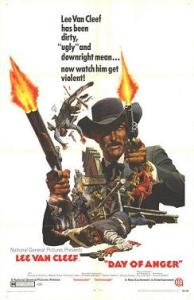
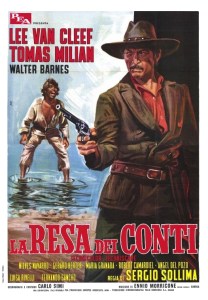
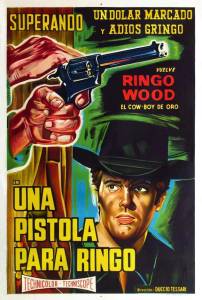
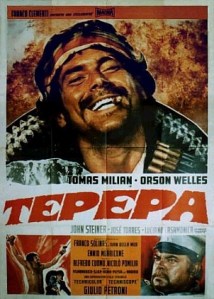
Quentin Tarantino’s official list of favorite Spaghetti Westerns:

Source: Quentin Tarantino’s Top 20 favorite Spaghetti Westerns – The Spaghetti Western Database

Posted in Film, Spaghetti Western, Western | Tagged , , , , , | Leave a comment

LAURA!

“WHEN YOU ROLL THE DICE THERE’S A LESSON LEARNT –
IF YOU PLAY WITH FIRE, WELL YOU’RE GONNA GET BURNT!”
–  ‘Irate’ song lyrics/music Copyright © Laura Wilde/Brian Canham.
LW Somric Castro

  • guitar
  • “Music in the Blood” – New Short Essay
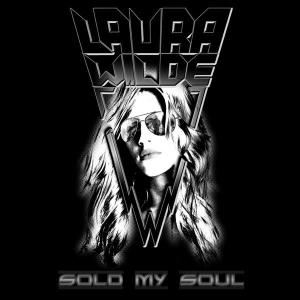
  • “Sold My Soul” – Updated Album Review
  • “Sold My Soul” – Album on Spotify
  • “All Alone” Single Download link 
  • “Highway To An Angry Heart” on Wattpad
  • “Charmed + Dangerous” – new album link/samples/review
  • Updated Social Media links
  • “Crashing Out” – new song demo on Soundcloud
  • “Finding Clarity”new song on youtube
  • Gig Database Record

Before we commence let’s take a few seconds to witness the talent of LAURA WILDE – here she is with a jam of the guitar solo to Led Zeppelin’s “Stairway To Heaven”

~ Music in the Blood ~

May, 2012: Hard Rock Cafe, Hollywood Boulevard…
One could almost be correct in their observation that most performers possibly approach every gig as some kind of ‘prizefight’. As a rule, the ‘prizefighter’ is more than willing to beat down any obstacle in their way, or at least keep it under some manageable control. Sometimes, the circling audience can provide that obstacle and take on the presence of a formidable opponent: baying for the blood and guts of sheer entertainment. Sometimes, it may be an unforeseen element, or circumstance, that appears to be working against the ‘staged prizefighter’. The ‘unforeseen’ which somehow evokes a blind spot or disguise within the realm of its murky presence. In this case,  the unforeseen lay in wait patiently somewhere between the striking of a power chord on the electric guitar and the eye of the element that captured the moment…

The dice had already been rolled, the fire ignited and the spotlights now descending upon, and saturating, the falling locks of blonde. The guitar’s burning emotion was crackling upon the atmosphere, continuing its search for an unspoilt and textured landscape. Then it happened: the cold sting from the metallic object flying past her eyes; the fleeting glint caught in the lights. Then it appeared: oozing like a cherry red wine, a glistening clot of human ‘crude’. Her thoughts trying to numb the pain; all emotion reserved for the remainder of the song. The lights molesting the drama they forever sought in the liquid appendage seeping on the bridge of her nose. A spotlight or two had shone on the expressions among the ‘ordinary’ faces in the audience, trying to capture every possible concern. Tonight’s show had been given freely, no charge; the blood flowed freely too, but could have been at a potentially high cost to its owner. Eventually, the set was brought to its ‘uncomfortable’ climax followed by the equally uncomfortable sting of the mopping implement soaking up its potent palette. The instigator of this bloody inconvenience was still dangling around her neck, smiling its charm. It was truly the unforeseen enemy obstacle on this night, on this field of musical combat steeped in the dazzling lights of Hollywood nights. But, it was her professionalism which shone more than the chained necklace; a professionalism that bathed freely in the deception of its surroundings.

The healing process of a resurrection began with a Doctor’s visit for this hard-working performer of rock-oriented songs; this ‘rookie’ of the US touring circuit who was gradually cutting into the musical fabric of the place she now called home. The next stop after the Doctor’s office would be the Arkansas Music Pavilion in Fayetteville to soak up more of that ‘prize-fighting’ experience of blistered fingers and thumbs and potential bloody noses. It is hard work being a genuine musician. But, the next stop was also a ride on the continuing “Great White Buffalo” tour supporting the legendary Ted Nugent. Therefore, all this blood, sweat and tears being wrung out of every ounce of rock ‘n’ roll was not totally void of its perks… or its prizes as Laura went on to win Rock Over America “Best New Female Rock Artist 2012” and Vegas Rocks “Best New Female Artist 2013” awards!

2016-01-18 (1)

~ SOLD MY SOUL ~

LauraWildeA glorious addition to your CD/mp3 collection is Laura Wilde’s “Sold My Soul” album. It’s a 21st Century take on a lot of the music which influenced her growing up years and has undoubtedly been in her family’s vinyl/cassette archives throughout those years. The ‘retro rock’ listener won’t be disappointed with Laura’s self-penned homages which blend the ingredients of Glam Rock, Glam Punk, Hard Rock and Pop mixed with a healthy dose of Metal and Soft Metal flavourings. It’s one big cool ride along a hot furnace of open road which commences with the 10-second intro of a roaring Harley-Davidson kick-starting a pulsating ‘heartbeat’ which segues into “ALL ALONE” – the first track which, incidentally, is the first song Laura ever wrote when she was a teenager and subsequently is her first single from the album. It’s a really good Punk-infused Pop song featuring crunching guitars amid a breathless recitation and an overall frantic production. “SOLD MY SOUL” – the gritty and catchy title track is a winner with its shades of Bolan’s20th Century Boy” guitar groove – it’s Glam Rock at its updated best as Laura takes us on a semi-autobiographical cross-country career-developing journey Stateside. “FREEEK!” – the throbbing baseline and ‘vox’ effects imbues the dark undertones in conjunction with another catchy electric guitar groove. The interesting spelling of the title is confirmed within the screech of its chorus. “IRATE” – guitars thrash across a dark landscape of attitude and a punk chorus that’s filled with angst and irritation.  “Irate” bellows with wordplay that’s singed with a fuming smoke and features “a guitar solo that bleeds along the highway of an angry heart!” (see “Highway To An Angry Heart” link below in this article). “BACK SEAT” – a fine commercial combination of Pop/Rock which became Laura’s follow-up single to “All Alone” and was one of the very first music videos Laura made. Throbbing base and fuzz guitar combine to great effect. “FOR YOU” – a major highlight of the album! The song is delivered with an incessant underlying angst which simply oozes from the words ‘creep’ and ‘sleaze’. Please note the ‘Explicit’ label attached to this song too. Nevertheless, it’s a brilliant delivery in performance and production as you’re able to experience the whole drama of the narrative via the song’s accompanying video (see link below in this article). A beautiful acoustic guitar pours its melancholy into the darkness of this atmospheric gem which also features another shining performance by Laura on the lead electric solo. “ANYTHING GOES” – a riveting glam rock sing-a-long with shades of Suzi Quatro equipped with Na-Na-Na-Na-Na’s thrown in for good measure. One of those songs which bestows the feeling of youth upon you. “CLASSICAL GUITAR STAR” –  a beautiful work of art. A yearning piece of musical drama unfolds for the adulation of the title character. Laura channels the young girl in this wondrous world of mystique. It’s a teenage angst that resonates for all and the beautiful musicianship culminates in a tear-inducing ending. “NOTHING BACK” – the punk undertones are delivered within a ‘machine gun’ style chorus which rocks straight in yer face! “LOVE BUYER” – more flashes of Suzi Quatro style phrasing here with a catchy chorus once again and a narrative that depicts the title character’s devious endeavour to pick up several ‘bargains’. “ANGEL” – rounds out the album with its fuzzing bass and electric solo searing through the ‘vox’ effects of combined punk and new wave pop textures. So, overall we have a brilliant debut by this young rocker still in her mid-20’s and with a great inspiring feel for classic rock which caters to all ages. “Sold My Soul” is vibrant, mostly upbeat and comes highly -recommended as a feel good listen paying homage to several sub-genres of rock and pop music. If only the album was made available in a warm vinly offering, it makes you crave for the nostalgia that inspired it. You can almost hear the flourishing touches of The Ramones and The Clash along with T.Rex, AC/DC and The Runaways! We eagerly anticipate the follow-up album* by Laura Wilde which is currently in the works…

*See Soundcloud link below for samples of new album “Charmed + Dangerous”!

2016-01-18 (4)

Sold My Soul

 2016-01-19

Rock over america

~ Links to a selection of Laura’s promotional videos of songs from the “Sold My Soul” album ~

“BACK SEAT” 
Back Seat

“FOR YOU”
Laura Eyes 2

The following are 2 music links (Spotify and youtube) to the song “IRATE”. It was Laura’s guitar solo in this song which inspired a quote from writer Tony G. Marshall which consequently inspired the creation of the lyrics of his own “Highway To An Angry Heart” (see below after “Irate” youtube link):

Tony G. Marshall’s
“HIGHWAY TO AN ANGRY HEART” ~

Highway To An Angry Heart promo

Laura’s new CD Album available NOW! (Click image below): 

Laura Wilde’s blazing new 10 track rock album “Charmed + Dangerous” is now available for purchase exclusively on laurawilde.com. Get your limited edition CD or digital link today! All songs written, produced and played by Laura Wilde.

“CHARMED + DANGEROUS” = Soundcloud Album Samples of “Let’s Roll,” “Tragedy” and “I Love This City“: 

“CHARMED + DANGEROUS” Review (Click image):

~ Laura on Social Media ~

Laura’s Official Website:

Also included on Laura’s website, at the following link,
is a unique database record of
all her shows :
2016-01-18 (3)

New song demo – “Crashing Out” on Soundcloud:

New song “Finding Clarity”: 
2016-02-10 (1)

Laura on Facebook:

2016-01-17 (2)

Laura on Twitter:

2016-01-17 (4)

Cosmic Dwellings do not own the copyright to the image/likeness/music/videos of Laura Wilde and Vice Grip Music Group. The written content and style in this not-for-profit article is owned by Cosmic Dwellings/Tony G. Marshall. All Rights Reserved. Copyright © 2012, 2016, 2020 Tony G. Marshall/Cosmic Dwellings.
Posted in Album, Blues, CD, Guitar, mp3, Music, Pop, Rhythm and Blues, Rock, Rock 'n' Roll | Tagged , , , , , , , , , , , , , , , , , , , , , , , , , , , , , , , , , , , , , , , , , , , , , , , , | Leave a comment

VINYL: History of the 45 rpm Record

A History of the Gramophone Record

The first records were on cylinders, the earliest of which were made by the inventor of the first ‘Phonograph’, Thomas Alva Edison in 1877. Attempts had been made of ‘recording’ sound much earlier than this, but none were capable of reproducing the human voice.

By 1887, another American, Emile Berliner (a German immigrant to the U.S.) filed a patent for a recording system based on a flat disc instead of a cylinder. This was a very significant development because the new discs were much easier to mass produce than the cylinders that they replaced. This was important in making the technology available to a wide market.

By the turn of the century the industry had begun to settle on a diameter of 10 inches for the new format. The rotational speed varied somewhat from one manufacturer to another, but most turned at between 75 and 80 revolutions per minute and most ‘Gramophone’ machines were capable of some adjustment. The name ‘Gramophone’ began as a Trademark for Berliner’s new invention, but Europeans adopted it as generic while Americans continued to use the term ‘Phonograph’. One popular theory for the choice of 78 rpm is arrived at from calculations based on the rotational speed of synchronous electric motors and achievable gear ratios. This is neither technically sound nor supported by historic evidence. It is far more likely that a speed of around 78 rpm simply proved the best compromise from empirical results with the materials and technology available at the time.

Various materials were used for manufacturing the earliest discs, but shellac (a resin made from the secretions of the lac insect) was found to be the best. Shellac is a natural thermoplastic, being soft and flowing when heated, but rigid and hard wearing at room temperature. Usually a fine clay or other filler was added to the ‘mix’. However, by the 1930s the natural shellac began to be replaced by equivalent synthetic resins.

All of the earliest 78 rpm recordings were single sided, but double sided recordings were introduced firstly in Europe by the Columbia company. By 1923, double sided recordings had become the norm on both sides of the Atlantic.

The 78 rpm disc reigned supreme as the accepted recording medium for many years despite its tendency to break easily and the fact that longer works could not be listened to without breaks for disc changes (at 5 minute intervals for 12″ discs).

In 1948 the Columbia company had perfected the 12″ Long Playing Vinyl disc. Spinning at 33 rpm the new format could play up to 25 minutes per side. This new record medium also had a much lower level of surface noise than did its older shellac cousin. However, Columbia’s big rival, RCA Victor then produced the seven inch 45 rpm vinyl disc. These could hold as much sound as the 12″ 78 rpm discs they were to replace, but were much smaller and attractive.

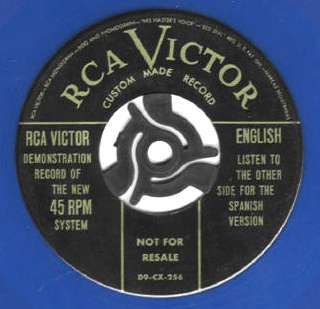
Here is what RCA Victor’s original 45 looked like. This image was kindly supplied by Jules Woodell who manages the Record Collector’s Glossary  Note the large centre hole which needs an adaptor to make it fit a regular UK style spindle was already a feature and that coloured vinyl was not such a novelty in the 1940s!

This early demonstration copy carried a recording of a salesman extolling the virtues of the new format.

It took many years for the 78 to disappear because the new vinyl records needed new equipment on which to play them, but the two new vinyl formats then were to dominate the recorded music industry until the advent of the digital compact disc (CD). Even then, vinyl would take much longer to fall into oblivion than 78s did when vinyl recordings first appeared.

The 45rpm record’s years of greatest success began with the onset of rock and roll. The new 7 inch format was favoured by the young and in the UK sales of 45s overtook 78s early in 1958 as rock and roll established a boom in record sales. During the next few years the UK was to become a major source of popular recorded music with the advent of the British ‘beat’ groups which were exemplified in the ‘Beatles’. This was the ‘golden era’ for the 45. Although sales of popular music were to grow dramatically during the following decades, buyers gradually transferred their purchases to the 12″ ‘LP’ as their affluence grew. Indeed, by the end of the 1960s sales of the 45 had even begun to decline. During the early years of the Beatles, a record would need to sell in excess of 750,000 copies to reach the coveted number 1 chart position. Such was the decline in this part of the market that by a decade later only 150,000 copies could achieve the same result. (See ‘EMI: The First 100 Years’ by Peter Martland ISBN 0-7134-6207-8 Published by B.T.Batsford Ltd, London).

Source: History of the 45 rpm Record

Posted in 45rpm vinyl single, Album, Music | Tagged , , , , , , , , , , , , , , , , , , , , , , , , , , , , | Leave a comment

DAVID BOWIE: “Blackstar” review – a spellbinding break with his past | Music | The Guardian

Eyes front … the perpetually forward looking David Bowie

As he reaches his 69th birthday, David Bowie finds himself in a rarefied position, even by the standards of the rock aristocracy. He does not give interviews, make himself available to promote new releases, or explain himself in any way. He does not tour the world playing his hits. In fact, he doesn’t do anything that rock stars are supposed to do. It’s behaviour that theoretically means a one-way ticket to oblivion, with no one but diehard fans for company. But since his re-emergence from a decade-long sabbatical with 2013’s The Next Day, it’s proved a quite astonishing recipe for success. Bowie’s scant public pronouncements are treated as hugely significant. His releases are pored over in a way they haven’t been since the days when his army of devotees would turn up at Victoria station to greet him off the boat train, a state of affairs abetted by the fact that, since his return, Bowie has reverted to writing the kind of elusive, elliptical lyrics that were once his stock in trade. Dense with mysterious references, the words on The Next Day and its follow-up alike have far more in common with the impenetrable mass of signifiers that made up Station to Station’s title track than, say, the Dad-misses-you-write-soon message to his adult son of 2002’s Everyone Says Hi. His 25th studio album concludes with I Can’t Give Everything Away, which seems to offer those attempting to unravel his lyrics a wry “best of luck with that” (“Saying no but meaning yes, this is all I ever meant, that’s the message that I sent”) while loudly trumpeting his own carefully maintained mystique. “I can’t give everything, I can’t give everything away,” he sings, over and over. It’s a beautiful, elegant song borne on clouds of synthesiser and decorated with a scrawly guitar solo, but it’s hard to avoid the suspicion that its lyrical admonishments aren’t going to make much difference: the bits of Blackstar that emerged in advance of the album have already been thoroughly examined for meaning. The most compelling interpretation – bolstered by a remark made by Donny McCaslin, the New York jazz musician whose electro-acoustic trio forms the core of the backing band on Blackstar – is that the album’s opening title track is Bowie’s response to the rise of Isis. It seemed plausible: Bowie has always been fascinated both by messianic dictators – not least the relationship of their power to that of celebrity – and by the idea that the world is facing a future so terrifying that the thought of it, as he once put it, makes your brain hurt a lot. The theory was subsequently denied by Bowie’s spokesperson, which seems a shame: there’s a pleasing circularity to the idea of a muse that burst into life amid what the writer Francis Wheen called the “collective nervous breakdown” of the 1970s, apparently sparking up again amid the collective nervous breakdown of the present day.

But aside from Abu Bakr al-Baghdadi’s supposed elevation to the pantheon of Bowie bogeymen – thence to swap tips on global domination with Big Brother,President Joe and his murderous Saviour Machine, and the cannibalistic Hungry Men off Bowie’s debut album – and the reappearance of Thomas Newton, antihero of The Man Who Fell to Earth, amid the alternately gorgeous and unsettling drift of Lazarus, Blackstar frequently sounds like a slate-cleaning break with the past.

Bowie’s back catalogue is peppered with jazz-influenced moments – from his 1965 attempt to mimic Georgie Fame, Take My Tip, to Mike Garson’s improvised piano playing on the title track of Aladdin Sane, to his duet with Art Ensemble of Chicago founder Lester Bowie on the Black Tie White Noise track Looking for Lester. But Blackstar’s enthusiastic embrace of the genre feels as if it has less in common with his previous jazz dabblings than it does his headlong plunge into contemporary soul on Young Americans: designed as a decisive, wilful shift away from the past. Just as it seems highly unlikely that anyone who heard Diamond Dogs in 1974 could have predicted that, within a year, its author would be starring on America’s premier black music show, Soul Train, so it seems fairly safe to say that no one who enjoyed the relatively straightforward rock music of The Next Day thought its follow-up would sound like this.


Lazarus, from David Bowie’s last album, Blackstar

More striking still is the synergy between Bowie and the musicians on Blackstar. You can hear it in Bowie’s whoop as McCaslin solos amid the sonic commotion of ’Tis Pity She Was a Whore. He sounds delighted at the racket they’re creating, and understandably so. Simultaneously wilfully synthetic and squirmingly alive, it has the same thrilling sense of exploratory, barely contained chaos found on “Heroes” or Scary Monsters (and Super Creeps), or in the tumultuous, wildly distorted version of the Spiders from Mars that rampaged through Panic in Detroit and Cracked Actor. Better still, it doesn’t actually sound anything like those records.

And you can hear it by comparing the album version of Sue (Or in a Season of Crime) with the single released in 2014. The earlier version felt like a statement rather than a song; a series of ideas (drum’n’bass-inspired rhythm, Maria Schneider’s high-minded, uncommercial big-band jazz, a fragmentary lyric) thrown together to let the world know that Bowie wasn’t done with being avant-garde yet. It did that job pretty well, but never became a satisfying whole. On Blackstar, however, everything coalesces. The rhythm is sample-based and punchier, the agitated bass riff distorted and driving, the seasick brass and woodwind arrangement is replaced by sprays of echoing feedback, electronic noise and sax. It sounds like a band, rather than Bowie grafting himself on to someone else’s musical vision.

DB

Over the years, rock has frequently reduced experimental jazz to a kind of dilettantish signifier: few things say “I consider myself to be a very important artist unleashing a challenging musical statement, I demand you take me seriously” quite like a burst of skronking free brass dropped in the middle of a track. But Blackstar never feels like that. Nor does it feel like it’s trying too hard, an accusation that could have been leveled at the drum’n’bass puttering of 1997’s Earthling.

Blackstar lacks the kind of killer pop single Bowie would once invariably come up with amid even his most experimental works – a Sound and Vision, a Heroes, a Golden Years – but only Girl Loves Me feels like a slog: lots of Clockwork Orange Nadsat and a smattering of polari in the incomprehensible lyrics, thuddingly propulsive drums, no tune. Instead, you’re struck by the sense of Bowie at his most commanding, twisting a genre to suit his own ends. Dollar Days might be the most straightforwardly beautiful thing here, a lambent ballad that doesn’t sound jazz influenced at all. But it’s lent a curious, slippery uncertainty at odds with the bullish lyrical pronouncements (“If I never see the English evergreens I’m running to, it’s nothing to me”) by Mark Guiliana’s drumming, the emphasis never quite landing where rock-trained ears might expect it to.

The overall effect is ambiguous and spellbinding, adjectives that apply virtually throughout Blackstar. It’s a rich, deep and strange album that feels like Bowie moving restlessly forward, his eyes fixed ahead: the position in which he’s always made his greatest music.


Source: David Bowie: Blackstar review – a spellbinding break with his past | Music | The Guardian

Posted in Album, Art Rock, Avant-garde Jazz, CD, Jazz, Music, Pop, Rock | Tagged , , , , , , , , , , , , , , , , | Leave a comment

“FANTASTIC PLANET” (1973) | Weird Fiction Review

Knowing the Alien: René Laloux’s “Fantastic Planet”


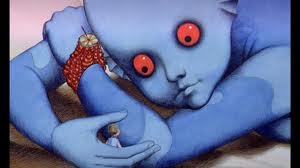
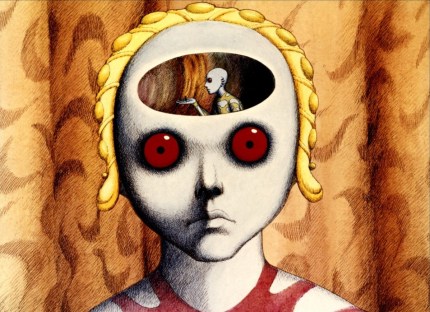
A father and his daughter, while strolling through a field, come across a tiny orphaned creature. The poor thing’s mother has just been killed by a callous group of children and the girl takes pity on it, asking if she can keep it as a pet. After a lecture on responsibility, her father agrees to let her bring it home with them. The girl plays games with this little stray, chases it around the house, and even cradles it while she does her homework. Their bond seems only threatened by her animal’s disinclination to wear the costumes she picks out for it, as well as her father’s increasing doubts as to the suitability of this new animal.  This is a scenario familiar from any number of “pet” narratives, but we are in the world of René Laloux’s cult classic Fantastic Planet (1973): the girl and her father are massive, blue-skinned members of the Draag species and their new pet is a baby human boy. Fantastic Planet follows this boy, Terr, through his childhood and into a rebellious adolescence. The girl, Tiva, telepathically absorbs her school lessons through a headset device, lessons in which she innocently allows Terr to participate. All the trivia a reluctant student may be expected to memorize (geography, biology, philosophy) acts as a primer in discontent for the young human. Laloux presents this information in disorientating chunks, a pleasantly realistic depiction of what it would really be like to be exposed to an alien world. Terr comes to resent his treatment as a pet, to yearn for a freedom he can only find outside this gilded cage. Humans (known to the Draag as “Om”) age far more rapidly than their giant keepers, setting the stage for strange conflicts between this boy and his owner. Not much more than a season passes for her, while Terr grows into a headstrong youth. Tiva’s father, one of the leaders of the Draag, shows more and more distrust of his daughter’s pet, and is inclined to see the Om as more a pest than anything else. Eventually, Terr sees his chance and takes it: he escapes the dubious comforts of Tiva’s care and flees into the wilderness beyond this Draag city. Beyond, he will find a rough-hewn tribe of free humans, as well as a world filled with bizarre and dangerous creatures. This community faces the possibility of genocide by way of pesticide, as many of the Draag wish to rid their planet of this nuisance species forever. The newest member of the Om society, however, may bring them their salvation in an unexpected form. The struggles of this tiny society, and the attempts the Draag make to squelch it, form the majority of this tale.Though such a brief summary may make Fantastic Planet sound like any number of dystopian/revolutionary movies, a number of factors converge to make this one unique in the history of Weird cinema. The animation, to begin with the most obvious component, is unlike anything an audience is likely to have seen before. Laloux used a cutout technique now made more familiar to American audiences by the series South Park; in Fantastic Planet, though, this process lends a dreamy cast to the story, and not simply a silly one. The sensation it gives is one of watching a bizarrely illustrated storybook coming to life. Humans, here, resemble gaunt, often haunted paper dolls, scrambling through a world too massive to take much notice of them. On this weird planet, humanity occupies a place not much higher than ants do in ours.Giant birds, insects and even plants threaten their existence. Watching tiny humans picked off, swallowed whole, or crushed by massive aliens disorients Laloux’s audience, reminding us that our own ecological niche, secure as it so often seems to be, is far more fragile than we’d like to think. In an environment abounding in surrealistic grotesques, the Om seem oddly out of place. The landscape itself resembles something like a collaboration between Jonathan Swift and Salvador Dali, somehow simultaneously stark and horrifically lush. Laloux, though, gives us a world more complex than a hellscape. The Draag, for instance, with their blue skin and wide red eyes, are ethereal beings, beautiful and not simple monstrosities. Crystal dew forms in the mornings and even temporarily encases a terrified Terr. We see animals trapping and devouring one another in surprising, often funny little vignettes. These visions, as well as others, may remind one of the works of the great Weird author Clark Ashton Smith. This “savage planet” (a more accurate translation of the film’s title) certainly would not have been out of place in his tales of the Earth in the far future. And the world beyond that occupied by the Draag? That moon to which the Om dream of escaping? Well, that proves to be even more mysterious… 
Early on, Terr witnesses strange meditative practices somehow central to Draag society, in a sequence rendered in psychedelic imagery. The out-of-body trips these meditations send the aliens on mark them as a fascinating, spiritually complex species, a fact vital not only to the climax of the movie, but also as an indicator that they are more than the genocidal monsters they might otherwise appear to be. This spiritual component is no doubt one reason Fantastic Planet attained, and retains, a place in cult film history. After the mechanisms of the plot have been resolved, after the fate of these two species has been decided, the image of the Draag and their metaphysical journeys persists. Laloux, as well as Stefan Wul (author of the novel, Oms en série, upon which the film was based), clearly have more to say than “Fight the Power,” that simplistic motto of so many dystopian narratives. As has been mentioned, Terr absorbs weird knowledge from Tiva’s learning device. The function this serves is far more than a matter of simple, useful information. This knowledge helps him awaken to consciousness, to a reality not immediately perceptible from the confines of his comfy prison house. It is gnosis, divine wisdom which enables not only salvation, but also the ability to rise psychically above his place as an alternately beloved and pesky pet. It is, as several of the ancient Gnostic sects interpreted the story of Genesis, the fruit of knowledge which spells the end to innocence and which introduces the possibility of greater spiritual growth. It would be a spoiler to say anything more direct about this facet of the plot, but suffice it to say the Om find they must bring their struggle to another level if they are to win anything more than a temporary reprieve from the cruelties of the Draag. 
Fantastic Planet
was made during a time of cultural tumult. It is hard not to read any number of themes into this film, as it seems to invite so many. A post-colonial reading would not be far off the mark, as evidenced by the mixture of paternalism and sadism the Draag show the tiny Om. The peoples of Africa, Asia and the Middle East found they needed more than weapons to combat the weight of European hegemony, and the Western powers learned (and are still learning) a great deal about themselves from their colonial adventures. Counter-cultural identification with Fantastic Planet has also been persistent in the forty years since it was made, and may be an echo of institutional conflicts within both European and American societies at the time. The Om, with their wild, natural lifestyles and their dogged resistance to an industrial civilization determined to either tame or annihilate them, sometimes resemble the 60’s counter culture which was already, in 1973, collapsing beneath its own weight. The arms race which develops between the Om and the Draag may even be a gesture toward the Cold War, though it is hard to imagine either the Soviet Union or the United States in the position of the brutalized Om. Those mystical elements, both Gnostic and vaguely Eastern, encourage interpretations more internal, as well as ideological. An understanding deeper than that necessitated by strictly physical survival has proven vital down through history, a need to fulfill psycho-spiritual yearnings without which society can become a horrible simulation of itself. The clash between the cold, yet mystical Draag and the wild, vital Om may be meant to say something about a conflict deeply embedded within our own civilization. 
However one interprets this film, this plasticity of meaning, far from being a detriment, is a strength the film possesses. Where many anti-authoritarian fantasies of its era have suffered with the passage of time, have come to seem too utopian or naïve, Fantastic Planet retains an essential weirdness which protects it from simplistic analysis. The bizarre set-pieces with which the film is filled are not easy to forget, nor are they easy to explain away as facile allegories. The film veers close to being a dream, at times, threatening to lose coherence and dissolve into mere sequences of phantasmagoria.Fantastic Planet does, however, speak some message, be it theological, political, internal, or even ecological. That it does so in such an alien tongue is only fitting in a tale about being lost in such a strange world.

Source: Knowing the Alien: René Laloux’s “Fantastic Planet” | Weird Fiction Review

Details of the Criterion Collection’s Blu-Ray/DVD release of “Fantastic Planet” at the following link:
criterion_fantasticplanet_cover

Posted in Animation, Book, Film, Movie, Science Fiction | Tagged , , , , , , , , , , , , , , , , , , , , , , , , , , , | Leave a comment

ELVIS PRESLEY’S Guitars | Official Graceland Blog

Elvis Presley’s Guitars
double

Posted by Elvis Presley’s Graceland on Dec 30, 2015

It’s hard to picture Elvis Presley without a guitar in his hand.From his iconic first album cover to his many movies, from the ’68 Special to “Aloha from Hawaii,” from Graceland to Vegas, Elvis always had a guitar nearby, and he was always ready to play. He enjoyed playing both the guitar and bass guitar.Elvis received his first guitar when he was 11, and for many years, that was his only guitar. But as he grew older – and eventually became the King of Rock ‘n’ Roll – he started collecting guitars, and many of them are part of pop culture history. Here are a few of the guitars made famous by The King:

1955 Martin D-28

Elvis used this guitar at many concerts, including in Tampa, Florida, where this photo was taken, and at the Overton Shell (now Levitt Shell) in Memphis.

Elvis used a 1942 Martin D-18 in 1954-55, until he traded it in for the newer D-28 in 1955 at O.K. Houck Piano Co. in Memphis, and he used it for a little over a year. Elvis often purchased his instruments from that store.

This guitar is the one Elvis is playing on the cover of his first album. It’s also well-known for its gorgeous leather cover, handmade by an employee at the music store where Elvis purchased the guitar.

1956 Gibson J200

Elvis’ 1956 Gibson J200.

This guitar definitely looks like it belongs to a member of rock ‘n’ roll royalty.

Elvis loved this guitar and used it often. He used it in many of his 1957 concerts and appearances.

After returning home from the Army, he asked his guitarist Scotty Moore to send the well-worn guitar out to be refurbished. The work wasn’t done in time for Elvis’ March 20 recording session in Nashville, so he was given a brand-new 1960 J200 that looked almost identical.

Meanwhile, the 1956 model got a beautiful facelift: Gibson replaced the red pick guard with a new black one, and Elvis’ name was inlaid on the finger board. The stylish new guitar was debuted in publicity shots for “Wild in the Country” and can be seen in “Elvis: That’s The Way It Is.” He loved the 1960 J200, too, so he kept it. He used it in the ’68 Special and many live performances.

These guitars were favorites of the king. They’re both part of the permanent archival collection at Graceland.

Fender Precision Bass

Even in his free time, Elvis made music.

Many fans know this guitar as the one Elvis is seen playing in Graceland’s living room in this March 1965 photo.

This pretty guitar can also be spotted in his film “Spinout”.

But maybe the most famous guitar seen in “Spinout” is the…

1965 Gibson EBS-1250 Double Bass

This red double bass is featured in many publicity shots for “Spinout.”

This stunning instrument is seen in lots of publicity shots and artwork for “Spinout,” but it’s only seen being played by Elvis very briefly, and toward the end, of the film. (His co-star, Jimmy Hawkins, is seen playing it earlier in the movie)

Elvis owned the Gibson after production wrapped, and it became one of his favorite guitars. This Gibson is part of the Graceland Archives.

Gibson Ebony Dove

This guitar is the one on everyone’s lips right now.

This Gibson Ebony Dove, which Elvis played on his groundbreaking “Aloha from Hawaii” special, will go on the auction block in next week’s Auction at Graceland. The guitar (and all items in the auction) is from a third-party collector; nothing in the Graceland Archives will ever go up for auction. Like in all previous auctions, Graceland will be bidding to try to bring these beloved Elvis artifacts home to Graceland.

In addition to “Aloha,” Elvis used this guitar during many concerts. The guitar features a Kenpo Karate Decal and Elvis’ name inlaid in the fingerboard. Elvis gave it to a fan in the front row of an Asheville, North Carolina concert, and that fan is the one who has consigned it to the Auction at Graceland.

Many of the items in the auction, including the guitar, are currently on display at the car museum here at Graceland, and they’ll be on display until the auction.

Learn more about all the guitars used or owned by Elvis.

Want to learn more about the King of Rock ‘n’ Roll? Visit Graceland and explore the life and career of Elvis Presley!

Source: Elvis Presley’s Guitars | Official Graceland Blog

Posted in Guitar, Music, Pop, Rhythm and Blues, Rock, Rock 'n' Roll, Rockabilly | Tagged , , , , , , , , , , , , , , , , , , , , , , , , , , , , , , , , , , , | Leave a comment

‘SAM PHILLIPS: The Man Who Invented Rock ’n’ Roll,’ by Peter Guralnick – The New York Times

Five hundred forty-one pages into Peter Guralnick’s 763-page biography of Sam Phillips, the impresario enshrined in the subtitle as “the man who invented rock ’n’ roll,” we get the moment when many people probably saw Phillips for the first time. It was the night of May 15, 1986, a few months after he had been inducted into the charter class of the Rock and Roll Hall of Fame for having produced the first recordings by Elvis Presley, Jerry Lee Lewis, Johnny Cash and Carl Perkins, among others, more than 30 years earlier. Phillips was appearing as a guest on “Late Night with David Letterman,” and he was behaving strangely, deflecting questions with an indifferent glare or changing the subject to ask how Letterman could be so successful with such bad teeth. Letterman, trying to keep things under control and failing, asked: “Now, Sam — now tell me about the early days there at Sun Records. What kind of a sound were you trying to establish there?”Phillips fiddled with his bracelet, stared at Letterman and repeated the question in his lumbering Tennessee drawl.Letterman, visibly frustrated, prodded him: “Or would you just record anybody who came through?” Phillips leaned slowly toward Letterman’s face and said, “Why certainly, ­David.” Nearly 30 years after that show aired, we finally get lucid answers to the not inconsequential questions of how and why Sam Phillips led an ad hoc assemblage of unknown and untested poor young musicians to combine the sounds of blues and country music, harnessing a raw carnality to make what would become known as rock ’n’ roll. Guralnick, a veteran scholar of vernacular American music whose eight previous books include a majestic and definitive two-volume biography of Elvis Presley, first met Phillips in 1979 (for an interview for The New York Times), and he interviewed him many times over the ensuing 24 years before Phillips’s death in 2003. Guralnick draws from his deep mine of knowledge about Phillips and his world — a mine with passageways to some dark places — to produce a book so thoroughly steeped in its subject that it is almost an autobiography in the third person. As Phillips admitted proudly to Letterman, the doors of his physically humble but grandly ambitious studio in Memphis were open — if not quite to anybody who came through, then to a great many people who, by virtue of their inexperience or unconventionality, might not have been so welcome at larger, more commercially oriented record companies. “The very foundation of Sam’s story,” in Guralnick’s view, was Phillips’s belief in “the vast, untapped talents of those who had been ignored, set aside, scorned and reviled by a world that, without even knowing it, was waiting for the bestowal of their gifts.”
                              The artists in the raw whom Phillips sought and cherished — “untried, untested, unspoken-­for people,” as Guralnick writes in words that echo through the pages of his book — had “an eloquence and a gift that sometimes they did not even know they possessed.” That is to say, neither the musicians themselves nor their public necessarily saw the value of the music Phillips recorded until Phillips interceded to enlighten them all. 
       This conception of Phillips as a quasi-­messianic figure, a charismatic visionary of the American vernacular, is the driving idea of Guralnick’s biography. Only from artists who were “pure,” “unspoiled” and “raw” could Phillips “get the results he was looking for.” It is essential to this scheme, of course, that Phillips be the active element, the one with the vision, grooming naïfs from whom he alone could extract golden results. As Guralnick describes the canonical first sessions by Presley, at which Elvis, the guitarist Scotty Moore and the bassist Bill Black break away from the romantic ballads they had been playing for hours to mess around with a blues tune called “That’s All Right” — originally recorded by Arthur (Big Boy) Crudup in 1946 — the sound they made “was the very essence of everything Sam had dreamt of but had never been able to fully imagine.”

The proposition that Presley’s music began with Sam Phillips’s dreams, fulfilled through his agency as a talent scout and record producer, lays the foundation for the inflated subtitle of this book. In the romantic image of dreams begins the idealization of Phillips as the man who not only discovered rock ’n’ roll but also carries responsibility for it.

Like many books about the early history of rock, including the first volume of Guralnick’s biography of Presley, “Sam Phillips” gives due attention to the racially hybrid character of the music. Quoting Phillips in his new book, Guralnick relays how the singer and the producer together crossed far over “the color line.” Elvis sang an idiosyncratically countrified, hypersexed version of rhythm and blues, a music that had been invented (not discovered) by African-American musicians in the rural South, and he did so with both palpable admiration for it and true affinity with it, as a poor Southerner.

Yet, as we rarely learn in books about rock, including Guralnick’s latest, the color line had been fairly well crossed long before Sam Phillips recorded white boys like Elvis, Jerry Lee Lewis and Carl Perkins singing songs originally recorded by African-Americans. From the era of Stephen Foster, the white popularizer who produced pop hits on sheet music by appropriating and adapting “plantation songs” for minstrel shows, American popular music has been a racial amalgam rooted, elementally, in black expression. In the generation immediately preceding Elvis — and Little Richard, Fats Domino and Chuck Berry — American teenagers of all races were swing-dancing to the hits of the big bands. Swing, like rock ’n’ roll, was essentially a black invention hybridized as it was taken up by musicians and fans of all colors.

Undeterred by humility, Phillips was a great talker and a good-looker in full command of his gifts, at least in his prime. At one point in his “Late Show” appearance, Letterman shows Phillips a photograph of Elvis teaching him how to finger a chord on the guitar, and Phillips says, “Gregory Peck ain’t got a damn thing on me in that photo, has he?” He attracted women easily and did not decline the attention, carrying on several extramarital affairs with women involved in his various business ventures in recording and radio broadcasting. Guralnick handles these incidents matter-of-factly, without judgment or prurience. Similarly, he deals squarely but briskly with the debilitating bouts of anxiety and other psychological problems Phillips faced early in his professional life, issues that called for multiple hospitalizations and treatments of electroshock therapy.

At one point in their long association, Guralnick and Phillips had some conversations (described in this book) about collaborating on an as-told-to memoir. They abandoned the idea, Guralnick says, though the spirit of literary companionship infuses the work Guralnick ended up doing. Most of the book is written from Phillips’s point of view in language often designed to emulate Phillips’s speech: “Sam couldn’t really blame him for that. Hell, that was just business.” Or, in reference to an early business dealing: “The Bihari boys might think they were the only game in town, but he’d be damned if he’d be yoked to those pissants for life.” You could practically use a “replace” command to turn every “he” to an “I,” and have Sam Phillips’s autobiography, notwithstanding the sections about how Guralnick became friends with Phillips’s son Knox and grew closer and closer to the elder Phillips.

“This is a book written out of admiration and love,” Guralnick states frankly in an author’s note. As such, it honors Sam Phillips elegantly, by devoting itself to the one subject Phillips seemed to admire and love as much as he did ­music: Sam Phillips himself.

S. PhillipsSAM PHILLIPS

The Man Who Invented Rock ’n’ Roll

By Peter Guralnick

Illustrated. 763 pp. Little, Brown & Company. $32.

Source: ‘Sam Phillips: The Man Who Invented Rock ’n’ Roll,’ by Peter Guralnick – The New York Times

Posted in Blues, Book, Country, Folk, Gospel, Music, Pop, Rhythm and Blues, Rock, Rock 'n' Roll, Rockabilly | Tagged , , , , , , , , , , , , , , , , , , , , , , , , , , , , , , , , , , , , , , , , , , , , , , , | Leave a comment

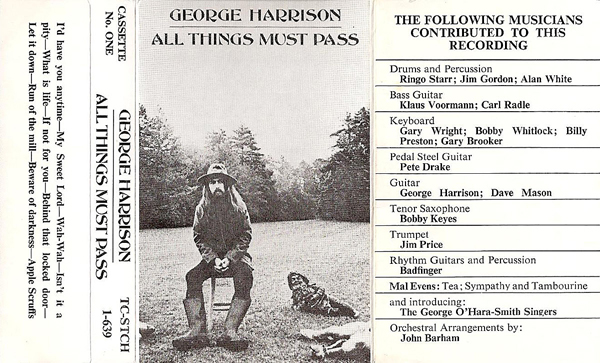
GEORGE HARRISON: “All Things Must Pass” – An Appreciation – uDiscover

Classic album is a term that’s used way too much when describing records from the golden era of rock music; of course, one person’s classic album is another’s long-forgotten record, but we think that without fear of contradiction George Harrison’s All Things Must Pass is a CLASSIC album…

45 Years ago it made the Billboard album charts on 19 December 1970 and two weeks later it was No.1. There’s an old adage in the music business that talks of, ‘the difficult third album’, well this was George’s third solo album and there’s nothing difficult about it, every track is worthy of its place, there’s no filler, just killers… and it was originally released as a triple album when it came out on 27 November 1970. Ben Gerson of Rolling Stone described the sound as “Wagnerian, Brucknerian, the music of mountain tops and vast horizons,” and who are we to disagree? Truth is George considered this to be his first solo album proper, having originally released his movie soundtrack, Wonderwall Music and his synthesizer album, Electronic Sound.The genesis of All Things Must Pass can be said to have begun with George’s visit to America in November 1968 when he established his long-lasting friendship with Bob Dylan while staying in Woodstock. George’s songwriting output was increasing and becoming increasingly more self-assured, for example he co-wrote ‘Badge’ with Eric Clapton for Cream’s Goodbye album that came out in early 1969. George’s involvement with Apple Record’s signings, Billy Preston and Doris Troy in 1969, as well as his tour with Delaney and Bonnie that included Eric Clapton, Leon Russell, Dave Mason, Bobby Whitlock, Carl Radle and Jim Gordon, began to influence his writing with elements of gospel and the kind of sounds that we have come to call ‘Americana’.
George’s spiritual journey saw him involved with the Hare Krishna movement that would also become another vital piece in the jigsaw of sound that makes up All Things Must Pass. In February 1969, on his 26th birthday, George recorded a demo of his song, ‘All Things Must Pass’, along with ‘Old Brown Shoe’ and ‘Something’. The latter two songs went on to be recorded by the Beatles and for whatever reason ‘All Things Must Pass’ was not recorded by the Beatles; the song is based on a translation of part of chapter 23 of the Tao Te Ching, “All things pass, A sunrise does not last all morning. All things pass, A cloudburst does not last all day.”

A month earlier George also made a demo of ‘Isn’t It A Pity’, one of the standout tracks on All Things Must Pass, but this song too failed to make the cut for a Beatles album. It wasn’t until early 1970 that initial preparatory work began on George’s solo album; it was at this time that he played producer Phil Spector demos of songs that he had been writing while with the Beatles.

Some of these songs went back as far as 1966, specifically, ‘Isn’t It a Pity’ and ‘Art of Dying’ and he had written ‘’I’d Have You Anytime’ with Bob Dylan in late 1968 while in Woodstock. George had tried to get the Beatles interested in ‘All Things Must Pass’, ‘Hear Me Lord’ and the beautiful, ‘Let It Down’, during rehearsals for the Get Back album, but the other Beatles seemed not to be interested. ‘Wah-Wah’ and ‘Run of the Mill’ both dated from early 1969, while ‘What Is Life’ came to George while he was working with Billy Preston on his album, That’s the Way God Planned It. ‘Behind That Locked Door ‘ was written in the summer of ’69, just before Dylan’s performance at the Isle of Wight Festival and he started to write the epic, ‘My Sweet Lord’ in Copenhagen while on tour with Delaney and Bonnie in late 1969.

It was while on tour with Delaney Bramlett that the American asked George to play slide guitar and his ‘I Dig Love’ is an early experiment with a sound that George came to make his own. Other songs on All Things Must Pass were all written in the first half of 1970, these include ‘Awaiting on You All’, ‘Ballad of Sir Frankie Crisp (Let It Roll)’, a tribute to the original owner of George’s home, Friar Park and ‘Beware of Darkness’. Shortly before the sessions for his album began, George was at a Dylan session in New York, which is where he heard, ‘If Not for You’ and in turn George was inspired to write the Dylanesque, ‘Apple Scruffs’ as the All Things Must Pass sessions were winding up, it was in tribute to the girls who hung around outside Apple Corps offices where he was working, or Abbey Road Studios in the hope of meeting a Beatle.
Recording the album began in late May 1970 and such was the frustration within George at being unable to get his songs on Beatles’ albums that it is of little surprise that there were so many on All Things Must Pass. The third record included in the original triple album is entitled Apple Jam and four of the five tracks – ‘Out of the Blue’, ‘Plug Me In’, ‘I Remember Jeep’ and ‘Thanks for the Pepperoni’ – are i instrumentals put together in the studio. According to George “For the jams, I didn’t want to just throw [them] in the cupboard, and yet at the same time it wasn’t part of the record; that’s why I put it on a separate label to go in the package as a kind of bonus.” The fifth track, It’s Johnny’s Birthday was a present for Lennon’s 30th and it is sung to the tune of Cliff Richard’s ‘Congratulations’.

Such is the big sound of All Things Must Pass that it is hard to be precise as to who appears on what track. Aside from those already mentioned there is Ringo Starr, Billy Preston, and German bassist Klaus Voormann who also did the artwork for the cover of the Beatles’ Revolver album. Members of Apple band, Badfinger were included, helping to create the wall of sound effect on acoustic guitars, and besides future Derek and the Dominos’ keyboard player Bobby Whitlock the other principal keyboardist was Gary Wright who had been a member of Spooky Tooth and later in the 1970s had some big hits in America. Other keyboard players included, Tony Ashton, and John Barham who both played on Wonderwall Music

The drummers were future Yes man, and member of the Plastic Ono Band, Alan White, Phil Collins in his pre-Genesis days and Ginger Baker on the jam, ‘I Remember Jeep’. Other musicians included Nashville pedal steel player Pete Drake and Procol Harum’s Gary Brooker.
Eric Clapton, Bobby Whitlock, Jim Gordon and Carl Radle (not Jim Keltner as the advert says) played London’s Lyceum in the Strand on Sunday 14 June 1970 and decided shortly before going on stage to call themselves, Derek and The Dominos. Earlier in the day they were at Abbey Road for an All Things Must Pass session when they cut ‘Tell The Truth’ that became Derek and The Dominos first single release in September 1970. The b-side of which was ‘Roll It Over’, recorded at an All Things Must Pass session on 25 June and this included George along with Dave Mason of Traffic on guitar and vocals.

Originally George had thought it would take just two months to record All Things Must Pass but in the end recording lasted for five months, not finishing until late October. George’s mother was ill with cancer during the recording and this meant that he needed to head back to Liverpool on a regular basis to see her; she died in July 1970. Phil Spector also proved somewhat unreliable and all this led to George himself doing much of the production work himself.

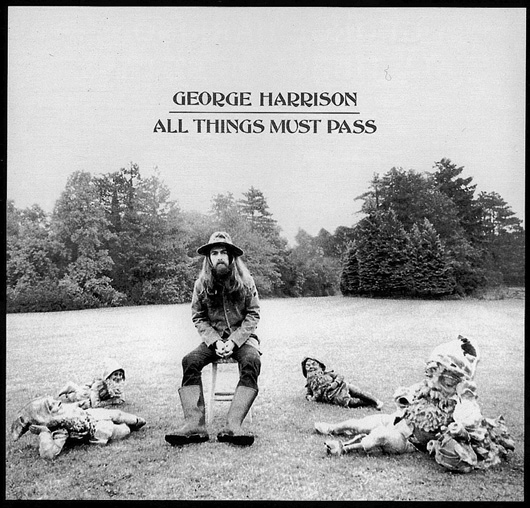
Final mixing of the record started at the very end of October in New York City with Phil Spector. George was not entirely happy with what Spector did, but nothing can take away from the brilliance of this record that still stands up to the test of time. Tom Wilkes designed the box to hold the three LPs and Barry Feinstein took the iconic photos of George and the four garden gnomes on the grass in front of Friar Park.

Scheduled for release in October, the delays meant it came out in America on 27 November 1970 and three days later in the UK. The first triple album by a single artist, it captivated audiences everywhere, entering the Billboard album chart in December it spent 7 weeks at No.1 in America starting with the first chart of 1971. In the UK it only made No.4 on the ‘official’ album chart, although it topped the NME’s chart for 7 weeks. George’s lead single from All Things Must Pass was, ‘My Sweet Lord’ and it topped the singles chart on both sides of the Atlantic.
As time passes we have come to love this amazing record even more. It is the kind of record that says so much about what made music so vital as the 1960s became the 1970s. It is full of great songs, and lyrics that not only meant something then but still resonate today. As future decades come and go, and new generations of music lovers look back, this is the kind of record that will take on almost mythical status. It’s one thing being able to read about its making, it’s quite another thing to allow it to envelop you, to caress you and to make you feel the world is a better place in which to live having listened to it.

All Things Must Pass is George’s spiritual high, truly a classic and unquestionably one of the greatest albums ever made…triple, double or single.

All Things Must Pass has been remastered for 2014 and is included in George Harrison’s The Apple Years 1968-1975 box set.

You can order the Apple Years 1968-75 box set from the Official George Harrison store here
Or from Amazon or iTunes 

Source: All Things Must Pass – An Appreciation – uDiscover

Posted in Album, Album, CD, CD, Music, Musician, Pop, Rhythm and Blues, Rock, Rock 'n' Roll, Singer, Songwriter | Tagged , , , , , , , , , , , , , , , , , , , , , , , , , , , , , , , , , , , , , , , , , , , , , , , , , | Leave a comment

TV: MONTY PYTHON’S FLYING CIRCUS

TV: MONTY PYTHON’S FLYING CIRCUS

by PETER TATCHELL (revised and updated version of article in TELEFILE #3, September 1997)

pythonIn late 1969, BBC television unleashed a sketch comedy series that broke new ground in surreal, off-the-wall craziness. It was a mesh of physical lunacy, literate wordplays and colourfully vicious animations all jigsaw-puzzled together in a kaleidoscope of inspired silliness. For all its success though, it didn’t actually change the course of TV humour from that day forth, as the schedules weren’t suddenly full of imitations. And after several years of silly walks, dead parrots, inquisitive Spaniards and people with their heads nailed to coffee tables, the participants simply thanked their hosts and moved on to the more financially lucrative world of the movies.

Monty Python’s Flying Circus did not spring fully-formed from the head of a BBC programme planner, nor the combined heads of writer/performers Graham Chapman, John Cleese, Eric Idle, Terry Jones, Michael Palin and (animator) Terry Gilliam. Its roots go back to the weekly broadcasts of The Goon Show listened to by Python’s creators in their formative years of the 1950s. A stint of university education led to student revues and script contributions to popular BBC television shows like That Was The Week That Was and The Late Show.

Cleese was the first to achieve public recognition, in the radio series I’m Sorry I’ll Read That Again (along with Goodies-to-be Tim Brooke-Taylor, Graeme Garden and Bill Oddie) and on TV’s The Frost Report (with Ronnies Barker and Corbett).

The success of the latter series led Frost himself to back his supporting players in individual ventures, in Cleese’s case a sketch programme calledAt Last The 1948 Show which ran for thirteen episodes in 1967 for British commercial television’s Associated-Rediffusion company. Screened in Australia by the ABC, it also starred Tim Brooke-Taylor, Graham Chapman, Marty Feldman and (as a dumb-blonde hostess to link the unrelated skits) “the lovely” Aimi MacDonald. One of Miss MacDonald’s links happened to be “and now for something completely different …”.

Many 1948 Show scripts were performed again on Python LPs and in stage shows, as well as at Amnesty International fundraising concerts – famous sketches such as Bookshop, Four Yorkshiremen, Beekeeping andTop Of The Form all debuted on At Last The 1948 Show. Taped in black-and-white and with a number of episodes lost, At Last The 1948 Showremained largely forgotten for more than three decades.  It was, however (in this writer’s opinion anyway), the best sketch-comedy television show ever produced and the official DVD release of a large percentage of retrieved footage was welcome indeed.

Rediffusion also produced an early-evening show called Do Not Adjust Your Set starring several other university writer/performers – Eric Idle, Terry Jones and Michael Palin. After two seasons (in which a young David Jason and the occasional Terry Gilliam animation also appeared), Palin and Jones created a mock-educational programme The Complete And Utter History Of Britain.

In 1968, David Frost financed the one-hour colour special How To Irritate People (for airing on US television) with 1948 Show participants Cleese, Brooke-Taylor and Chapman joined by Michael Palin and Connie Booth. It’s a fascinating (if somewhat disappointing) mix of material from the earlier show plus items which would soon appear on a Marty Feldman special and within Python itself. (The complete special has been available on commercial video and DVD for several years.)

By 1969, Cleese and Chapman had approached Palin and Jones and suggested they might work together. They, in turn, thought Idle would be a useful recruit and were keen to explore a flowing transition from one item to another in a manner similar to that used in one of Gilliam’s cartoons from Do Not Adjust Your Set.

With scriptwriter Barry Took (Marty Feldman’s former writing partner on radio’s Round The Horne) acting as a go-between, the six approached the BBC, which agreed to commission a season of thirteen episodes. Coming up with a title for the project did not prove easy. Eventually suggestions such as Owl Stretching Time, A Horse A Spoon And A Bucketand Gwen Dibley’s Flying Circus gave way to Monty Python’s Flying Circus and the show premiered just in time for BBC1 ‘s conversion to colour in late 1969.

Despite launching such popular routines as Nudge Nudge, The Funniest Joke In The World, Lumberjack Song, Crunchy Frog and Dead Parrot, the participants themselves weren’t altogether satisfied with the early episodes and felt the format and material integrated better in later seasons. With four “teams” of contributors (Cleese/Chapman, Palin/Jones, and Idle and Gilliam working as separate entities), it’s not surprising many fans note a degree of unevenness in the finished product.

Though allocated an unfriendly late Sunday night timeslot (with occasional editions pre-empted) the programme managed to build up sufficient audience figures to become something of a cult favourite – not yet well-known to the general public, but successful enough for the BBC to agree to a follow-up season.

In 1970 the BBC set up its own record label (prior to this, soundtrack extracts from such TV hits as Hancock’s Half Hour, Steptoe And Son, Till Death Us Do Part and Not Only … But Also were released through the Pye or Decca labels), and one of its first issues was a collection of highlights from Monty Python’s Flying Circus. In reality, the disc didn’t feature actual soundtracks from the show, but pieces specially rerecorded for the LP before a somewhat bemused and muted audience. It was the first of what would ultimately become a veritable industry of Python spinoff material – compact discs, videos, DVDs, souvenir books and script collections (not to mention diaries, calendars and coffee mugs) are still in plentiful supply decades later.
 
The latter months of 1970 saw the Pythons back for a second season (again of thirteen programmes) with the first edition introducing probably their most famous routine of all… The Silly Walk. Later shows saw Scott Of The Sahara, a sitcom starring Attila The Hun, an unfortunate commercial campaign for Conquistador Coffee and a soccer match between Long John Silver Impersonators and Bournemouth Gynaecologists.

By now, the team had touched on such subjects as gratuitous violence (both live and in Gilliam’s animations) and often entered the realm of sex and nudity. The last programme of the second series was particularly notable for pushing back the boundaries of acceptable content on television. Following a scene in which shipwreck survivors discuss the prospect of cannibalism, the show concludes with possibly the most notorious Python TV creation, The Undertakers Sketch, in which an undertaker (Chapman) offers a client (Cleese) various alternatives as to how he might wish to dispose of his mother’s remains. As the credits roll, audience members are seen to invade the set in a display of disgust (a somewhat confusing vehicle insisted upon by the producer in order to balance the scales of taste), but following its broadcast the routine caused quite a degree of genuine controversy and was discussed on legitimate current affairs programmes. The offending item was omitted from repeat screenings for a number of years, and is believed to have disappeared from BBC videotape archives entirely (its inclusion in commercial releases of the episode is thanks to the existence of an American master copy).

After two TV seasons on television and one LP, Monty Python’s Flying Circus next foray was to the big screen. The series’ best routines were refilmed for a movie titled And Now For Something Completely Different. The team also signed with Charisma Records to produce a series of discs, initially using scripts from the TV series, but later including new material (and occasional reworkings of items previously used on unrelated 1960s productions).

These other ventures delayed the airing of a third television series until late 1972 and by now the show had very much gained the attention of the general public. Though containing fewer well-known sketches, the writing and performance quality were very much on a par with the preceding season but with the added (then highly unusual) innovation of title and credit sequences appearing at unexpected points in the show. One episode even offered a continuing theme throughout, as we follow the cycling tour of the decidedly boring Mr Pither. (It was a format variation that would be explored more fully in the fourth season at the end of 1974).

In 1973 the Pythons filmed two 40-minute specials for German television. Both titled Monty Python’s Fliegende Zirkus, the first saw the team actually speaking their dialogue in German, whilst the second was made in English and subtitled for the German audience. As a result, only the latter programme was given much airplay. 1973 also saw the Pythons in a stage version of the show, initially touring the north of England, then Canada before opening in London’s West End at the Theatre Royal Drury Lane. A recording of this version of the show was issued.

With a fourth television season in preparation John Cleese, feeling the spectre of repetition was marring his enjoyment of his involvement, decided it was time to move on to other ventures. The BBC considered dropping the show altogether but finally gave the green light to a 6-part series now carrying the abridged title of Monty Python (though the full “Flying Circus” moniker appears in the animated opening sequence). Generally considered less successful than its predecessors, it was the last batch of episodes to be commercially released.

By now, American audiences were able to view the show as well, with PBS screening the series (without commercial interruption). Its increasing popularity on the public channel eventually led the giant ABC network to purchase rights to the fourth season, but executive wisdom decided to edit the six half hours into two 90-minute specials (in the process, removing a significant amount of programme material to fit in adverts).

When their US agent alerted them to ABC’s indiscretion the Pythons were horrified and – arguing that the injudicious editing, amounting to censorship in many cases, created a result that bore little relation to their original work and was potentially damaging to their artistic integrity and future marketability – the team took the mighty network to court. In a landmark outcome, the Pythons won the case. TV networks were put on notice that similar infractions would no longer be tolerated, and the Pythons themselves gained video rights for all their programmes (outside the UK).

1975 saw the full Monty Python team (complete with Cleese) back on the big screen for the first time in a plotted story, rather than sketches. Monty Python And The Holy Grail was an historical send-up of the legend of King Arthur, with Gilliam and Jones sharing the directors chair. (The first draft of the script was reworked into the fourth series Python episodeMichael Ellis.) Holy Grail‘s success paved the way for future films, and a great deal of controversy.

Individually, Python members were creating new projects for television – Cleese in the hugely successful Fawlty Towers, Idle in Rutland Weekend Television and Palin (with Jones as co-writer) in Ripping Yarns.

In 1976 they reunited for another live show, this time at New York’s City Center (highlights of which were released on disc) and a half a dozen years later appeared on the west coast at the Hollywood Bowl (the TV specialMonty Python Live at the Hollywood Bowl was released cinematically, then to video, laser disc and DVD).

For their next movie venture, they opted to lampoon the gullibility of certain religious followers in Monty Python’s Life Of Brian, which told of an ordinary man (a contemporary of Jesus Christ) who is mistakenly thought to be a messiah. When word of the plot spread, church groups around the world became incensed, thinking the film would be sending up the Lord Himself, and organised protests. The storyline was controversial enough to cause major studios to refuse financial backing but eventually ex-Beatle George Harrison put up the money (his confessed motive being that, having read the script, he simply wanted to watch the thing up on the screen). Despite – or possibly due to – the notoriety, the movie ended up a huge success.

The Pythons continued to issue LPs. Their 1980 release Monty Python’sContractual Obligation Album resulted in yet more court action – but this time as defendants. Singer/songwriter John Denver objected to the unauthorised R-rated mockery of his Annie’s Song in the track Farewell To John Denver and took legal action against the troupe shortly after the album’s release. Denver won the case which forced a withdrawal of the first edition, the offending track replaced by A Legal Apology. Consequently, early versions of the LP are now regarded as collector’s items.

In 1983 the Pythons made their last film, returning to the familiar territory of their original segment format rather than a continuous plotline. Monty Python’s Meaning Of Life poked fun at sex-education, contraception, birth, death and gluttony. Whilst enjoyable and memorable in places, the movie tended to miss the mark artistically and (ultimately) financially. Although generally regarded as a lesser work, at the time of its release Cleese was quoted as saying the Mr Creosote sketch – in which a deplorably obese man (Jones) enters a restaurant, copiously vomits and later explodes – was the one he believed “will run in our obituary columns”.

The team continued to go their separate ways – Cleese with fishes called Wanda and Palin trotting the globe – until 1989 when 20th anniversary get-togethers and TV specials were planned. Celebrations were abandoned though when tragedy struck. Graham Chapman (who had conquered alcoholism and battled throat cancer) finally succumbed to the latter literally on the eve of the anniversary.

Never ones to let hypocrisy rear its head, Jones commented that “it was the biggest case of party pooping in history” and Cleese, in his funeral oration, became the first (and possibly only) person to utter the word “fuck” in a eulogy.  A later TV appearance by the surviving members, to which the remains of their fallen comrade were brought along, included a routine in which Chapman’s ashes were accidentally upended onto the stage and vacuumed up.

Though a reunion is now impossible, all the remaining five have made contributions to various Python-related projects in the years following Chapman’s death, perhaps the most notable being a lengthy 30th anniversary Python Night tribute which aired in 1999 on BBC2, introduced by Cleese in typically manic form.

For theatre-goers, the spirit of Python has been revived with the successful Broadway musical Spamalot, based on Monty Python And Holy Grailand comprising an amalgam of adapted excerpts from the movie together with songs and new material.

Reissues of Python television shows, movies and albums now carry various bonuses – amongst them a lost sketch from Series 3, deleted movie scenes, documentaries and featurettes.  Remastered CD versions of the albums now contain rare and previously unreleased bonus tracks.  With the advent of internet file sharing, avid collectors have made available further items including extraordinarily rare filmed corporate presentations, and even a complete record album thought to have been compiled for release and then shelved.

In an effort to prevent internet ripoff by fans, the Monty Python team announced the formation of their own channel on the YouTube website in 2008 where many of the more famous sketches and rare footage can be viewed, and where visitors are encouraged to purchase official items.


TELEVISION EPISODES

Series One
BBC1 – October 5 1969 to January 11 1970 (not November 2 or 9)
1    It’s The Arts / Arthur “Two­ Sheds” Jackson / Funniest Joke In The World
2    Flying Sheep / Man With Three Buttocks / The Mouse Problem
3    Court Scene / Dirty Fork / Nudge Nudge
4    Art Gallery / Self-Defence From Fresh Fruit / Secret Service Dentists
5    Confuse-A-Cat / Neurotic Job Interviewer / Door-To-Door Burglar
6    Johann Gambolputty.. / Crunchy Frog / 20th Century Vole
7    Camel Spotting / Giant Blancmanges Turning People Into Scotsmen
8    Army Protection Racket / Dead Parrot / Hell’s Grannies
9 Kilimanjaro Expedition / Lumberjack Song / Awful Visitors
10  It’s A Tree / Vocational Guidance Counsellor / Pet Conversions
11  Murder Mystery / Interesting People / Women’s Guild Battle Of Pearl Harbour
12  Falling Bodies / Minehead By-election / Upper-Class Twit Of The Year
13  Albatross / Chatting Up A Policeman / Squatters Inside Man

Series Two
BBC1 – September 15 to December 22 1970
1    New Cooker / Silly Walks / Piranha Brothers
2    Spanish Inquisition / Jokes And Novelties / Semaphore version of Wuthering Heights
3    Flying Lessons / The Poet McTeagle / Deja Vu
4    Architect / The Bishop / Chemist
5    Blackmail / Rude And Polite Man / Boxer Documentary
6    School Prize Giving / Raymond Luxury Yacht / Election Night Special
7    Attila The Hun Show / Idiot In Society / Spot The Brain Cell
8    Wife Swap / Poofy Judges / Beethoven’s Mynah Bird
9    Bruces / Naughty Bits / Penguin On The TV Set
10  Scott Of The Sahara / Fish Licence / Soccer Match
11  Conquistador Coffee / Train Timetables Whodunnit / How Not To Be Seen
12  Hungarian Phrasebook / Ypres 1914 / Spam
13  The Queen Will Be Watching / Lifeboat / Undertakers

Series Three
BBC1 – October 19 1972 to January 18 1973 (not December 28)
1    Njorl’s Saga / Jean-Paul Sartre / Whicker Island
2    Schoolboys’ Insurance Company / How To Do It / Fish Slapping Dance
3    Money / Salvation Fuzz / Argument Clinic
4    Anagram Speaker / Pantomime Horse / Gestures
5 Summarise Proust Competition / Travel Agent / Anne Elk
6    Gumby Brain Specialist / Expedition To Lake Pahoe
7    Biggles / Cheese Shop / Peckinpah’s Salad Days
8    Mr. Pither’s Cycling Tour
9    Literary Housing Project / Olympic Hide-And-Seek Final / Planet Algon
10  Elizabethan Pornography / Silly Disturbances / Thripshaw’s Disease
11  Sir Kenneth Clark Boxing / Dennis Moore / Astrology
12  Kamikazi Scotsmen / No Time To Lose / Spot The Loony
13  Entertainment Awards / Mrs Zambesi’s New Brain / International Wife-Swapping

Monty Python’s Fliegender Zirkus (German TV specials – 40 min)
1  Albrecht Durer / Little Red Riding Hood / Silly Olympics / Stake Your Claim / Holzfäller Song (1972, performed in German)
2  Mouse Ranch / Chicken Mining / Philosophical Football / Hearing Aid & Contact Lens Shop / The Princess With Wooden Teeth (screened on BBC2 – October 6 1973, performed in English)

Series 4
BBC2 – October 31 to December 5 1974
1    The Golden Age Of Ballooning
2    Michael Ellis
3    Light Entertainment War
4    Hamlet
5    Mr. Neutron
6    Party Political Broadcast


TELEVISION DOCUMENTARIES

The Pythons… Somewhere In Tunisia (Making of ‘Life of Brian’)
(BBC1, June 20 1979)

Parrot Sketch Not Included
(BBC1, November 18 1989)

Monty Python Live In Aspen
(Paramount Comedy Channel, October 24 1998)

Python Night
(BBC2, October 9 1999)
includes new material performed by John Cleese, Michael Palin and Terry Jones:
It’s… The Monty Python Story
Pythonland (Palin travelogue of Python locations)
Lost Python (a found Python sequence from the early 1970s)
From Spam To Sperm: Monty Python’s Greatest Hits

Movie Connections: Monty Python And The Holy Grail
(BBC1, January 7 2009)


RADIO DOCUMENTARIES

Long Live The Dead Parrot
(BBC Radio 4, September 14 1999)

Something Completely Different
(BBC Radio 2, October 5 1999)

Comedian’s Comedians
(BBC Radio 2, episode of January 18 2003)


FILMS

And Now For Something Completely Different (1971, 88 min)
Monty Python And The Holy Grail (1975, 90 min)
Monty Python’s Life Of Brian (1979, 93 min)
Monty Python Live At The Hollywood Bowl (1982, 78 min)
Monty Python’s Meaning Of Life (1983, 90 min)


DISCS

Where no official track itemisation is listed, titles given are those created by Warwick Holt for LAUGH MAGAZINE #1, 1991

Monty Python’s Flying Circus (1970)
BBC LP REB 73M, CD BBCCD 73 (UK);  Pye LP 12116 (US)
sketches specially re-recorded for record release:
Flying Sheep
Television Interviews
Trade Description Act
Nudge Nudge
The Mouse Problem
Buying A Bed
Interesting People
The Barber
Interviews
More Television Interviews
Children’s Stories
The Visitors
The Cinema
The North Minehead By-Election
Me, Doctor
Pet Shop
Self Defence

Flying Sheep / Man With Three Buttocks
BBC single (not confirmed)

Another Monty Python Record (1971)
Charisma LP CAS 1049, Virgin CD CASCD 49 (UK), Buddah LP CAS 1049 (US),
Apologies
Spanish Inquisition (longer version on Buddah release)
World Forum (not on Charisma release)
Gumby Theatre (longer version on Buddah release)
The Architect
Piranha Brothers
Death Of Mary Queen Of Scots
Penguin On The TV (not on Charisma release)
Comfy Chair
Sound Quiz
Be A Great Actor
Theatre Critic
Royal Festival Hall Concert
Spam
The Judges
Stake Your Claim
Still No Sight Of Land
The Undertaker
Early pressings included a “Be A Great Actor” kit, with scripts and cut-outs.

Spam Song / The Concert
Charisma single CB 192 (UK)

Eric The Half-A-Bee / Zambezi Song
Charisma single CB 200 (UK)(1972)

Monty Python’s Previous Record
Charisma LP CAS 1063, Virgin CD CASCD 1063 (UK), Buddah LP CAS 1063 (US)
Embarrassment
A Bed Time Book
England 1747 — Dennis Moore
Money Programme
Dennis Moore Continues
Australian Table Wines
Argument Clinic
Putting Down Budgies And So Forth
Eric The Half-A-Bee
Travel Agency
Radio Quiz Game
A Massage
City Noises Quiz (Silly Noises Quiz)
Miss Anne Elk
We Love The Yangtse
How-To-Do-It Lessons
A Minute Passed
Eclipse Of The Sun
Alastair Cook
Wonderful World Of Sounds
A Fairy Tale

Teach Yourself Heath
Flexi-disc included with the December 1972 issue of Zigzag magazine

The Monty Python Matching Tie And Handkerchief (1973)
Charisma LP CAS 1080, Virgin CD VCCD 003 (UK), Arista LP AL 4039 (US)
Dead Bishop On The Landing
The Church Police
Who Cares
The Surgeon And The Elephant Mr. Humphries
Thomas Hardy
Novel Writing
Word Association
Bruces
Philosophers’ Song
Nothing Happened
Eating Dog
Cheese Shop
Thomas Hardy
Tiger Club
Great Actors
Infant Minister For Overseas Development
Oscar Wilde’s Party
Pet Shop Conversions
Phone-In
Background To History
Medieval Open Field Farming Songs
World War 1 Soldier
Stuck Record
Boxing Tonight With Kenneth Clark
(originally released with two concentric tracks on side 1)

Lumberjack Song* / Spam Song
Charisma single CB 268 (UK)
(*new version, produced by George Harrison)

Monty Python Live At Drury Lane (1974) 
Charisma LP CLASS 4, Virgin CD (UK)
Introduction
Llamas
Gumby – Flower Arranging
Secret Service
Wrestling
Communist Quiz
Idiot Song
Albatross
Colonel
Nudge, Nudge
Cocktail Bar
Travel Agent
Spot The Brain Cell
Bruces
Argument
Four Yorkshiremen
Election Special
Lumberjack Song
Parrot Sketch

Monty Python’s Tiny Black Round Thing
Charisma SO 1259 (UK)
included with New Musical Express of May 1974

The Single
Arista AS 0130 (US)(1975)
promotional single for The Monty Python Matching Tie And Handkerchief
featuring edited versions of
Who Cares
Infant Minister For Overseas Development
Pet Shop Conversions

The Album Of The Soundtrack Of The Trailer Of The Film Of Monty Python And The Holy Grail
Charisma LP CAS 1103, Virgin CD VCCD 004 (UK), Arista LP AL 4050 (US)
Congratulations
Welcome To The Cinema
Opening
Coconuts
Bring Out Your Dead
King Arthur Meets Dennis
Class Struggle
Witch Test
Professional Logician
Camelot
The Quest
The Silbury Hill Car Park
Frenchmen Of The Castle
Bomb Threat
Executive Announcement
Story Of The Film So Far
The Tale Of Sir Robin
The Knights Of Ni
Interview
Director Carl French
Swamp Castle
The Guards
Tim The Enchanter
Great Performances
Angry Crowd
Holy Hand Grenade
Announcement — Sir Kenneth Clark
French Castle Again
Close

Monty Python On Song
Charisma double-single NP 001 (UK)
Lumberjack Song (Harrison-produced version)
Spam Song
Bruces’ Song (Drury Lane version)
Eric The Half-A-Bee

The Worst/Best Of Monty Python
Kama Sutra 2LP KSBS 2611-2, Buddah 2LP BDS 5656-2 (both US)
2LP reissue of Another Monty Python Record and Monty Python’s Previous Record

The Least Bizarre
Buddah promotional EP CMP-EP (US)

Monty Python Live At City Center
Arista LP AL 4075, CD 18957-2 (US)
Introduction
Llama
Gumby Flower Arranging
Short Blues (Neil Innes)
Wrestling
World Forum
Albatross
Colonel Stopping It
Nudge, Nudge
Crunchy Frog
Bruces’ Song
Travel Agent
Camp Judges
Blackmail
Protest Song (Neil Innes)
Pet Shop
Four Yorkshiremen
Argument Clinic
Death Of Mary, Queen Of Scots
Salvation Fuzz
Church Police
Lumberjack Song

The Monty Python Instant Record Collection (British release version, 1977)
Charisma LP CAS 1134 (UK)
compilation disc, with one previously-unreleased track*
Introductions
Alastair Cook
Nudge, Nudge
Mrs . Nigger-Baiter
Constitutional Peasants
Fish Licence
Eric The Half-A-Bee
Australian Table Wines
Silly Noises
Novel Writing
Elephantoplasty
How To Do It
Gumby Cherry Orchard
Oscar Wilde
Introduction
Argument
French Taunter
Summarized Proust Competition*
Cheese Emporium
Funerals At Prestatyn
Camelot
Word Association
Bruces
Parrot
Monty Python Theme

Monty Python’s Life Of Brian (1979) 
Warner Bros. LP K 56751, Virgin CD VCCD 009 (UK), LP BSK 3396 (US)
film soundtrack plus links by Graham Chapman and Eric Idle
Introduction
Three Wise Men
Brian Song
Big Nose
The Stoning
Ex-Leper
Bloody Romans
Link
People’s Front Of Judea
Short Link
Latin Lesson
Missing Link
Revolutionary Meeting
Very Good Link
Ben
Audience With Pilate
Meanwhile
The Prophets
Haggling
Lobster
Sermon On The Wall
Lobster Link
Simon The Holy Man
Sex Link
The Morning After
Lighter Link
Pilate And Biggus
Welease Bwian
Nisus Wettus
Crucifixion
Always Look On The Bright Side Of Life
Close

Always Look On The Bright Side Of Life / Brian
Warner Bros. single K 17495, W 7653 (UK)

The Warner Bros. Music Show – Monty Python Examines The Life Of Brian
Warner Bros. LP WBMS 110 (US)
promotional LP issued to radio stations, featuring an hour-long interview by Dave Herman, including soundtrack excerpts.

Monty Python’s Contractual Obligation Album
Charisma LP CAS 1152, Virgin CD CASCD 1152 (UK), Arista LP AL 9536 (US)(1980)
Sit On My Face
Announcement
Henry Kissinger
String
Never Be Rude To An Arab
I Like Chinese
Bishop
Medical Love Song
Farewell To John Denver*
Finland
I’m So Worried
I Bet You They Won’t Play This Song On The Radio
Martyrdom Of St. Victor
Here Comes Another One
Bookshop
Do What John
Rock Notes
Muddy Knees
Crocodile
Decomposing Composers
Bells
Traffic Lights
All Things Dull And Ugly
A Scottish Farewell
(* replaced on later pressings by A Legal Apology, following litigation)

I Like Chinese / I Bet You They Won’t Play This Song On The Radio / Finland
Charisma single CB 374 (UK)

Monty Python’s Contractual Obligation Album Sampler
Arista LP SP 101 (US)
A promotional sampler of material from the album issued for broadcast.

The Monty Python Instant Record Collection (U.S. release version, 1981)
Arista LP AL 9580, CD ARCD 8296
The Executive Intro
Pet Shop
Nudge, Nudge
Premiere Of Film Live Broadcast From London
Bring Out Your Dead
How Do You Tell A Witch
Camelot
Argument Clinic
Crunchy Frog
The Cheese Shop
The Phone-In
Sit On My Face
Another Executive Announcement
Bishop On The Landing
Elephantoplasty
The Lumberjack Song
Bookshop
Blackmail
Farewell To John Denver
World Forum
String
Wide World Of Novel Writing
Death Of Mary Queen Of Scots
Never Be Rude To An Arab

Monty Python’s The Meaning Of Life (1983)
CBS LP SBP 237921, Virgin CD VCCD 010 (UK), MCA LP MCA 6121 (US)
soundtrack excerpts with new links
Introduction
Fish Introduction
The Meaning Of Life Theme
Birth
Birth Link
Frying Eggs
Every Sperm Is Sacred
Protestant Couple
Adventures Of Martin Luther
Sex Education
Trench Warfare
The Great Tea Of 1914-18
Fish Link
Terry Gilliam’s Intro
Accountancy Shanty
Zulu Wars
Link
The Dungeon Restaurant
Link
Live Organ Transplants
The Galaxy Song
The Not Noel Coward (Penis) Song
Mr. Creosote
The Grim Reaper
Christmas In Heaven
Dedication (To Fish)

Galaxy Song / Every Sperm Is Sacred
C.B.S. single A 3495, picture disc single (in the shape of a fishbowl) WA 3495 (UK)

The Final Rip Off
Virgin 2LP MPD 1 (UK), Virgin 2LP 7 90865-1 (US)(1987)
compilation, with one new track *, plus several new links
Introduction*
Constitutional Peasant
Fish Licence
Eric The Half-A-Bee Song
Finland Song
Travel Agent
Are You Embarrassed Easily?
Australian Table Wines
Argument
Henry Kissinger Song (* longer version than previously issued)
Parrot
Sit On My Face
Undertaker
Novel Writing (Live From Wessex)
String/Bells
Traffic Lights
Cocktail Bar
Four Yorkshiremen
Election Special
Lumberjack Song
I Like Chinese
Spanish Inquisition Part 1
Cheese Shop
Cherry Orchard
Architects Sketch
Spanish Inquisition Part 2
Spam
Spanish Inquisition Part 3
Comfy Chair
Famous Person Quiz
You Be The Actor
Nudge Nudge
Cannibalism
Spanish Inquisition Revisited
I Bet You They Won’t Play This Song On The Radio
Bruces
Bookshop
Do Wot John
Rock Notes
I’m So Worried
Crocodile
French Taunter
Marilyn Monroe
Swamp Castle
French Taunter Part 2
Last Word

Monty Python Sings
Virgin LP MONT 1, CD (UK)(1989)
compilation, with one new track*
Always Look On The Bright Side Of Life
Sit On My Face
Lumberjack Song (George Harrison produced version)
Not The Noel Coward (Penis) Song
Oliver Cromwell*
Money Song
Accountancy Shanty
Finland
Medical Love Song (longer version than previously issued)
I’m So Worried
Every Sperm Is Sacred
Never Be Rude To An Arab
I Like Chinese
Eric The Half-A-Bee
Brian Song
Bruces’ Philosophers Song
Meaning Of Life
Knights Of The Round Table
All Things Dull And Ugly
Decomposing Composers
Henry Kissinger
I’ve Got Two Legs (studio version)
Christmas In Heaven
Galaxy Song
Spam Song

The Instant Monty Python CD Collection
Virgin 6CD set
reissues of 8 previous releases:
Another / Previous / Matching Tie / Drury Lane / Holy Grail / Contractual /Brian / Meaning

Always Look On The Bright Side Of Life
Virgin CD PYTHD 1 (1991)
Always Look On The Bright Side Of Life
I’m So Ashamed
I Bet You They Won’t Play This Song On The Radio
Holzfaller Song (German version of The Lumberjack Song)

The Ultimate Monty Python Ripoff
Virgin CD CDV 2748 (1994)
Introduction
Finland
Travel Agent
I Like Chinese
French Taunter
Australian Table Wines
Spanish Inquisition
The Galaxy Song
Every Sperm Is Sacred
Grim Reaper
Sit On My Face
Argument
Mary Queen Of Scots
Four Yorkshiremen
Lumberjack Song
Albatross
Nudge, Nudge
Parrot
Bruces Philosophers’ Song
Fish Licence
Eric The Half-A-Bee
The Spam Song
Big Nose
Stoning
Link 1
Welease Wodger
Link 2
Always Look On The Bright Side Of Life
Spanish Inquisition (ending)

The Pythons Autobiography By The Pythons – The Interviews That Made The Book (2003)
Orion Audio Books 2CD 0-75286-065-8

BOOKS

Monty Python’s Big Red Book
(Methuen, 1971)

The Brand New Monty Python Bok
(Eyre Methuen, 1974 – paperback edition titled The Brand New Monty Python Papperbok)

Monty Python And The Holy Grail
(Eye Methuen ppk, 1975)

Monty Python Scrapbook/The Life Of Brian
(Eyre Methuen ppk, I 979)

Monty Python – The Case Against
by Robert Hewison (Eyre Methuen, 1981)

Life Of Python
by George Perry (Pavilion/Michael Joseph ppk, 1983)

Monty Python’s Flying Circus – Just The Words (Two volumes)
compiled by Roger Wilmut (Methuen, 1989)

The First 20 Years Of Monty Python
by Kim “Howard” Johnson (St. Martin’s Press ppk, 1989)

Monty Python – A Chronological Listing
Compiled by Douglas L. McCall (McFarland & Co., 1990)

And Now For Something Completely Trivial
by Kim “Howard” Johnson (St Marlin’s Press ppk, 1991)

Life Before And After Monty Python
by Kim “Howard” Johnson
(St. Martin’s Press ppk, 1993)

The Fairly Incomplete & Rather Badly Illustrated Monty Python Song Book
(Methuen, 1994)

The 1995 Monty Python Datebook
(The Ink Group, 1994)

Monty Python And The Holy Grail 1997 Diary
(The Ink Group, 1996)

Monty Python Encyclopedia
by Robert Ross (Batsford, 1997)

Monty Python Speaks!
by David Morgan (Avon Books, 1999)

The Pythons Autobiography By The Pythons
edited by Bob McCabe
(Orion, 2003)

Michael Palin Diaries 1969-1979 – The Python Years
by Michael Palin (Weidenfeld and Nicolson, 2006)

Monty Python Live
by Eric Idle (Simon and Shuster, 2009)
laughterlog's avatarLaughterlog.com

View original post 5,309 more words

Posted in Comedy, Film, Series, Stage, Television, Theatre | Tagged , | Leave a comment

FLASH GORDON On the Planet Mongo by Alex Raymond

Posted in Uncategorized | Tagged , , , | Leave a comment